

Mental health affects every part of life—from relationships and work performance to physical health and overall happiness.
Yet many people wait until emotional struggles become overwhelming before seeking professional help.
Whether you’re dealing with anxiety, depression, chronic stress, burnout, or emotional trauma, getting support early can make a significant difference.
A mental health clinic visit is not only for people experiencing severe psychiatric conditions.
These healthcare centers help individuals of all ages manage everyday emotional challenges, diagnose mental health conditions, and develop personalized treatment plans that improve long-term wellbeing.
In this guide, you’ll learn what services these clinics provide, who should consider visiting one, how treatments work, and what to expect during your first appointment.
We’ll also share practical tips for choosing the right clinic and answer the most common questions people ask before seeking professional care.
What Do Mental Health Clinics Do?
Quick Answer (Featured Snippet)
Mental health clinics provide professional evaluation, diagnosis, counseling, therapy, medication management, and ongoing support for individuals experiencing emotional, behavioral, or psychological concerns.
Services are delivered by licensed mental health professionals such as psychologists, psychiatrists, therapists, counselors, and psychiatric nurses.
Most clinics focus on improving both emotional wellbeing and behavioral health through evidence-based care tailored to each patient’s needs.
Common services include:
- Mental health assessment
- Psychiatric evaluation
- Individual psychotherapy
- Cognitive Behavioral Therapy (CBT)
- Dialectical Behavior Therapy (DBT)
- Family counseling
- Marriage counseling
- Child counseling
- Addiction counseling
- Medication management
- Crisis intervention services
- Stress management therapy
- Group therapy
- Online therapy sessions
- Follow-up care
Rather than treating only symptoms, many clinics identify the root causes of emotional distress and build a personalized recovery plan.
When Should You Visit a Mental Health Clinic?
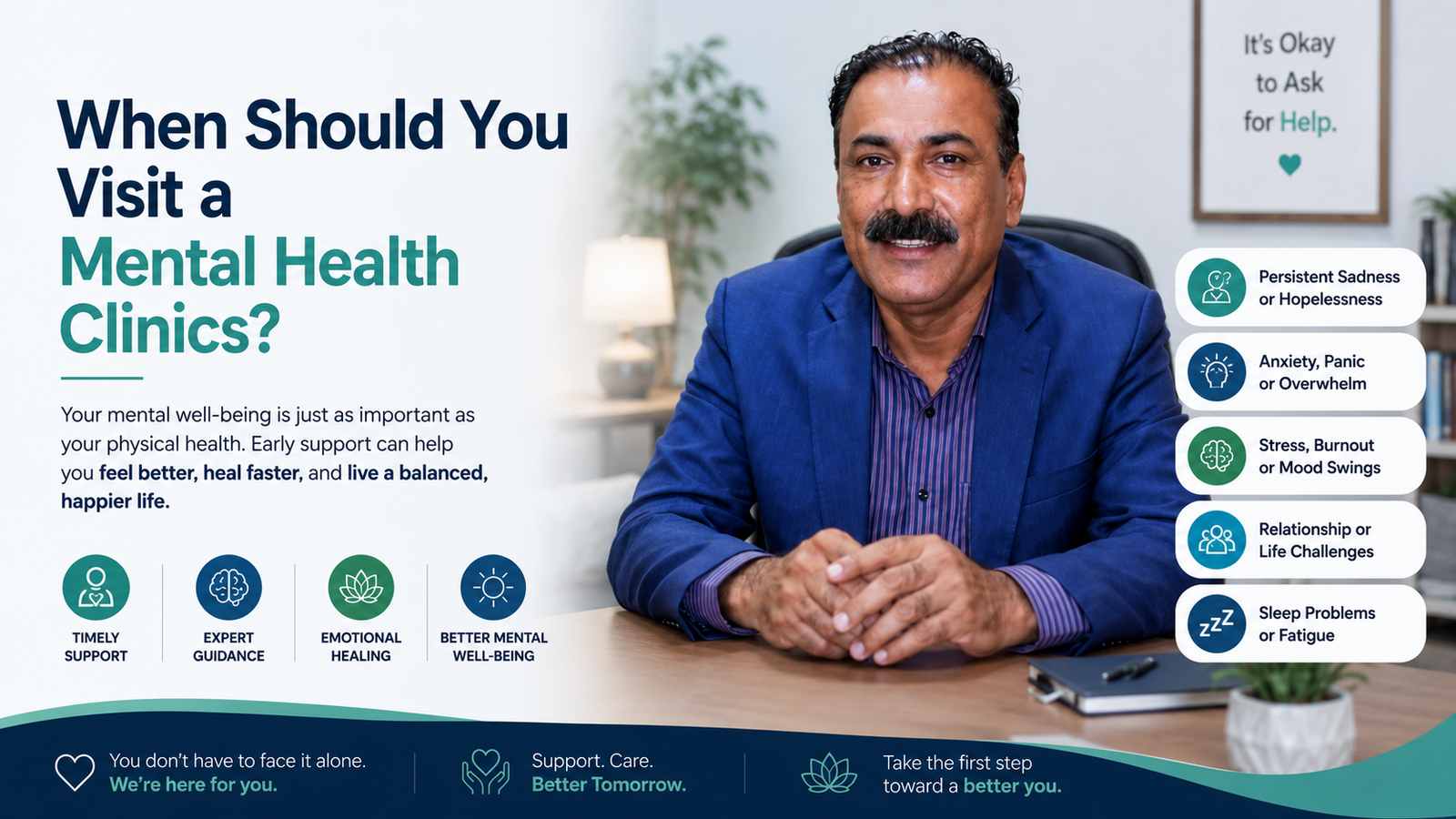
Many people believe they should wait until life feels completely unmanageable before asking for help.
In reality, early intervention often leads to better outcomes and faster recovery.
Consider scheduling an appointment if you experience:
- Persistent sadness lasting several weeks
- Excessive worry that interferes with daily life
- Frequent panic attacks
- Mood swings
- Chronic stress
- Burnout from work or caregiving
- Difficulty sleeping or insomnia
- Lack of motivation
- Concentration problems
- Emotional trauma after a difficult event
- Anger management issues
- Social anxiety
- Relationship conflicts affecting daily life
If these symptoms continue for more than two weeks or begin affecting your work, school, or family life, professional evaluation is recommended.
Early treatment often prevents mild concerns from becoming more serious conditions.
How Do Mental Health Clinics Help People Recover?
Recovery looks different for everyone because mental health conditions have different causes, symptoms, and treatment needs.
A quality behavioral health clinic follows a structured care process.
Step 1: Comprehensive Assessment
The first appointment usually includes:
- Medical history
- Family history
- Current symptoms
- Lifestyle habits
- Sleep patterns
- Stress levels
- Previous treatments
This information helps clinicians develop an accurate diagnosis.
Step 2: Personalized Treatment Plan
After assessment, your care team creates an individualized treatment strategy.
This may include:
- Weekly counseling sessions
- Behavioral therapy
- CBT therapy
- DBT therapy
- Medication when appropriate
- Lifestyle recommendations
- Stress reduction techniques
- Family involvement
No two treatment plans are exactly alike.
Step 3: Continuous Monitoring
Mental health changes over time.
Clinicians regularly monitor:
- Progress
- Medication effectiveness
- Therapy goals
- Emotional wellbeing
- Daily functioning
Treatment plans are adjusted whenever necessary.
Can Mental Health Clinics Treat Anxiety and Depression?
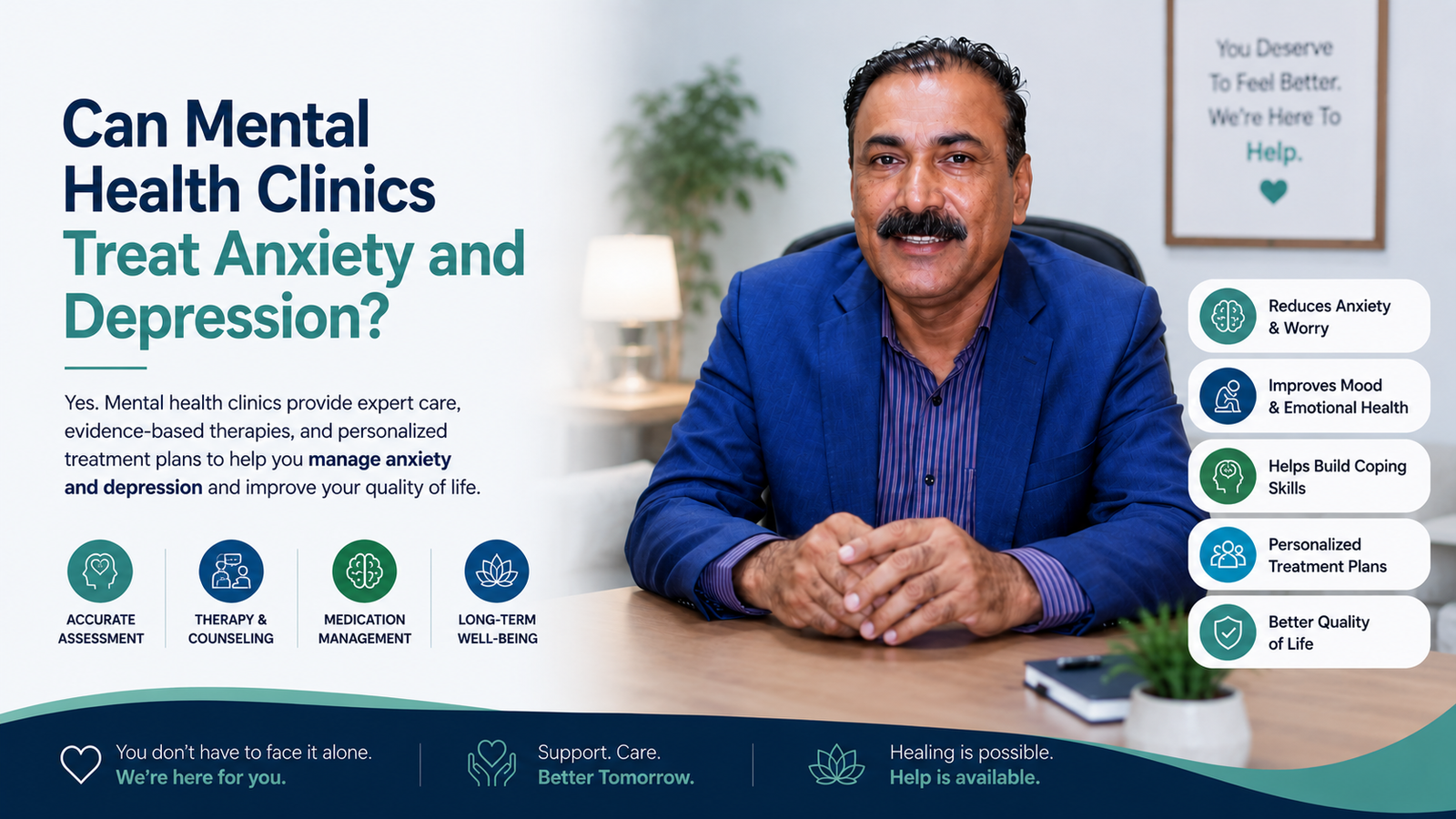
Yes. These are among the most common conditions treated in a behavioral health clinic.
Anxiety Treatment
People often seek help for:
- Generalized anxiety
- Panic attacks
- Social anxiety
- Health anxiety
- Phobias
Treatment may include:
- Cognitive Behavioral Therapy
- Mindfulness therapy
- Relaxation exercises
- Medication management
- Stress management techniques
Research consistently shows CBT is one of the most effective therapies for anxiety disorders.
Depression Treatment
Depression involves much more than temporary sadness.
Common symptoms include:
- Persistent sadness
- Loss of interest
- Fatigue
- Sleep disorders
- Feelings of hopelessness
- Difficulty concentrating
- Changes in appetite
Treatment may involve:
- Psychotherapy
- Medication
- Lifestyle counseling
- Group therapy
- Family support
- Behavioral activation techniques
Most people improve significantly when treatment begins early.
What Happens During a Mental Health Assessment?
Many first-time patients worry they will be judged or pressured during their appointment.
In reality, assessments are simply conversations designed to help professionals understand your situation.
A typical assessment includes:
Assessment Area | Purpose |
Symptoms | Identify emotional concerns |
Medical history | Rule out physical causes |
Family history | Evaluate inherited risks |
Lifestyle | Assess contributing factors |
Sleep habits | Detect sleep-related issues |
Work and relationships | Measure daily functioning |
Emotional wellbeing | Develop treatment goals |
Everything discussed remains confidential except in rare situations involving immediate safety concerns.
Which Mental Health Professionals Work in These Clinics?
Several specialists may work together to provide comprehensive care.
Psychologist
Focuses on psychological assessment, diagnosis, and therapy.
Ideal for:
- Anxiety
- Depression
- Trauma
- OCD
- ADHD
- Stress management
Psychiatrist
A medical doctor specializing in psychiatric disorders.
Can:
- Diagnose complex conditions
- Prescribe medications
- Manage treatment plans
- Monitor medication side effects
Licensed Therapist
Provides counseling and psychotherapy for emotional, behavioral, and relationship concerns.
Mental Health Counselor
Helps patients improve coping skills and emotional resilience through structured counseling sessions.
Behavioral Therapist
Uses evidence-based behavioral interventions to help patients change unhealthy thought patterns and behaviors.
Are Therapy and Medication Always Required?
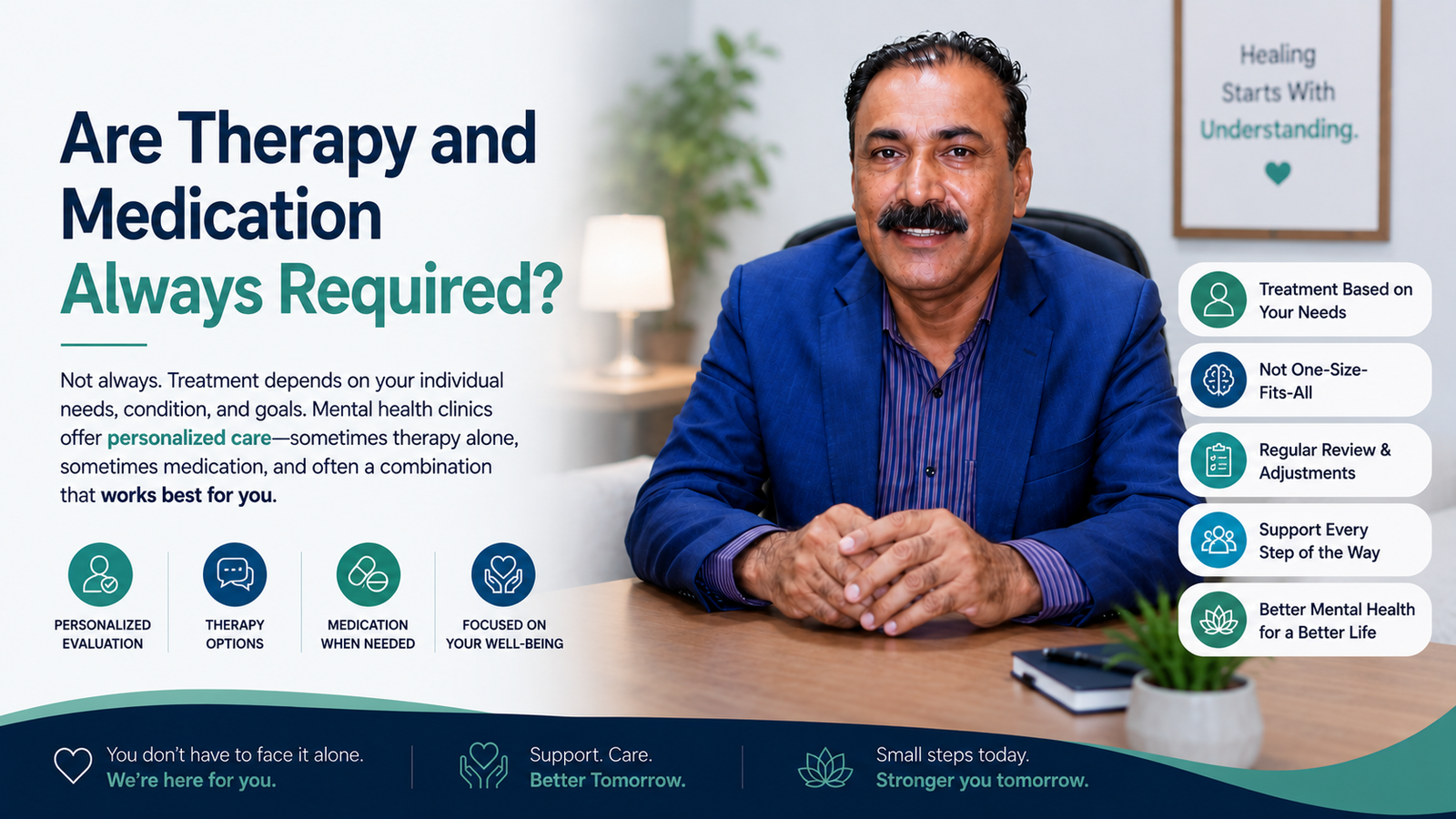
No.
Treatment depends entirely on the diagnosis and individual needs.
Many people recover successfully through therapy alone, particularly those experiencing:
- Mild anxiety
- Workplace stress
- Relationship problems
- Grief
- Burnout
- Life transitions
Medication may be recommended when symptoms become moderate to severe or significantly interfere with daily functioning.
Trusted organizations such as the World Health Organization (WHO) and the American Psychiatric Association (APA) emphasize that effective mental healthcare should be personalized rather than relying on a one-size-fits-all approach.
How Do You Choose the Best Mental Health Clinics?
Choosing the right clinic can feel overwhelming, especially when you’re already dealing with emotional stress.
Instead of searching only for the best mental health clinics near me, evaluate a few important factors.
Look for licensed professionals
A quality clinic should have qualified:
- Psychiatrists
- Clinical psychologists
- Licensed therapists
- Mental health counselors
- Behavioral therapists
Check the services offered
Some clinics focus only on medication management, while others provide comprehensive care, including:
- Psychotherapy
- CBT therapy
- DBT therapy
- Family therapy
- Couples counseling
- Child counseling
- Addiction therapy
- Trauma counseling
Consider accessibility
Ask practical questions such as:
- Do they offer same day mental health clinic appointments?
- Is there a walk in mental health clinic option?
- Do they provide online mental health clinic services?
- Do they accept insurance?
Read patient reviews
Look for feedback about:
- Professionalism
- Wait times
- Communication
- Privacy
- Treatment outcomes
What Is the Difference Between Private and Community Clinics?
Feature | Private Mental Health Clinic | Community Mental Health Center |
Cost | Usually higher | Often lower |
Wait times | Shorter | May be longer |
Insurance | Varies | Often accepted |
Specialized services | More extensive | Basic to moderate |
Availability | Appointment-based | Community access |
Can Mental Health Clinics Treat PTSD, OCD, ADHD, and Bipolar Disorder?
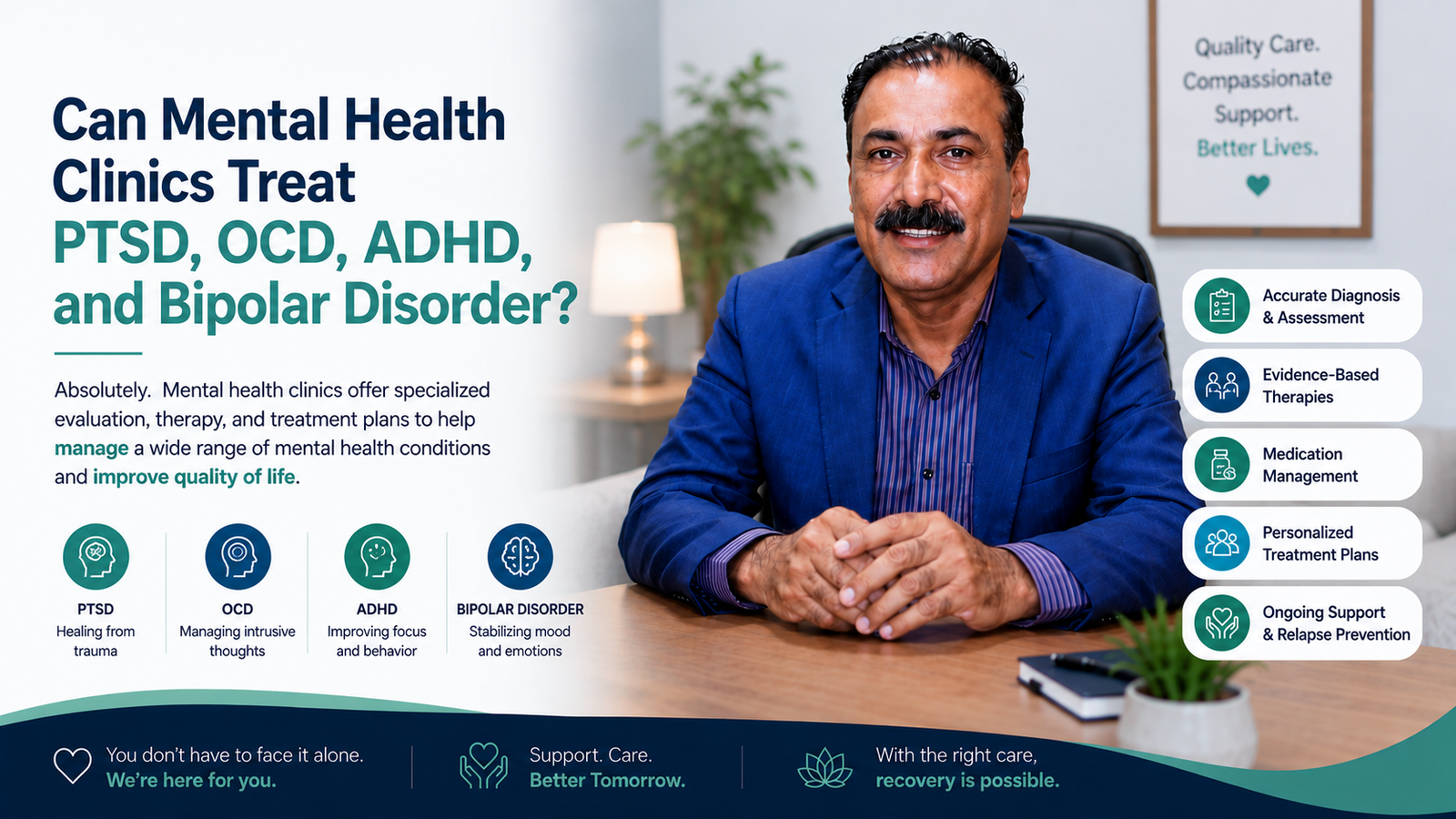
Yes. Many clinics provide specialized care for complex mental health conditions.
PTSD (Post-Traumatic Stress Disorder)
Trauma therapy may include:
- Trauma-focused CBT
- EMDR (where available)
- Trauma counseling
- Stress management therapy
OCD (Obsessive-Compulsive Disorder)
Evidence-based treatment often includes:
- CBT with Exposure and Response Prevention
- Medication management
- Behavioral therapy
ADHD
Adults and children may receive:
- Psychological assessment
- Behavioral interventions
- Executive functioning support
- Medication when appropriate
Bipolar Disorder
Treatment typically involves:
- Psychiatric evaluation
- Mood stabilization
- Psychotherapy
- Family education
- Long-term monitoring
Do Mental Health Clinics Offer Services for Children and Teenagers?
Absolutely. Many clinics have dedicated child psychology clinic and adolescent mental health clinic programs.
Common concerns in children
- ADHD
- Anxiety
- Behavioral problems
- School difficulties
- Social challenges
- Emotional regulation issues
Common concerns in teenagers
- Depression
- Social anxiety
- Academic stress
- Self-esteem issues
- Family conflict
- Substance use concerns
Early intervention can significantly improve long-term outcomes.
Are There Specialized Clinics for Women and Men?
Yes. Some centers offer women’s mental health clinic and men’s mental health clinic services.
Women’s mental health services may include
- Pregnancy-related emotional support
- Postpartum mental health care
- Hormone-related mood concerns
- Trauma counseling
- Relationship counseling
Men’s mental health services may include
- Stress management
- Anger management
- Depression treatment
- Work-related burnout
- Addiction counseling
How Much Does a Mental Health Clinic Cost?
Costs vary by country, city, clinic type, and provider credentials.
Common factors affecting cost
- Initial psychiatric evaluation
- Therapy session length
- Psychologist vs psychiatrist fees
- Insurance coverage
- Online vs in-person visits
- Specialized treatment programs
What Are the Benefits of Online Mental Health Clinics?
Online therapy has become increasingly popular because it offers:
- Convenience
- Privacy
- Access from home
- Reduced travel time
- Greater provider choice
- Flexible scheduling
It can be particularly helpful for people with busy schedules, mobility limitations, or social anxiety.
What Mistakes Should You Avoid When Seeking Mental Health Care?
Common mistakes
- Waiting too long to seek help
- Stopping therapy after a few sessions
- Discontinuing medication without medical advice
- Choosing a clinic based only on price
- Hiding important symptoms from clinicians
- Expecting instant results
Expert Tips for Getting Better Results From Therapy
To maximize progress
- Attend sessions consistently.
- Be honest about your symptoms.
- Practice coping skills between appointments.
- Track mood changes and triggers.
- Involve trusted family members when appropriate.
- Discuss goals openly with your therapist.
Finding Mental Health Support in Karachi
Local SEO
People searching for mental health clinics in Karachi, psychiatrist clinic Karachi, psychologist clinic Karachi, or therapy clinic Karachi should look for clinics that offer:
- Licensed mental health professionals
- Confidential care
- Comprehensive assessments
- Evidence-based therapy
- Emergency support options
- Child and adult services
How Can You Find the Right Mental Health Clinic in Karachi?
If you’re searching for mental health clinics in Karachi, take time to compare your options before booking an appointment.
The right clinic should match your needs, budget, and treatment goals.
Consider these factors:
- Qualified psychologists and psychiatrists
- Evidence-based therapies such as CBT and DBT
- Individual, family, and couples counseling
- Child and adolescent mental health services
- Medication management, if required
- Emergency or crisis intervention services
- Online consultation options
- Transparent pricing and appointment policies
Whether you need a psychiatrist clinic Karachi, a psychologist clinic Karachi, or a behavioral health clinic Karachi, choosing a reputable provider increases the likelihood of receiving safe, effective, and compassionate care.
What Are the Benefits of Visiting Mental Health Clinics Early?
Seeking professional support at the first signs of emotional distress offers several advantages.
Key Benefits
- Earlier diagnosis of mental health conditions
- Faster access to appropriate treatment
- Reduced risk of symptoms becoming more severe
- Better work and academic performance
- Healthier relationships
- Improved emotional resilience
- Higher quality of life
- Better long-term mental wellbeing
Many people delay treatment because they worry about stigma.
In reality, asking for help is a proactive step toward protecting your health, just as you would seek medical care for a physical illness.
What Are the Signs That You Should Seek Immediate Help?
While many mental health concerns can be managed through scheduled appointments, some situations require urgent attention.
Seek immediate professional or emergency assistance if you or someone you know experiences:
- Suicidal thoughts or plans
- Thoughts of harming others
- Severe panic attacks that do not improve
- Hallucinations or delusions
- Extreme confusion or disorientation
- Sudden loss of contact with reality
- Dangerous substance misuse
- Inability to care for basic daily needs
Prompt intervention can save lives and improve recovery outcomes.
Frequently Asked Questions
What do mental health clinics do?
Mental health clinics assess, diagnose, and treat emotional, behavioral, and psychological conditions.
They offer services such as counseling, psychotherapy, psychiatric evaluations, medication management, and crisis intervention.
Can mental health clinics treat anxiety and depression?
Yes. Most clinics provide evidence-based treatments for anxiety and depression, including Cognitive Behavioral Therapy (CBT), psychotherapy, medication management when needed, and stress management techniques.
Do I need a referral to visit a mental health clinic?
In many countries, you can book an appointment directly without a referral. However, some insurance plans or healthcare systems may require a referral from a primary care physician. It’s best to check with the clinic or your insurance provider.
What happens during the first appointment?
Your first visit typically includes a mental health assessment, discussion of your symptoms, medical and family history, lifestyle factors, and treatment goals. Based on this evaluation, the clinician will recommend a personalized care plan.
How do I choose the best mental health clinic?
Look for licensed professionals, evidence-based treatment methods, positive patient reviews, transparent pricing, confidentiality, and services that match your specific needs. A clinic that provides personalized treatment plans and ongoing support is usually the best choice.
Conclusion
Choosing the right mental health clinics can be one of the most important decisions you make for your emotional and psychological wellbeing.
Professional care is not limited to severe mental illness—it also supports people dealing with anxiety, depression, stress, trauma, relationship challenges, grief, and everyday emotional difficulties.
The best outcomes often come from early intervention, evidence-based therapy, personalized treatment plans, and ongoing support from licensed mental health professionals.
Whether you prefer in-person care or an online consultation, taking the first step today can lead to meaningful improvements in your quality of life.
If you or a loved one has been struggling emotionally, don’t wait for symptoms to worsen.
Reach out to a qualified mental healthcare provider, schedule an assessment, and begin your journey toward better mental wellbeing with confidence.