Author name: qasim.hafeez@hotmail.com

Delusional Disorder
Blog

Delusional Disorder: Why Do So Many People Miss the Early Warning Signs?

Delusional Disorder |  Published: Feb 19, 2026 Delusional Disorder Why Do So Many People Miss the Early Warning Signs More on : All Blogs youtube-app Summarize this post with Chat GPT Perplexity [chatgpt_button] Delusional Disorder is a serious mental health condition in which a person strongly believes something that is not true, even when there is clear evidence against it. These are dogmas that are entrenched. They are not mere confusions or usual suspicions. They are potent concepts that determine how an individual views the world. Most families do not pay attention to the initial signs in time since an individual may appear normal in their day-to-day life. They can act, speak, and behave normally under most circumstances. The issue lies within one or more beliefs that do not allow change. This complicates the situation of identifying the condition initially. When left untreated, Delusional Disorder can damage relationships, careers, and emotional stability. This is the reason why it is significant to be aware at an early age. Book An Appointment For Best Treatment What Are the Delusional Disorder Symptoms That Families Often Miss? Delusional disorder symptoms usually revolve around one main false belief. Speech and behavior can be organized, unlike in other psychotic disorders. The individual does not have to look bewildered. It is due to this reason that a lot of individuals put off seeking help. The typical symptoms are ongoing conviction in: A person believes someone is in love with them without evidence. A person believes their partner is unfaithful without proof. A person believes they are being followed or harmed. A person believes they have a serious illness despite medical reassurance. A person believes they have special powers or a unique identity. The belief is equal to the emotional response. They can respond with anger or fear if they feel like a victim. They can be confident in their actions if they think they are superior. These are beliefs that can at least be sustained over one month, and they are not that easy to forget. It is usually the case that family members believe that it is stubbornness or character traits. As a matter of fact, these are clinical signs that need to be assessed. How Does Delusional Disorder DSM 5 Define the Condition? The Delusional disorder DSM 5 criteria provide a clear medical framework for diagnosis. This guide says that an individual has to experience one or more delusions that persist for at least a month. That person should not qualify as being the full-scale schizophrenic. Acting in the real world and daily functioning are comparatively intact. The Diagnostic and Statistical Manual of Mental Disorders, Fifth Edition, also mentions that hallucinations are also mild and associated with delusions, in case they exist. As an illustration, an individual who feels that he/she has an infection will experience body sensations. This systematic definition is useful in assisting mental health experts to properly diagnose. It helps to avoid being confused with other psychotic disorders as well. How Is Delusional Disorder ICD 10 Classified in Medical Systems? The Delusional disorder ICD 10 classification is used worldwide in hospitals and clinics. In this system, the condition falls under persistent delusional disorders. The code assists the doctors in recording and following up on cases regardless of the country. This global system of classification has made the diagnosis and treatment standards the same all over the world. It assists in research as well as insurance records. Both systems, DSM and ICD, collaborate to achieve professional accountability and clinical accuracy. What Is the Difference Between Delusional Disorder vs Schizophrenia? Many people confuse Delusional disorder vs schizophrenia because both involve false beliefs. Nevertheless, there exist major differences. A schizophrenic is likely to have disorganised speech, severe hallucinations, and social withdrawal that is evident. Ways of thinking are evidently interrupted. The normal day-to-day life is greatly affected. In Delusional Disorder, thinking outside the specific belief usually remains logical. The individual can cope with daily tasks. There are few or no hallucinations. The delusion may be based on a single theme. This distinction matters since the treatment planning requires proper diagnosis. Labeling can postpone quality care. What Causes Delusional Disorder to Develop? There is no single cause. Studies indicate that there is a biological, psychological, and environmental combination. Brain chemistry can also be involved, especially the use of dopamine. In case there is a family history of psychotic disorders, genetics may predispose it. Social isolation could also tend to heighten vulnerability. Symptoms of people at risk are sometimes brought about by stressful life events. It can also be caused by trauma and long-term emotional stress. Each case is unique. Contributing factors should be well measured with the help of a qualified mental health professional. What Is Grandiose Delusional Disorder and How Does It Present? Grandiose delusional disorder involves a strong belief that the person has exceptional abilities, wealth, intelligence, or fame. They can feel that they have found something revolutionary in the world or that they have a secret relationship with influential people. This belief is not as simple as confidence, and this is maintained even when there is strong evidence to the contrary. It can cause imprudent financial choices or poor relationships. The reason is that family members seem confused due to the fact that the person seems to be confident and ambitious. The contrast is in the immobility of the belief and the denial of reality. How Do Doctors Perform a Delusional Disorder Test? There is no single laboratory Delusional disorder. It needs a thorough psychiatric diagnosis. Interviews are done by a licensed psychiatrist or a clinical psychologist. They assess medical history, mental history, and behavior patterns. They exclude the use of substances, neurological disorders, and other psychiatric disorders. Clinical judgment takes centre stage, although the professional may rely on structured assessment tools. Diagnostic precision is enhanced when truthfulness and frankness are exercised in the process of evaluation. Early evaluation results in improved performance. What Are the Most Effective Delusional Disorder Treatment Options?
Blog

Acute Psychotic Disorder: Sudden Mental Health Crisis You Should Never Ignore

Acute Psychotic Disorder |  Published: Feb 12, 2026 Acute Psychotic Disorder: Sudden Mental Health Crisis You Should Never Ignore More on : All Blogs youtube-app Summarize this post with Chat GPT Perplexity [chatgpt_button] Mental health problems do not always grow slowly. They may sometimes come unexpectedly and totally transform the thoughts, emotions, and behavior of a person within days. This abrupt transition usually makes families confused, scared, and helpless. One such serious condition is Acute Psychotic Disorder. Most individuals believe that psychosis only occurs when someone is mentally ill in the long term, but this is not necessarily always the case. Acute psychotic disorder can begin suddenly in a person who previously seemed mentally healthy. The individual can begin to receive voices of seeing things that do not exist or thinking of things that do not make sense to others. Such symptoms are scary not only to the patient but also to their loved ones. The greatest area of pain is awareness. The delay in treatment is often caused by the fact that the families believe that the condition will resolve itself on its own. Unfortunately, such a latency may aggravate symptoms. Premature medical attention is very significant in healing. The following article will also explain what this disorder is and why it occurs, as well as how doctors arrive at a diagnosis of this disorder and how it is treated to enable the individuals to resume normal life. Book An Appointment For Best Treatment Acute Psychotic Disorder Acute Psychotic Disorder is a mental health condition in which a person suddenly loses touch with reality for a short period of time. The symptoms tend to set in fast within a few days, and this can take a few weeks to a few months. This disorder is usually temporary, unlike chronic psychotic illnesses, provided it is treated properly. At this stage, the brain is not able to put thoughts, emotions, and perceptions into proper processing. The individual could turn suspicious, fearful, or get so confused. Speech can become disordered, and behavior can be spontaneously altered. The onset is fast, and this complicates the situation because many families confuse it with stress or emotional weakness, which postpones professional assistance. Health specialists believe that this condition is severe and can be managed. Most of the patients are able to recuperate once they receive timely psychiatric care and get back to their routine. Acute Psychotic Disorder Treatment Acute psychotic disorder treatment focuses on stabilizing the mind and reducing symptoms as quickly as possible. The initial treatment is normally started in a hospital or a psychiatric facility, particularly when the symptoms are severe. Medication is significant in the suppression of hallucinations, delusions, and agitation. Antipsychotics are normally used in controlled doses. Some of the examples include the use of medicines by doctors to treat cases of anxiety or sleep. Psychological assistance is also significant. As soon as the symptoms start settling, therapy assists the patient in working through the experience and alleviating the fear. Family education is also included in treatment because emotional support enhances the recovery rate. Early treatment yields positive results in most patients within weeks. Consistent follow-ups guarantee the absence of relapses and the possibility of reducing medication safely with the help of a doctor. Acute Psychotic Disorder DSM 5 According to the DSM 5 classification, acute psychotic disorder falls under brief psychotic disorders. According to the DSM 5, it is a psychotic outbreak that suddenly develops psychotic symptoms, including hallucinations delusion or disorganized speech that lasts at least one day but is less than one day or one month. The criteria are clear that the symptoms come about without a substance use medical illness or another mental disorder. This assists the doctors in isolating it as schizophrenia or mood related psychosis. DSM 5 focuses on sudden onset, implying that symptoms develop within two weeks or even less. One of the best attributes of diagnosis that doctors utilize is this suddenness. Acute Psychotic Disorder ICD 10 In the ICD 10 classification, acute psychotic disorder is listed under acute and transient psychotic disorders. The system is popular across borders in terms of diagnosis and insurance records. According to ICD10, it is a minor, temporary psychotic disorder with a quick onset and full recovery in the vast majority of cases. Onset is typically associated with stressful life events, including trauma, loss, or pressure to an extreme level. This category underscores the fact that the symptoms tend to improve in three months. When the symptoms persist past that time, physicians can re-examine the diagnosis. Acute Psychotic Disorder PPT Many medical students and mental health educators prepare acute psychotic disorder PPT presentations to explain the condition clearly. The causes, symptoms, diagnosis, treatment, and prognosis are normally discussed during these presentations. PPT learning content can assist medical workers in becoming aware of protective symptoms in clinical education. Early identification produces quicker referral and better patient outcomes. Such presentations are also used in the training of staff and mental health awareness programs in hospitals. Acute Psychotic Disorder vs Schizophrenia Among the prevailing fears of the families is whether acute psychosis implies schizophrenia. The fact is, they are not alike. Acute psychotic disorder appears suddenly and often resolves fully with treatment. Schizophrenia is a chronic, long-term disease. Acute psychosis personality normally stays unaffected even after the recovery, whereas schizophrenia influences day to day functioning over the years. Another significant difference is duration. Acute psychosis runs between weeks to months, and schizophrenia is managed on long basis. Early improvement strongly suggests an acute psychotic disorder rather than schizophrenia. Physicians observe patients keenly before arriving at a final diagnosis to prevent wastage of labels. Acute Psychotic Disorder Duration The duration of acute psychotic disorder varies depending on severity and treatment timing. The symptoms, in most instances, take between two weeks and three months. Certain patients are able to pick up after taking a few days. Other people would take time, particularly when there was a delay in treatment. Medical follow

Addiction and related disorders
Blog

Addiction and Related Disorders: Understanding Causes, Impact, and Treatment

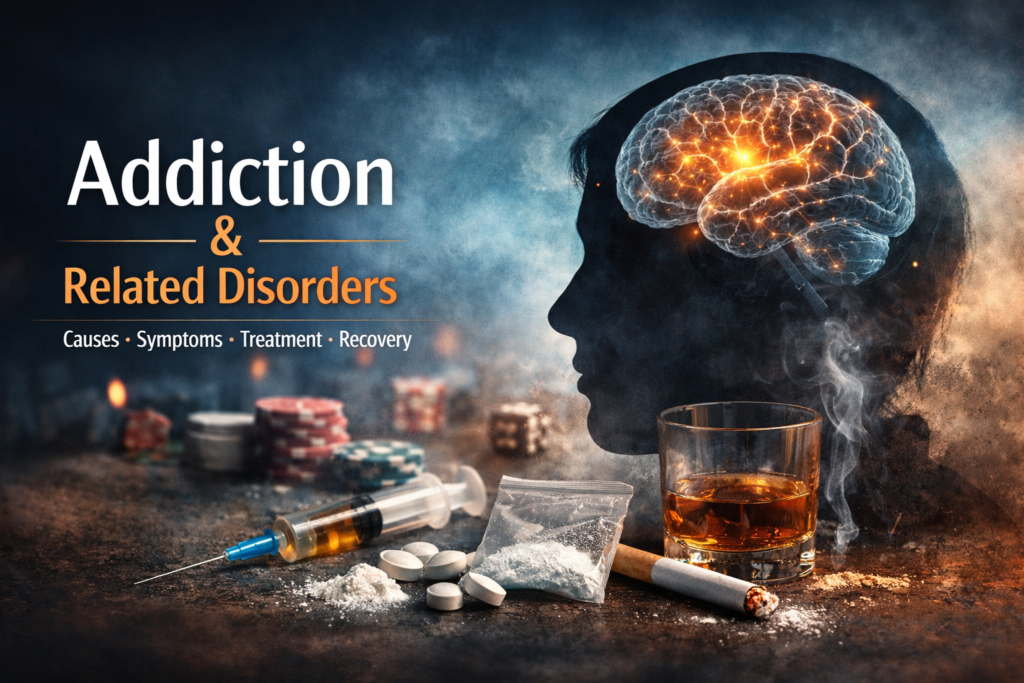
Addiction and Related Disorder  |  Published: December 25, 2025 Addiction and Related Disorders: Understanding Causes, Impact, and Treatment More on : All Blogs youtube-app Summarize this post with Chat GPT Perplexity [chatgpt_button] Addiction and related disorders represent one of the most complex and misunderstood challenges in modern mental health. For many years, addiction was considered to be a moral failure or a failure of will. Medical science today is very clear about the fact that addiction is a chronic psychiatric illness that influences how the brain works, how the person controls their emotions, behavior, and decision-making. It is an illness that may happen to anybody irrespective of their age, gender, education, or even social background. Addiction has emerged as a new social health problem in such countries as Pakistan. The problem of substance use disorders, behavioral addictions, and co-occurring psychiatric illnesses is being noted distinctly more in adolescents, adults, and even the older generations. Addiction is a scientific and compassionate disease to treat and recover from in the long term. Book An Appointment For Best Treatment What Is Addiction? Addiction is a psychiatric health problem that is marked by compulsive involvement with a substance or activity, even following its damaging effects. An addictive person will go on with the practice despite its harm to physical health, emotional stability, relationships, professional life, and social life. Addiction is characterised by the loss of control. The person might desire to quit, but s/he is unable to do so. Medically, the addiction changes the reward system of the brain. Constant exposure to addictive drugs or habits causes alterations of neurotransmitters, including dopamine, which significantly contributes to pleasure, motivation, and learning. With time, the brain starts to require the addictive drug or activity to achieve a normal status, and hence it is so hard to stop the drug use or activity without professional assistance. Addiction as a Brain Disorder The current neuroscience proves that addiction is not merely a behavior problem, but a disorder of the brain. The physical alterations of brain circuits involved in judgment, impulse control, memory, and emotional regulation are caused by long-term substance use or compulsive behaviors. Such changes are the reason why addicted people usually act in ways that appear crazy or self-destructive. When an individual is already addicted, the brain becomes more concerned with the addictive substance or behavior rather than with other needs such as family, work, and personal security. This is the reason why only punishment, shame, or moral pressure cannot effectively treat addiction. It is necessary to treat it medically and psychologically. Types of Addiction and Related Disorders Addiction and related disorders can broadly be divided into substance-related addictions and behavioral addictions. Drug-related addictions are abuses of drugs like heroin, cannabis, cocaine, methamphetamine, alcohol, nicotine, and prescription drugs like sedatives or painkillers. These chemicals have a direct impact on brain chemistry and can frequently lead to physical addiction and withdrawal. Behavioral addictions, however, do not imply chemical substances, although they also stimulate the same reward systems in the brain. These are gambling disorder, addiction to the internet and social media, gaming addiction, pornography addiction, and compulsive shopping. Behavioral addictions might not cause any physical effects of withdrawal, but their psychological effects can be as damaging. Others also end up having what is referred to as dual diagnosis, where addiction is accompanied by another mental illness like depression, anxiety, bipolar disorder, or personality disorders. Under this condition, both conditions should be remedied to achieve successful recovery. Causes of Addiction No single cause of addiction exists. It is formed as a result of a complicated combination of biological, psychological, and social factors. Genetics is also a factor to consider, because people who have a family history of addiction are more susceptible. Early exposure to substances and brain chemistry also makes one prone to risk. Addiction is largely caused by psychological reasons, including trauma, chronic stress, child neglect, emotional abuse, and untreated mental illnesses. A large number of people turn to the use of substances or behaviors as a way of coping to avoid emotional pain, loneliness, or anxiety. Addiction is also affected by social and environmental factors. Vulnerability is heightened by peer pressure, unstable families, unemployment, social isolation, and easy access to drugs. These causes will assist in changing the blame game to that of treatment and prevention. Signs and Symptoms of Addiction Addiction occurs in the form of a broad spectrum of symptoms in terms of physical, emotional, and behavioral symptoms. The usual behavior characteristics are secrecy, lying, loss of social contact with family and friends, deterioration in employment or school work, and risky behaviors. The emotional symptoms may be mood swings, irritability, anxiety, depression, and emotional numbness. The physical symptoms are dependent on the substance or behavior and can include appetite changes, sleep issues, loss or gain of weight, poor hygiene, and unexplained health issues. Addiction is characterized by psychological symptoms like extreme cravings, failure to give up, and compulsive thoughts about the addictive action. Recognizing these symptoms early can significantly improve treatment outcomes. Impact of Addiction on Individuals and Families Addiction not only impacts an individual, but it also affects families and society. On the body, addiction may cause serious health conditions such as liver disease, heart issues, brain damage, immunosuppression, and susceptibility to infectious diseases. The effects of this on mental health are an increase in depression, anxiety, psychosis, and suicidal behavior. Socially, addiction tends to cause broken relationships, domestic strife, loss of jobs, financial instability, and even legal troubles. Families suffer emotional distress, guilt, anger, and powerlessness. Young children raised in families with addicts are more vulnerable to emotional disturbances and behavioral disorders. The effect of addiction shows the significance of early intervention and full treatment. Treatment of Addiction and Related Disorders Addiction is a disorder that needs to be treated in an organized, personalized, and evidence-based manner. The initial intervention is an in-depth assessment of the psychiatric status of the patient to establish the type of addiction, severity of addiction, mental health,

Mental HealthCare
Blog

What Is Mental Health? A Complete Guide to Mental HealthCare

Mental Health  |  Published: December 12, 2025 What Is Mental Health? A Complete Guide to Mental HealthCare More on : All Blogs youtube-app Summarize this post with Chat GPT Perplexity [chatgpt_button] Mental HealthCare is an essential part of a person’s overall well-being because it influences how we think, feel, and behave in our daily lives. It is extremely crucial in determining the way we cope with stress, our decisions, the relationships we form, and the emotional equilibrium we achieve. With adequate support and guidance, individuals stand a better chance of dealing with depression, anxiety, bipolar disorder, addiction, and a host of other things that may affect their lives. Good mental health does not mean not having an illness; it is the capacity to derive pleasure out of life, remain strong in hard situations, and have valuable relationships with others. Nonetheless, mental health may deteriorate once emotional stress, traumatic events, or lifestyle issues are too intense. This is where effective Mental HealthCare becomes crucial, ensuring people receive the help they need to restore balance and stability. This comprehensive guide explains the meaning of mental health, its risk factors, common disorders, symptoms, diagnosis, treatment options, myths, and long-term outlook, all while emphasizing the importance of reliable Mental HealthCare. Book An Appointment Meaning and Definition of Mental Health According to the World Health Organization (WHO),“Mental health is a state of well-being where individuals realize their abilities, cope with normal stresses of life, work productively, and contribute to their community.” This definition emphasizes that mental health encompasses emotional strength, cognitive ability, and social bond. It does not merely concentrate on averting some disease but concentrates on cultivating strong points, talents, and general psychological development. Data released by the National Alliance on Mental Illness (NAMI) in the U.S. indicates that an adult out of 5 experiences a mental issue annually. The National Institute of Mental Health (NIMH) also says that over 14 million Americans have a serious mental condition. These numbers show why improved access to quality Mental HealthCare is more important than ever. Risk Factors for Mental Health Conditions Human beings can be victims of mental disorders. They are not discriminatory in terms of age, gender, income, or ethnicity. Regardless, there are factors that result in predisposition to these conditions. 1. Socioeconomic Pressure Individuals who are financially strained, unemployed, discriminated against, and socially unequal tend to have more emotional strain. These pressures can reduce access to proper Mental HealthCare, making individuals more vulnerable to depression, anxiety disorders, or chronic stress. Mental well-being can be enhanced by modifiable elements such as education, employment, and social support. Some of the non-modifiable factors that may influence the acquisition or experience of mental health challenges may include age, gender, and ethnicity. Research consistently shows that women and economically disadvantaged groups have fewer resources for Mental HealthCare, making early detection and treatment more difficult. 2. Childhood Adversity The development of emotions depends on childhood experiences. Abuse, neglect, loss of a parent or personality, or an unstable home environment can have a profound impact on the brain development of a child and their ability to regulate emotions. Adults that had undergone some form of adversity during childhood have a high probability of developing anxiety disorder, PTSD, or depression. Early access to Mental HealthCare can prevent long-term emotional damage. 3. Biological and Genetic Factors A mental illness, hormonal, neurological, or chronic medical history in the family can make a person more vulnerable. Other conditions, such as diabetes, cancer, chronic pain, and thyroid imbalances, usually cause emotional stress, which can cause or increase mental illnesses. This is why doctors today integrate physical and Mental HealthCare together for accurate diagnosis and treatment. Types of Mental Health Disorders The mental health disorders are divided by professionals into some major groups. The most common ones are explained in detail below. 1. Anxiety Disorders Anxiety disorders are described as recurrent worry, fear, or nervousness, which disrupt normal daily operations. These are very widespread diseases, which impact millions of people throughout the world. Generalized Anxiety Disorder (GAD) Individuals affected by GAD worry constantly and uncontrollably, even in the absence of a threat. They can experience bodily stress, psychological burnout, or lack of concentration. Panic Disorder This disorder can result in sudden, intense panic attacks that involve such symptoms as chest pain, dizziness, sweating, trembling, and fear of losing control. Phobias Phobias can be described as an extreme fear of certain situations or objects that do not pose a threat or have very minimal threat. Examples may be fear of heights, fear of animals, fear of speaking before a crowd, or fear of being in a confined area. Obsessive-Compulsive Disorder (OCD) OCD is a disorder that entails intrusive and unwanted thoughts (obsessions) and compulsive actions (compulsions). They can wash their hands many times, check locks, or arrange things in a specific sequence. Post-Traumatic Stress Disorder (PTSD) PTSD is formed following a traumatic experience in terms of violence, war, accidents, or natural disasters. The victims can re-experience the trauma, evade reminders, or experience feelings of being on high alert all the time. Effective Mental HealthCare, such as therapy and early intervention, can significantly reduce anxiety symptoms and help people regain control. 2. Mood Disorders Mood disorders influence the emotions of a person in the long term. Major Depressive Disorder This is a condition that is characterized by profound sadness, hopelessness, loss of interest in activities, low energy, and alteration in sleep or appetite. Work, relationships, and physical health are some of the areas that depression can touch. Bipolar Disorder Bipolar disorder is associated with mania (high energy, euphoria, impulsive behavior) and depression (low energy, sadness, fatigue). The episodes do not take minutes; they take weeks or months. Seasonal Affective Disorder (SAD) SAD is experienced in winter when there is limited sunshine. The individuals can be depressed, fatigued, and socially isolated. Proper Mental HealthCare helps individuals identify triggers and manage mood swings effectively. 3. Schizophrenia Spectrum Disorders These disorders impact thought, perception, emotions, and behavior. People can be hallucinated, deluded, and unable to

Tips to Manage Daily Stress
Blog

10 Effective Tips to Manage Daily Stress

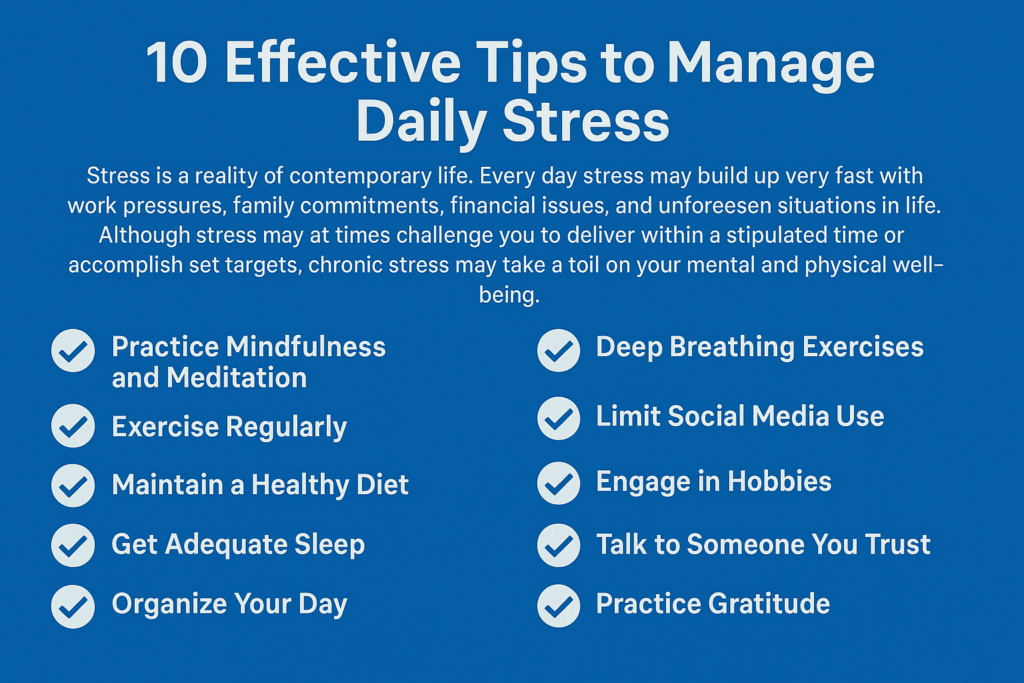
Effective Tips  |  Published: December 05, 2025 10 Effective Tips to Manage Daily Stress More on : All Blogs youtube-app Summarize this post with Chat GPT Perplexity [chatgpt_button] Stress is a reality of contemporary life. Every day stress may build up very fast with work pressures, family commitments, financial issues, and unforeseen situations in life. Although stress may at times challenge you to deliver within a stipulated time or accomplish set targets, chronic stress may take a toll on your mental and physical well-being. It may cause anxiety, depression, sleep disorders, hypertension, and low immunity. The positive thing is that stress can be dealt with. With the help of efficient coping skills, you will be able to eliminate stress, become more emotionally resilient, and overall feel better. These are 10 tips to Manage Daily Stress. Book An Appointment Tips to Manage Daily Stress Here are 10 tips to Manage Daily Stress: 1. Practice Mindfulness and Meditation Stress reduction is an effective stress-reducing mechanism that involves mindfulness and meditation. Mindfulness can be described as the act of being attentive to the present without making judgments about it, and this can aid in your reaction to stress in a more relaxed manner. When meditating, on the other hand, you give your mind a rest, get better concentration, and even balance your emotions. Tips: Start with 5–10 minutes daily and gradually increase the duration. Use guided meditation apps or YouTube sessions for beginners. Practice mindful breathing by focusing on your inhale and exhale. Research shows that regular meditation may reduce the amount of cortisol levels, the hormone that causes stress, and improve the overall mental state. 2. Exercise Regularly Physical activity is a natural stress reduction. Exercise releases endorphins, which are chemicals in the brain that act as natural mood boosters. Regular exercise also reduces levels of stress hormones like cortisol and adrenaline. Suggestions: Aim for at least 30 minutes of moderate exercise daily. Include cardio, strength training, or yoga to balance mind and body. Even a 15-minute walk outdoors can improve your mood and energy. Exercise not only helps stress reduction but also enhances the quality of sleep, clarity of the mind, and emotional strength. 3. Maintain a Healthy Diet What you eat influences your mood. Stress due to bad nutrition may worsen it, whereas a balanced diet helps the brain to work properly and remain emotionally stable. Tips for a stress-reducing diet: Eat plenty of fruits, vegetables, whole grains, and lean proteins. Reduce caffeine, refined sugar, and processed foods that spike stress levels. Include foods rich in omega-3 fatty acids, magnesium, and vitamin B to support mental health. Water intake is also essential; sufficient water consumption is known to sustain not only vitality but also mental clarity to decrease crankiness and exhaustion. 4. Get Adequate Sleep Stress and sleep are too closely related. Stress in the long term may interfere with sleep, and the lack of sleep may elevate stress. Adults require 7-9 hours of good sleep to perform better. Tips for better sleep: Maintain a consistent sleep schedule. Avoid screens at least an hour before bedtime. Create a relaxing bedtime routine, such as reading or listening to soft music. Keep your bedroom dark, quiet, and cool. Sleep gives your brain time to process the emotional aspect, enhances memory, and boosts your immune system. 5. Organize Your Day Disorganization can heighten stress and make daily tasks feel overwhelming. Planning and time management reduce anxiety by providing structure and control. Tips: Use to-do lists, planners, or digital apps to schedule tasks. Break large tasks into smaller, manageable steps. Prioritize important tasks and learn to delegate when possible. Include short breaks to rest and recharge during the day. Proper organization creates a feeling of accomplishment, it eliminates the clutter of the mind and enhances confidence, and lowers stress. 6. Deep Breathing Exercises Breathing in and out deeply assists in the relaxation process in the body. Such exercises as diaphragmatic breathing or the 4-7-8 method relax the nervous system and slow down the heartbeat. Steps for the 4-7-8 technique: Inhale through your nose for 4 seconds. Hold your breath for 7 seconds. Exhale slowly through your mouth for 8 seconds. Repeat 4–5 times daily. The inclusion of breathing exercises in your daily routine can help you stay calm when faced with stressful circumstances at work, at home, or even in social situations. 7. Limit Social Media Use Where social media is used to connect us, it may also be a cause of anxiety, stress, and information overload. Being exposed to news all the time, comparisons, and online negativity may be detrimental to mental well-being. Tips: Set specific time limits for social media usage. Avoid checking social media before bed. Follow positive, motivational, or educational content instead of stress-inducing feeds. Even though it might be impossible to go without digital devices in a day, a digital detox, even a few hours a day, can be very helpful to relieve stress and enhance focus. 8. Engage in Hobbies Hobbies give a psychological reprieve from stress. Hobbies are relaxing and enhance emotional health, whether one is painting, reading, gardening, or playing a musical instrument. Tips: Dedicate at least 30 minutes a day to a hobby. Try new activities to stimulate creativity and boost mood. Use hobbies as a healthy coping mechanism instead of stress-eating or overworking. The pleasurable activities lower negative thoughts, increase dopamine, and make people happier. 9. Talk to Someone You Trust Discussing emotions with friends, relatives, or a mental health worker will take the load off. Professional therapy/counseling offers coping mechanisms that suit your needs. Tips: Be open and honest about your stress triggers. Don’t hesitate to seek professional help if stress becomes unmanageable. Join support groups or online communities with similar experiences. Social support enhances mental health and resilience and is strengthened by communication. 10. Practice Gratitude The concept of gratitude will change the positivity of stressors. Research indicates that gratitude practice has the potential to increase psychological well-being, negative affect, and improve well-being.

Scroll to Top