

The teenage years bring rapid emotional, physical, and social changes.
While many teenagers adjust well, others struggle with challenges that affect their daily lives, relationships, and academic performance.
A psychiatrist for teens specializes in diagnosing, treating, and managing mental health conditions that commonly develop during adolescence.
Early support can make a meaningful difference, helping young people build healthy coping skills and improve their overall well-being.
Parents often wonder whether their teenager’s behavior is a normal part of growing up or a sign of a deeper concern.
Mood swings, occasional stress, and changes in interests are common during adolescence.
However, persistent sadness, severe anxiety, self-isolation, or sudden personality changes may indicate a mental health condition that requires professional care.
Seeking timely help allows families to address problems before they become more difficult to manage.
This guide explains what a teen psychiatrist does, why adolescent mental health care matters, common conditions they treat, and how families can recognize when professional support may be beneficial.
What Is a Psychiatrist for Teens?
A psychiatrist for teens is a licensed medical doctor who specializes in diagnosing, treating, and preventing mental health disorders in adolescents.
This specialist combines medical training with expertise in child and adolescent psychology to provide personalized treatment plans for teenagers.
Unlike counselors or psychologists, psychiatrists can evaluate both emotional and physical factors that may influence mental health.
When necessary, they can prescribe medications while also recommending therapy, lifestyle improvements, family counseling, or school-based support.
A Teen Psychiatrist works closely with teenagers and their families to identify emotional, behavioral, and developmental concerns.
Every treatment plan considers the teenager’s age, symptoms, medical history, family environment, and daily routines.
Why Teen Mental Health Matters

Adolescence is a period when the brain continues to develop rapidly.
Emotional regulation, decision-making, and impulse control are still maturing.
During this stage, stressful life events, academic pressure, family conflicts, bullying, social media, and hormonal changes can increase the risk of mental health conditions.
When mental health challenges remain untreated, they may affect many areas of life, including:
- School performance and concentration
- Friendships and family relationships
- Self-confidence and emotional resilience
- Physical health and sleep quality
- Future education and career opportunities
Early diagnosis allows teenagers to receive appropriate support before symptoms become more severe.
Many young people recover successfully when they receive timely care from a Teen Mental Health Specialist.
Common Mental Health Conditions Treated by a Child and Adolescent Psychiatrist
A Child and Adolescent Psychiatrist treats a wide range of emotional and behavioral disorders that affect teenagers.
Some conditions appear gradually, while others develop after stressful or traumatic experiences.
Common conditions include:
- Anxiety disorders
- Depression
- Attention Deficit Hyperactivity Disorder (ADHD)
- Obsessive Compulsive Disorder (OCD)
- Panic disorder
- Bipolar disorder
- Eating disorders
- Post Traumatic Stress Disorder (PTSD)
- Social anxiety
- Behavioral disorders
- Sleep-related mental health concerns
- Self-harming behaviors
- Substance misuse linked to emotional health
Each teenager experiences symptoms differently.
Some may become withdrawn, while others show anger, irritability, or declining academic performance.
A detailed psychiatric evaluation helps identify the root cause and guides the most suitable treatment plan.
Signs That Indicate a Teen May Need a Psychiatrist
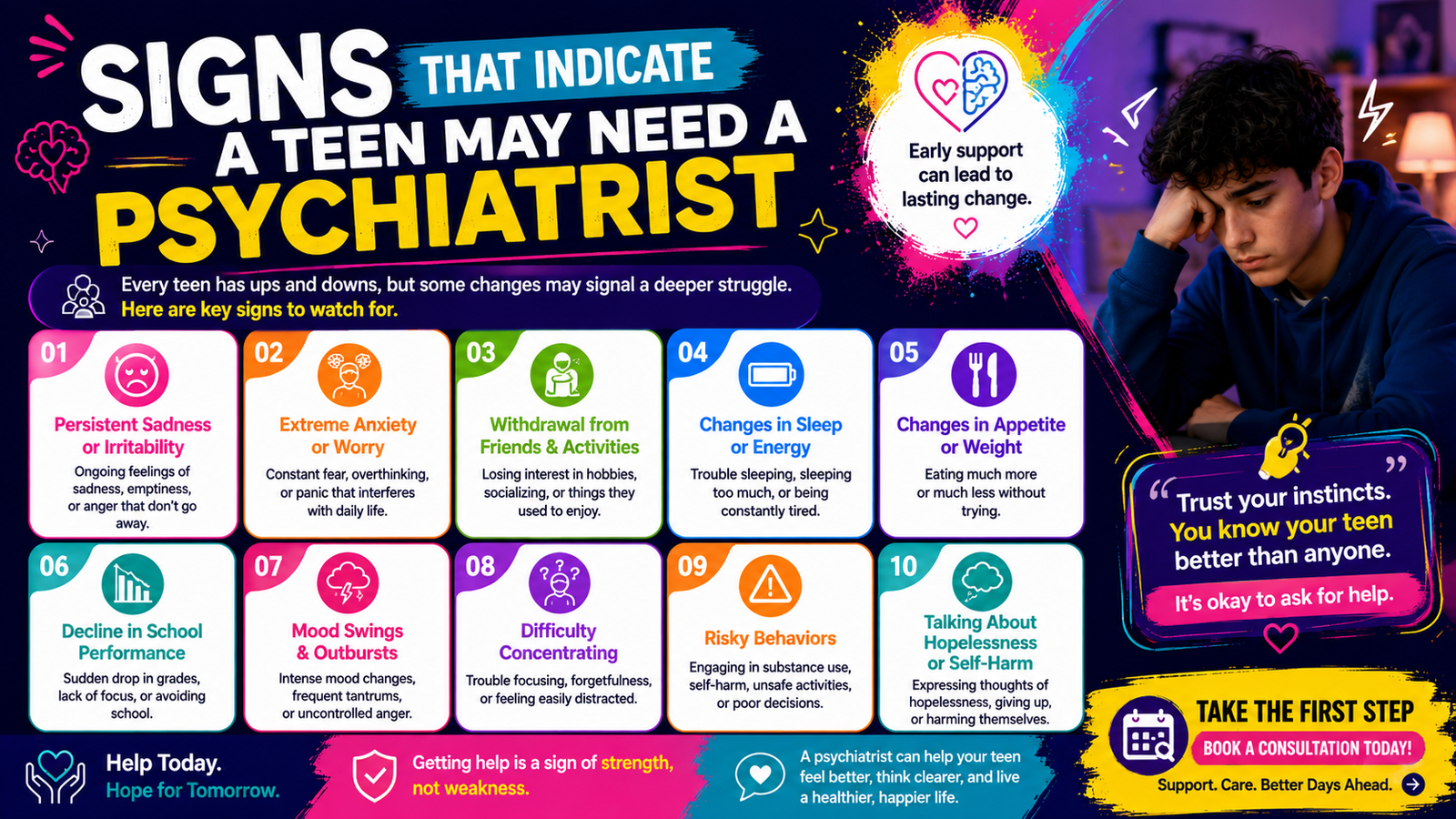
Parents often hesitate because they are unsure whether their teenager’s behavior is temporary or something more serious.
While every adolescent experiences emotional ups and downs, certain warning signs should never be ignored.
Signs to Watch For
- Persistent sadness lasting several weeks
- Frequent anxiety or panic attacks
- Sudden decline in school performance
- Withdrawal from friends and family
- Major changes in sleeping habits
- Significant changes in eating patterns
- Loss of interest in hobbies and favorite activities
- Aggressive or risky behavior
- Difficulty concentrating for long periods
- Repeated emotional outbursts
- Expressions of hopelessness
- Self-harm or thoughts of suicide
- Drug or alcohol misuse
- Extreme fear of social situations
These symptoms do not always indicate a psychiatric disorder, but they deserve careful evaluation.
Consulting a Psychiatrist for Adolescents can help determine whether the teenager is experiencing temporary stress or a condition that requires professional treatment.
How a Teenage Mental Health Doctor Evaluates a Teen
The first appointment usually focuses on gathering detailed information rather than making immediate treatment decisions.
A Teenage Mental Health Doctor aims to build trust so the teenager feels comfortable discussing personal thoughts and emotions.
The evaluation generally includes conversations about emotional health, school experiences, friendships, family relationships, medical history, sleep habits, and any recent life changes.
Parents also share observations about behavioral changes at home.
The psychiatrist may use standardized mental health questionnaires, clinical interviews, and diagnostic criteria to assess symptoms.
In some situations, medical tests are recommended to rule out physical conditions that can mimic mental health disorders, such as thyroid problems or vitamin deficiencies.
After completing the assessment, the psychiatrist explains the findings and discusses possible treatment options.
Families are encouraged to ask questions so they can make informed decisions together.
Types of Treatment Offered by an Adolescent Psychiatrist
Every teenager has unique emotional needs. Because of this, an Adolescent Psychiatrist creates individualized treatment plans instead of using the same approach for everyone.
Treatment may involve psychotherapy, medication when appropriate, family counseling, school collaboration, stress management techniques, and lifestyle changes.
Many teenagers benefit from combining several approaches rather than relying on a single treatment method.
The goal is not simply to reduce symptoms but also to improve emotional resilience, strengthen communication skills, and help teenagers succeed at home, in school, and in their social lives.
How Early Care Improves Long-Term Outcomes

Mental health conditions often become easier to manage when they are identified early.
Delayed treatment may allow symptoms to worsen, making recovery more challenging.
When teenagers receive support from a Youth Psychiatrist, they can learn healthier coping strategies, build stronger relationships, improve academic performance, and develop greater confidence.
Early intervention also reduces the risk of long-term emotional difficulties that may continue into adulthood.
Parents play a critical role by staying involved, encouraging open communication, and supporting treatment recommendations.
A strong partnership between families, schools, therapists, and psychiatric professionals creates the best environment for lasting progress.
Benefits of Working with the Best Teen Psychiatrist
Finding the Best Teen Psychiatrist is not about choosing someone with the most years of experience alone.
It is about selecting a qualified professional who communicates effectively with teenagers, builds trust, and develops personalized treatment plans.
A strong therapeutic relationship often improves treatment outcomes because teenagers are more likely to participate openly.
Professional psychiatric care offers several long-term advantages. Teenagers learn healthier ways to manage emotions, cope with stress, and build resilience.
Families also receive guidance that helps create a supportive home environment.
As symptoms improve, many adolescents experience better school performance, healthier friendships, and greater confidence in daily life.
Treatment also focuses on preventing future mental health crises. Regular follow-up appointments allow the psychiatrist to monitor progress, adjust treatment when needed, and address new concerns before they become more serious.
This proactive approach supports lasting emotional wellness rather than only treating immediate symptoms.
Step-by-Step Treatment Process with a Teen Behavioral Health Specialist
A Teen Behavioral Health Specialist follows a structured process to ensure every teenager receives care that matches their specific needs.
Although each treatment plan differs, the overall journey often includes the following stages.
The process begins with a comprehensive psychiatric evaluation. During this appointment, the psychiatrist gathers information about symptoms, family history, medical conditions, school experiences, friendships, and daily routines.
This assessment provides a complete picture of the teenager’s mental health.
After the evaluation, the psychiatrist develops an individualized treatment plan.
Depending on the diagnosis, this plan may include psychotherapy, medication, family counseling, stress management techniques, or coordination with school staff.
Regular follow-up visits allow the psychiatrist to monitor improvement and make adjustments when necessary.
Mental health conditions can change over time, especially during adolescence, so treatment remains flexible to meet evolving needs.
Recovery is often gradual rather than immediate. Many teenagers experience meaningful progress over several months as they develop healthier coping strategies, improve communication skills, and gain confidence in managing emotional challenges.
Psychiatrist vs Psychologist for Teen Mental Health
Choosing between different mental health professionals can be confusing for many families.
The following comparison highlights the primary differences between a psychiatrist and a psychologist when treating adolescents.
Feature | Psychiatrist | Psychologist |
Medical Degree | Yes | No |
Can Diagnose Mental Disorders | Yes | Yes |
Can Prescribe Medication | Yes | No (in most regions) |
Provides Psychotherapy | Often | Yes |
Manages Complex Mental Illness | Yes | Sometimes with collaborative care |
Focus | Medical and psychological treatment | Psychological assessment and therapy |
Many teenagers benefit from collaborative care where both professionals work together.
The psychiatrist manages diagnosis and medication when needed, while the psychologist provides regular therapy sessions to help develop emotional and behavioral skills.
Conditions That May Require Psychiatric Medication
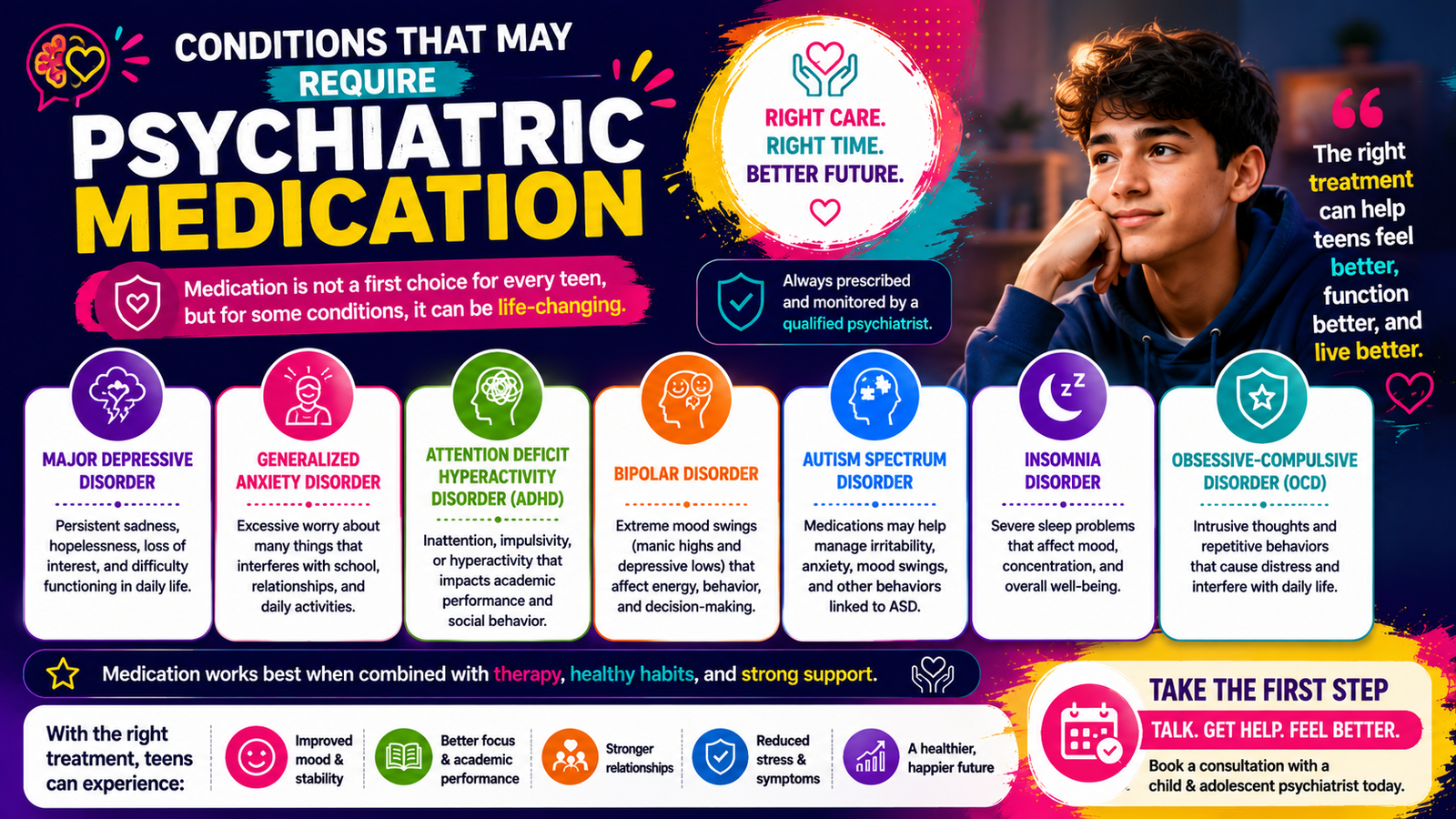
Medication is not necessary for every teenager. In many cases, therapy and lifestyle improvements provide significant benefits.
However, some mental health conditions respond best to a combination of psychotherapy and carefully monitored medication.
Examples include moderate to severe depression, severe anxiety disorders, bipolar disorder, schizophrenia, obsessive compulsive disorder, and certain cases of ADHD.
When medication is recommended, the psychiatrist carefully explains its purpose, expected benefits, possible side effects, and monitoring plan.
Parents should remember that medication is only one component of comprehensive mental health care.
Regular follow-up appointments help ensure the treatment remains safe and effective as the teenager grows.
Common Mistakes Families Should Avoid
Many parents delay seeking professional help because they hope symptoms will disappear on their own.
While temporary emotional changes are common during adolescence, persistent symptoms deserve careful evaluation.
Waiting too long may allow problems to become more difficult to treat.
Another common mistake is assuming every teenager with emotional challenges needs medication.
A qualified Youth Psychiatrist recommends medication only when the expected benefits outweigh the risks.
Many adolescents improve through therapy, family support, healthy routines, and stress management strategies.
Families should also avoid comparing one teenager’s recovery with another’s.
Mental health treatment is highly individualized. Progress depends on the diagnosis, symptom severity, family involvement, and the teenager’s willingness to participate in treatment.
Maintaining open communication is equally important. Teenagers who feel judged or criticized may become reluctant to discuss their emotions honestly.
Creating a supportive environment encourages trust and strengthens the effectiveness of professional care.
Expert Recommendations for Supporting Teen Mental Health
Mental health experts encourage parents to maintain regular communication with their teenagers while respecting their growing independence. Listening without immediate judgment helps adolescents feel safe when discussing difficult emotions.
Healthy daily habits also contribute significantly to emotional wellness.
Consistent sleep schedules, balanced nutrition, regular physical activity, and limited screen time can positively influence mood and concentration.
These lifestyle factors complement professional psychiatric care rather than replace it.
Schools also play an important role. Teachers, counselors, and school psychologists often notice behavioral or academic changes before parents do.
Collaboration between families, schools, and a Psychiatrist for Teens creates a more comprehensive support system for adolescents facing emotional or behavioral challenges.
Parents should never ignore statements related to self-harm or suicide. Any expression of hopelessness or suicidal thoughts requires immediate professional assessment.
Prompt intervention can protect the teenager’s safety and provide access to appropriate treatment during a critical time.
Practical Example: How Early Psychiatric Care Can Help
Imagine a 15-year-old student who was once active in sports and enjoyed spending time with friends.
Over several months, the teenager became withdrawn, lost interest in hobbies, struggled to concentrate in class, and frequently complained of feeling exhausted.
Parents initially believed these changes were simply part of adolescence.
After consulting a Psychiatrist for Teens, a thorough assessment revealed moderate depression combined with anxiety.
The treatment plan included cognitive behavioral therapy, family counseling, stress management techniques, and regular psychiatric follow-up visits.
Medication was considered after discussing the benefits and potential risks with the family.
Within a few months, the teenager gradually regained confidence, improved school attendance, rebuilt friendships, and returned to favorite activities.
This example shows how early assessment and appropriate treatment can improve emotional health and overall quality of life.
How Parents Can Support a Teen During Treatment
Parents play a significant role in helping treatment succeed.
Emotional support at home often strengthens the benefits of professional care and encourages teenagers to remain engaged in the recovery process.
Ways Parents Can Help
- Listen calmly without judging or criticizing.
- Encourage honest conversations about emotions.
- Follow the treatment plan recommended by the psychiatrist.
- Attend family therapy sessions when advised.
- Help maintain healthy sleep and daily routines.
- Support regular physical activity and balanced nutrition.
- Stay in contact with teachers if school concerns arise.
- Watch for changes in mood or behavior between appointments.
- Celebrate small improvements to build confidence.
- Seek immediate professional help if there are concerns about self-harm or suicidal thoughts.
Consistent encouragement helps teenagers feel supported rather than isolated.
Recovery is often a gradual process, and family involvement can make a meaningful difference.
Choosing the Right Psychiatrist for Adolescents
Selecting the right Psychiatrist for Adolescents involves more than checking qualifications.
Families should look for a specialist with experience in adolescent mental health, strong communication skills, and an approach that encourages teenagers to participate actively in treatment.
A good psychiatrist explains diagnoses in simple language, answers questions patiently, and involves both parents and teenagers in treatment decisions whenever appropriate.
Trust and open communication create a stronger foundation for long-term progress.
It is also helpful to choose a psychiatrist who collaborates with psychologists, pediatricians, school counselors, and other healthcare professionals when needed.
A team-based approach often provides more comprehensive care for teenagers with complex mental health needs.
When Should You Seek Immediate Help?
Some situations require urgent psychiatric evaluation rather than waiting for a routine appointment.
Immediate professional care is recommended if a teenager talks about suicide, engages in self-harm, experiences hallucinations, becomes extremely aggressive, or shows sudden and severe changes in behavior.
Prompt intervention can reduce immediate risks and connect families with appropriate emergency mental health services.
Parents should always take these warning signs seriously, even if the teenager later says they were only expressing frustration.
Frequently Asked Questions
What does a psychiatrist for teens do?
A psychiatrist for teens diagnoses, treats, and manages mental health conditions in adolescents.
They provide psychiatric evaluations, recommend therapy, prescribe medication when necessary, and monitor long-term progress.
When should a teenager see a teen psychiatrist?
A teenager should see a psychiatrist if emotional or behavioral symptoms such as persistent sadness, severe anxiety, panic attacks, self-harm, major mood changes, or declining school performance continue for several weeks or interfere with daily life.
Can a child and adolescent psychiatrist prescribe medication?
Yes. A Child and Adolescent Psychiatrist is a licensed medical doctor who can prescribe medication when it is clinically appropriate and monitor its safety and effectiveness throughout treatment.
What is the difference between a psychologist and a psychiatrist?
A psychiatrist is a medical doctor who can diagnose mental illnesses, prescribe medication, and provide medical treatment.
A psychologist primarily offers psychological assessments and therapy but generally does not prescribe medication.
Can teenagers recover from mental health disorders?
Many teenagers experience significant improvement with early diagnosis, personalized treatment, family support, and consistent follow-up care.
Recovery varies depending on the condition, but timely intervention often leads to better long-term outcomes.
Conclusion
Choosing a qualified psychiatrist for teens can be an important step toward improving a young person’s emotional health and overall well-being.
Adolescence brings many challenges, but persistent anxiety, depression, behavioral changes, or emotional distress should never be ignored.
Early evaluation allows mental health conditions to be identified before they become more difficult to manage.
A skilled Child and Adolescent Psychiatrist, Teen Psychiatrist, or Teen Mental Health Specialist develops individualized treatment plans that may include therapy, family support, lifestyle guidance, and medication when appropriate.
With timely care, consistent family involvement, and ongoing professional support, many teenagers develop healthier coping skills, stronger relationships, improved academic performance, and greater confidence as they move into adulthood.