
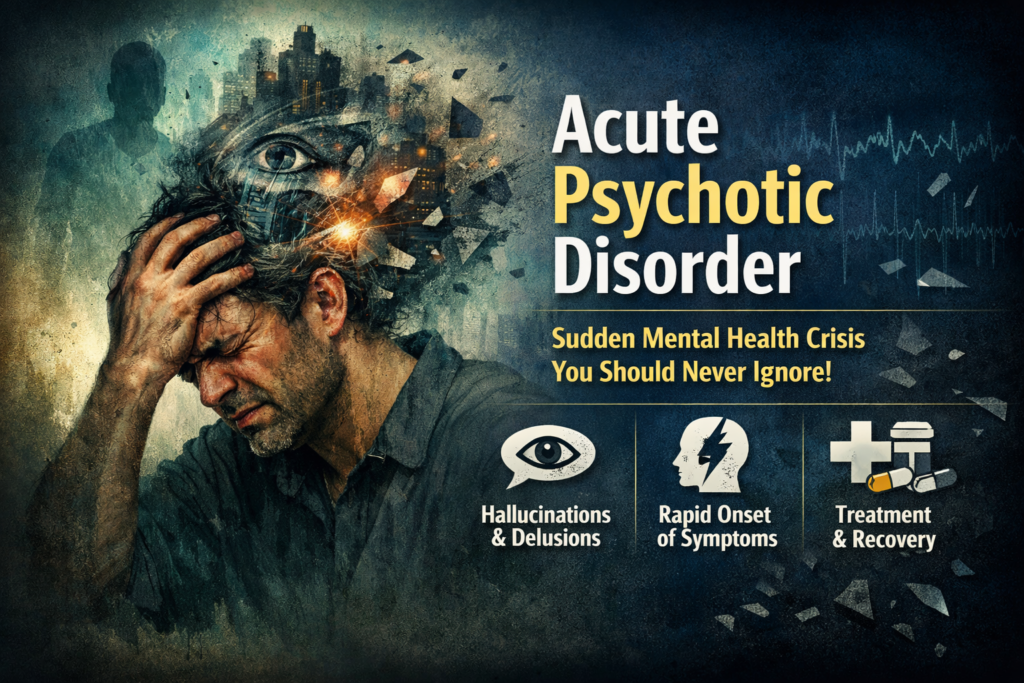
Acute Psychotic Disorder: Sudden Mental Health Crisis You Should Never Ignore
Acute Psychotic Disorder | Published: Feb 12, 2026 Acute Psychotic Disorder: Sudden Mental Health Crisis You Should Never Ignore More on : All Blogs youtube-app Summarize this post with Chat GPT Perplexity [chatgpt_button] Mental health problems do not always grow slowly. They may sometimes come unexpectedly and totally transform the thoughts, emotions, and behavior of a person within days. This abrupt transition usually makes families confused, scared, and helpless. One such serious condition is Acute Psychotic Disorder. Most individuals believe that psychosis only occurs when someone is mentally ill in the long term, but this is not necessarily always the case. Acute psychotic disorder can begin suddenly in a person who previously seemed mentally healthy. The individual can begin to receive voices of seeing things that do not exist or thinking of things that do not make sense to others. Such symptoms are scary not only to the patient but also to their loved ones. The greatest area of pain is awareness. The delay in treatment is often caused by the fact that the families believe that the condition will resolve itself on its own. Unfortunately, such a latency may aggravate symptoms. Premature medical attention is very significant in healing. The following article will also explain what this disorder is and why it occurs, as well as how doctors arrive at a diagnosis of this disorder and how it is treated to enable the individuals to resume normal life. Book An Appointment For Best Treatment Acute Psychotic Disorder Acute Psychotic Disorder is a mental health condition in which a person suddenly loses touch with reality for a short period of time. The symptoms tend to set in fast within a few days, and this can take a few weeks to a few months. This disorder is usually temporary, unlike chronic psychotic illnesses, provided it is treated properly. At this stage, the brain is not able to put thoughts, emotions, and perceptions into proper processing. The individual could turn suspicious, fearful, or get so confused. Speech can become disordered, and behavior can be spontaneously altered. The onset is fast, and this complicates the situation because many families confuse it with stress or emotional weakness, which postpones professional assistance. Health specialists believe that this condition is severe and can be managed. Most of the patients are able to recuperate once they receive timely psychiatric care and get back to their routine. Acute Psychotic Disorder Treatment Acute psychotic disorder treatment focuses on stabilizing the mind and reducing symptoms as quickly as possible. The initial treatment is normally started in a hospital or a psychiatric facility, particularly when the symptoms are severe. Medication is significant in the suppression of hallucinations, delusions, and agitation. Antipsychotics are normally used in controlled doses. Some of the examples include the use of medicines by doctors to treat cases of anxiety or sleep. Psychological assistance is also significant. As soon as the symptoms start settling, therapy assists the patient in working through the experience and alleviating the fear. Family education is also included in treatment because emotional support enhances the recovery rate. Early treatment yields positive results in most patients within weeks. Consistent follow-ups guarantee the absence of relapses and the possibility of reducing medication safely with the help of a doctor. Acute Psychotic Disorder DSM 5 According to the DSM 5 classification, acute psychotic disorder falls under brief psychotic disorders. According to the DSM 5, it is a psychotic outbreak that suddenly develops psychotic symptoms, including hallucinations delusion or disorganized speech that lasts at least one day but is less than one day or one month. The criteria are clear that the symptoms come about without a substance use medical illness or another mental disorder. This assists the doctors in isolating it as schizophrenia or mood related psychosis. DSM 5 focuses on sudden onset, implying that symptoms develop within two weeks or even less. One of the best attributes of diagnosis that doctors utilize is this suddenness. Acute Psychotic Disorder ICD 10 In the ICD 10 classification, acute psychotic disorder is listed under acute and transient psychotic disorders. The system is popular across borders in terms of diagnosis and insurance records. According to ICD10, it is a minor, temporary psychotic disorder with a quick onset and full recovery in the vast majority of cases. Onset is typically associated with stressful life events, including trauma, loss, or pressure to an extreme level. This category underscores the fact that the symptoms tend to improve in three months. When the symptoms persist past that time, physicians can re-examine the diagnosis. Acute Psychotic Disorder PPT Many medical students and mental health educators prepare acute psychotic disorder PPT presentations to explain the condition clearly. The causes, symptoms, diagnosis, treatment, and prognosis are normally discussed during these presentations. PPT learning content can assist medical workers in becoming aware of protective symptoms in clinical education. Early identification produces quicker referral and better patient outcomes. Such presentations are also used in the training of staff and mental health awareness programs in hospitals. Acute Psychotic Disorder vs Schizophrenia Among the prevailing fears of the families is whether acute psychosis implies schizophrenia. The fact is, they are not alike. Acute psychotic disorder appears suddenly and often resolves fully with treatment. Schizophrenia is a chronic, long-term disease. Acute psychosis personality normally stays unaffected even after the recovery, whereas schizophrenia influences day to day functioning over the years. Another significant difference is duration. Acute psychosis runs between weeks to months, and schizophrenia is managed on long basis. Early improvement strongly suggests an acute psychotic disorder rather than schizophrenia. Physicians observe patients keenly before arriving at a final diagnosis to prevent wastage of labels. Acute Psychotic Disorder Duration The duration of acute psychotic disorder varies depending on severity and treatment timing. The symptoms, in most instances, take between two weeks and three months. Certain patients are able to pick up after taking a few days. Other people would take time, particularly when there was a delay in treatment. Medical follow