


What Is a Psychiatrist and What Does a Psychiatrist Treat?
A psychiatrist is a physician with a specialty in mental health. Psychiatrists can evaluate psychological symptoms and factor in other medical, medication, substance abuse, family history and other factors that may impact a person’s mental state.
A psychiatric doctor in Karachi could perform assessment and treatment for anxiety disorders, depression, bipolar disorder, panic disorder, obsessive-compulsive disorder, post-traumatic stress disorder, psychotic disorders, and various mental health disorders.
Treatment will not automatically be restricted to medication. A psychiatrist might prescribe medication, suggest psychotherapy, provide lifestyle advice, recommend regular checkups, or refer to a psychologist or therapist to work with the individual.
The crucial thing is that psychiatric treatment is to be flexible and personalised. The treatment required to successfully resolve two similar symptoms can be markedly different.
How Can You Find the Best Psychiatrist in Karachi, Pakistan?
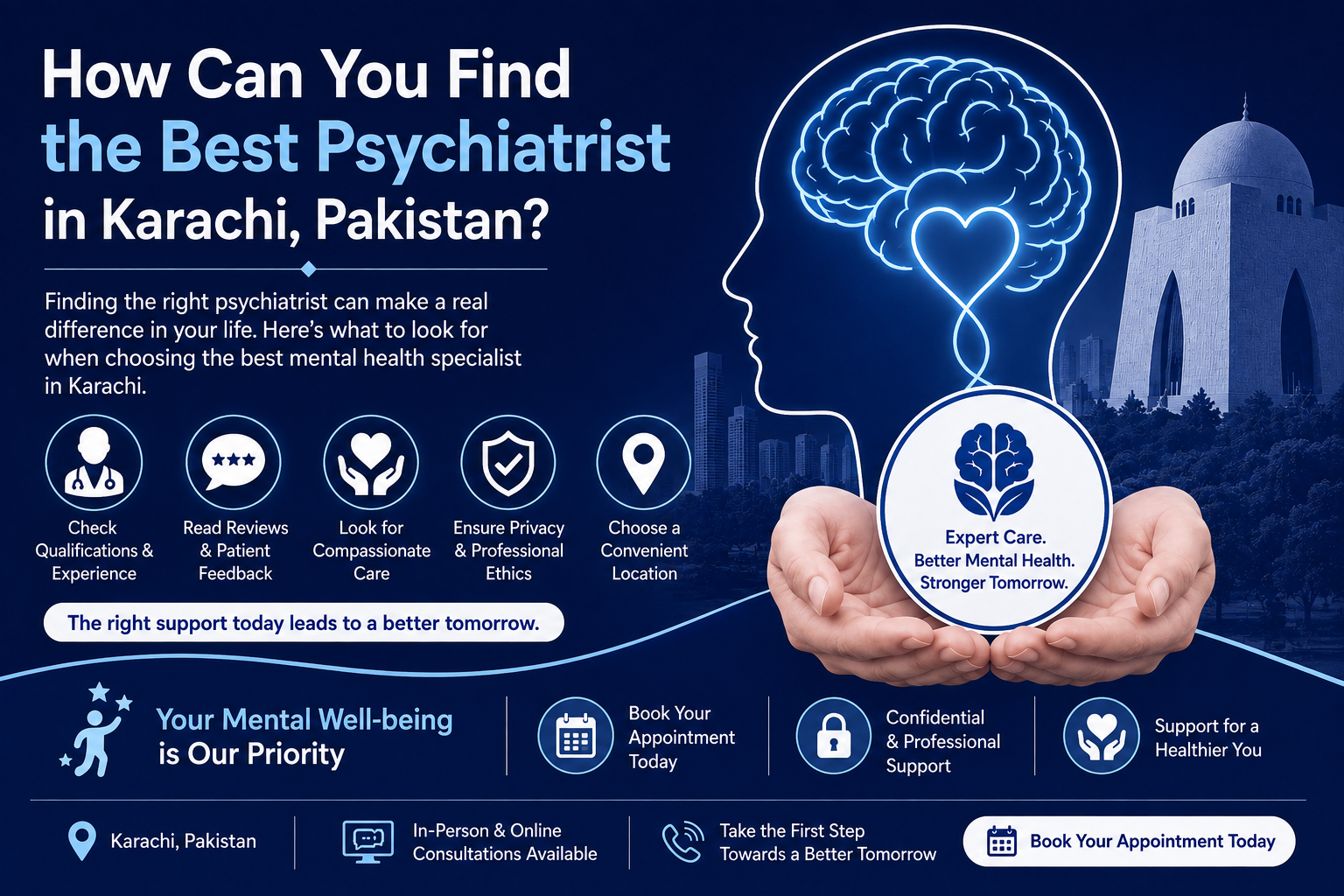
The best psychiatrist can mean different things to different patients. If a person is seeking assistance for chronic depression, he or she might require a different specialist than someone with panic attacks or serious mood swings.
When picking a psychiatrist, think about their medical and psychiatric experience, their expertise with your specific concern, how they relate to you, their treatment philosophy, and the degree to which they are accessible for after-treatment care.
Just as it is fair to ask questions before making an appointment, it is fair to ask questions after the appointment. After the appointment, it is fair to ask questions as well. A clinic should be able to give you information relating to the doctor’s training, consultation, and charge.
In fact, while exploring mental health care in Karachi, you may encounter experts like Dr. Ilyasjat. The key is to not just take the doctor’s name at their word for it but decide if the specialist’s experience and treatment plan are right for you and your symptoms.
What Qualifications Should a Qualified Psychiatrist in Karachi Have?
One of the initial parameters to consider when choosing a reputable psychiatrist in Karachi is their professional qualifications.
A psychiatrist should have suitable medical training, then recognized further training in Psychiatry. Patients may also be able to verify professional registration and qualifications via relevant Pakistani medical regulatory bodies.
But qualifications don’t tell the full story. Other aspects of good psychiatric care are also relevant: clinical experience, continuing professional development, communication, ethics, and appropriate follow-up.
A good psychiatrist will also not make promises that are not feasible. Responsible MD’s typically let patients know that mental health issues can affect different people in different ways and may need to be monitored and adjusted during treatment.
When Should You See a Psychiatrist in Karachi?
It’s not necessary to wait until you have symptoms that are out of control to get professional input.
Emotional, behavioural or psychological symptoms that are ongoing for weeks, reoccur often, are difficult to control, and are interfering with daily functioning may benefit from a psychiatric consultation.
Some indications that a professional mental health service might be beneficial are:
- Negativity, hopelessness, or disinterest in activities you used to do
- Any excessive worrying that cannot be controlled.
- Panic attacks that have been happening over and over again, or very strong feelings of fear.
- Significant alterations in sleep, appetite, energy or concentration
- Extreme mood swings or unusual irritability
- Withdrawal or inability to carry out usual activities
- A distressing thought, strange perceptions, or significant changes in behaviour
Emotional symptoms which are interfering with work, school, relationships, or daily activities
The following symptoms are not necessarily indicative of a psychiatric disorder. A professional assessment is beneficial as similar symptoms may be linked to physical health, side effects of medication, stress or multiple factors.
Can a Psychiatrist Help With Anxiety and Depression?
Yes. A psychiatrist for anxiety and depression in Karachi can evaluate the symptoms to determine if depression or anxiety is a disorder.
Anxiety may include continuous worrying, restlessness, bodily tension, racing ideas, trouble sleeping, or durations of severe anxiety. Symptoms of depression can include low mood, decreased interest, fatigue, alterations in sleep and appetite, diminished concentration, sense of worthlessness.
Sometimes anxiety and depression occur together. That is why it’s crucial to have a detailed evaluation of the issue instead of relying on just one or two symptoms.
Therapy, medication and/or a combination of these. It is dependent on the diagnosis, the severity of the symptoms, treatment history, medical history and individual circumstances.
What Happens During Your First Psychiatric Consultation?
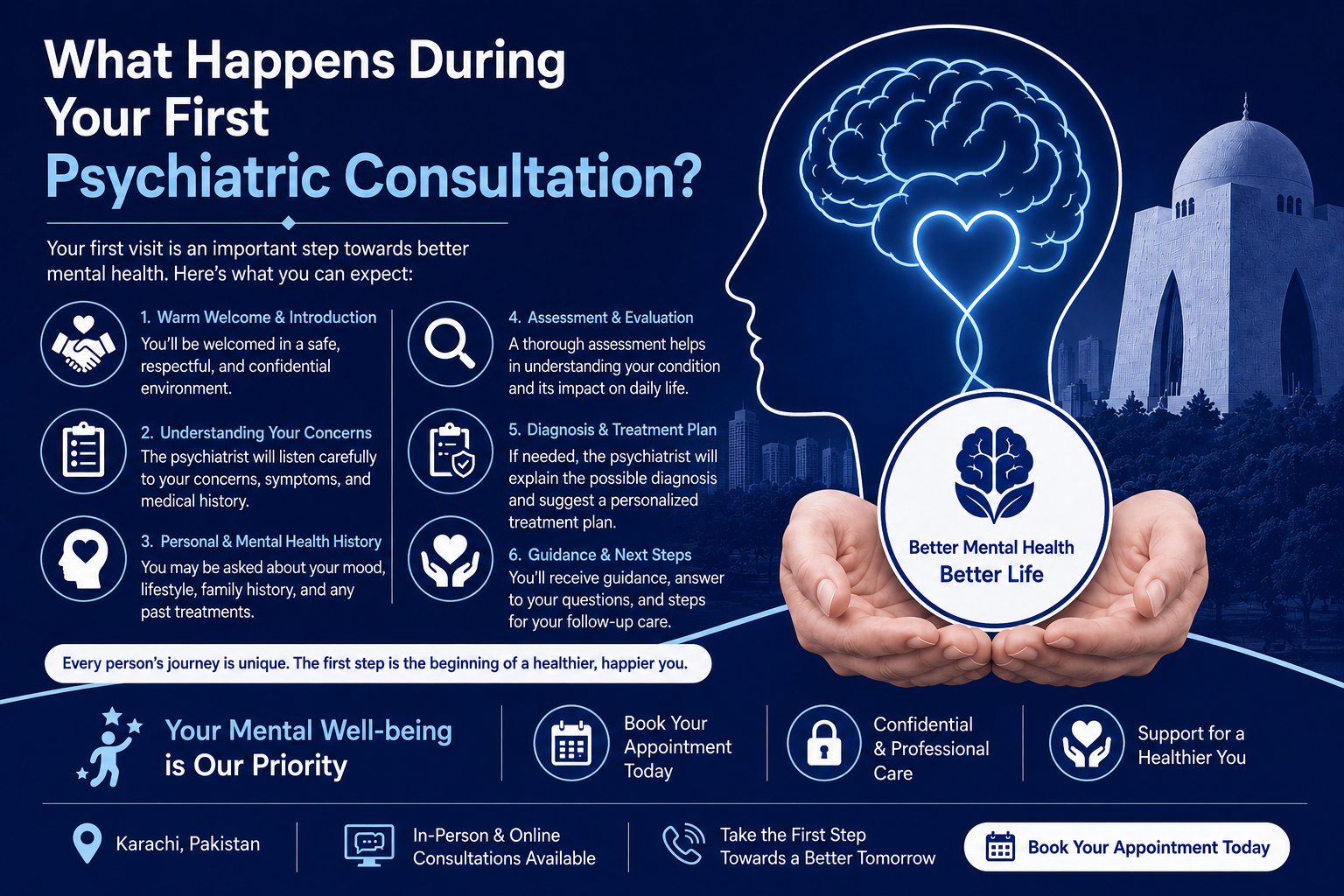
Before the first psychiatric appointment, many are not sure what questions the doctor will ask and are nervous. In fact, the consultation becomes a discussion aimed at gaining insight into your entire situation.
The psychiatrist may question about the onset of symptoms, the frequency of the symptoms, what makes symptoms better or worse and how symptoms impact daily life.
Other questions might be asked about sleep, appetite, concentration, energy, past treatment, medical history, current medications, family history, and major life changes.
The doctor also might check your state of mind, thoughts, actions, and mood. This information can help the psychiatrist to have a better idea of what is worrying you.
Feel free to ask questions during the appointment. There is no need to use medical jargon. It’s sometimes better to describe what it feels like to you rather than make a diagnosis.
What Questions Should You Ask a Psychiatrist?
A first appointment is also the time to determine if you’re at ease with the doctor.
Feel free to inquire about the psychiatrist’s opinion on what might be causing your symptoms, if additional testing is required, the available treatment options, and if any follow-up will be necessary.
If the doctor prescribes a medicine, find out what it is for, any side effects, how it will help, and what to do if a problem occurs. It is also possible to inquire if psychotherapy can be helpful in addition to medical treatment.
Communication is important because psychiatric care is more likely to be a process than an appointment.
What Is the Difference Between a Psychiatrist and a Psychologist?
Psychiatrist and psychiatrist are often used interchangeably, although they have different roles.
A psychiatrist is a medical doctor who is trained in the diagnosis and treatment of mental health disorders and who can prescribe medication, if authorized by law. Psychologists tend to work in the field of psychological evaluation, psychotherapy, behavioral treatment, and services.
Also, a therapist or counselor can offer emotional support, stress management, and relationship and living skills support through conversations.
It is not a rule that anyone can only go to one type of professional. A psychiatrist can serve as a collaborating team member, along with a psychologist, in some situations. For instance, a psychiatrist can oversee medication, and a psychologist can conduct structured psychotherapy.
Psychiatrist vs Psychologist: Which One Should You See?
The appropriate professional depends on what you need.
Your Main Need | Professional Who May Be Appropriate | Why |
Medication assessment or management | Psychiatrist | Can provide medical and psychiatric evaluation |
Persistent depression or significant anxiety | Psychiatrist and/or psychologist | Treatment may involve medication, therapy, or both |
Psychotherapy | Psychologist or therapist | Focuses primarily on talk-based psychological treatment |
Psychological testing | Psychologist | Trained in psychological assessment and testing |
Complex or severe psychiatric symptoms | Psychiatrist | Medical psychiatric assessment may be important |
Stress or relationship difficulties | Therapist, counselor, or psychologist | Talk-based support may be appropriate |
The best choice can also change over time. Someone may begin with one professional and later benefit from another type of support.
What Should You Look for in a Mental Health Specialist in Karachi?
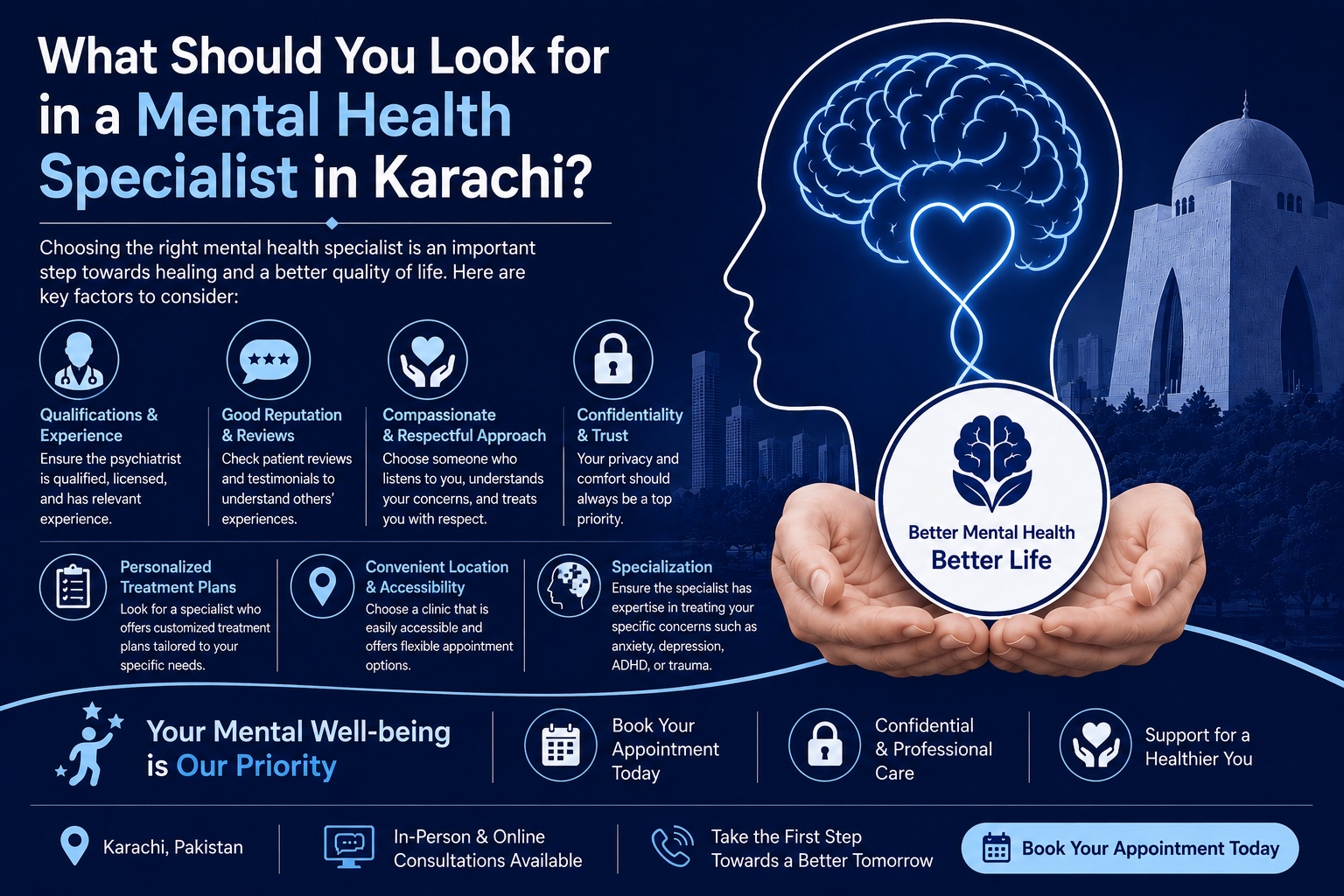
It is not enough to just check the location of a clinic to find a mental health specialist in Karachi.
Think about the professional’s experience with the type of symptoms you’re having. An individual with regular practice in anxiety and depression treatment might be a sensible choice for those with anxiety and depression, while another doctor might specialize in a different problem.
Communication is also crucial. Patients should feel free to share confidential information without being asked to leave or feeling judged.
Other factors that are worth considering are appointment availability, clinic location, appointment type, follow-up schedules, and the total cost.
Some context may be gleaned from online reviews, but they should not be the basis for replacing proper qualifications and/or clinical assessment.
How Does Psychiatric Treatment Work?
Typically, psychiatric treatment starts with an evaluation before a specific medication is prescribed.
The psychiatrist can review the symptoms and discuss possible treatment options and/or diagnoses. Treatment options might be psychotherapy, medication, behavioral strategies, lifestyle recommendations, or referral to another professional, depending on the circumstances.
Medication (if prescribed), may be used and may be monitored through follow-up appointments for improvement/needs.
This is significant because different people may respond differently to psychiatric medications. Medicines that are effective in one person might not be effective in another.
Patients should not stop, reduce or increase their prescribed psychiatric medication without consulting with the prescribing doctor. .
How Can You Prepare for Your First Appointment?
There is no need to have an ideal medical history prior to meeting a psychiatrist. There are some simple things that can make the consultation go even smoother.
Record the key symptoms you have observed, when they began and how it impacts your life. Bring medications and/or information about previous mental health treatment if applicable.
Changes in sleep, appetite, concentration, mood, energy, and functioning on a daily basis can also be beneficial to be noted.
When you do not feel comfortable talking about something during the appointment, just let the psychiatrist know that you are having a difficult time talking about it. Your doctor needs to know what’s going on if you need to be honest in your communication.
How Much Does a Psychiatrist Cost in Karachi?
The psychiatric consultation fee in Karachi fluctuates from doctor to doctor, depending on their qualifications, experience, clinic/hospital location, appointment, and follow-up schedule.
The lowest priced consultation is not always best, and the highest priced consultation isn’t always best.
You can inquire with the clinic regarding the consultation fee, follow-up costs, appointment duration and availability of online consultation services if applicable, prior to booking an appointment.
Many patients view a doctor’s services in a more holistic way than just by the initial consultation fee.
What Are the Benefits of Professional Psychiatric Care?

A patient can get a structured approach to treatment and understand the symptoms that are persistent with the help of professional mental health care.
The advantages of a psychiatrist visit are immense. The benefits of a psychiatrist visit are extensive.
Specialist evaluation of emotional, behavioural, and psychological symptoms
Identification of possible psychiatric concerns or other medical concerns that may be related to this problem
Personalized treatment planning
- Medication assessment in the context of clinical appropriateness of medication.
- Careful monitoring of response to treatment and potential side effects
- Referral to Psychotherapy / other specialists as needed
- Continuous follow-up (rather than only short-term self-management)
- Psychiatric treatment is not just about taking drugs. Good treatment requires an understanding of the person, and the identification of the problem as accurately as possible, followed by the selection of an appropriate management strategy.
Can Lifestyle Changes Replace Psychiatric Treatment?
While healthy lifestyle habits may be helpful to mental health, they are not a substitute for professional treatment.
Good sleep habits, exercise, social interaction, healthy eating, stress reduction, and avoiding harmful substance use are all factors that can promote overall health.
If depression does not lift, anxiety is intense, mood shifts dramatically, there are psychotic features, or significant disruption in functioning, then assessment by a professional is warranted.
A psychiatrist may be able to help identify how lifestyle changes fit with the overall treatment plan.
When Is Urgent Mental Health Help Necessary?
Not all mental health issues are considered emergencies, but some are.
Urgent medical assistance should be sought if the person is in immediate danger of hurting themselves or others, is very confused, or seems disconnected or unable to care for themselves.
If a crisis involves a safety concern, call local emergency services or go to the nearest emergency department – do not wait for a scheduled psychiatric appointment.
How Can You Make a Better Decision When Choosing a Psychiatrist?
It is easier to pick a psychiatrist if you think about suitability instead of a universal “number one” psychiatrist.
Identify your main concern for help. Then look at the psychiatrist’s qualifications, relevant experience, treatment approach, availability, and follow-up process.
At first consultation, consider whether the doctor listens to you, explains well, responds to sensible inquiries, and treats you with respect.
The key to mental health treatment is trust. When you find that your concerns are not being heard, it’s fair to get a second professional opinion.