


What Does a Psychiatrist Do?
A psychiatrist is a medical doctor who specializes in mental health.
Psychiatrists assess and treat problems affecting a person’s thoughts, emotions, behavior, and daily functioning.
Because they are medical doctors, psychiatrists can also look at whether physical health problems, medicines, substance use, or other medical factors could be contributing to psychological symptoms.
Treatment is different for every patient. Depending on the situation, a psychiatrist may recommend medication, psychotherapy, lifestyle changes, regular monitoring, or a combination of these approaches.
The treatment plan usually depends on the person’s symptoms, medical history, diagnosis, preferences, and response to treatment.
Psychiatrists commonly work with people experiencing anxiety, depression, bipolar disorder, schizophrenia and other psychotic disorders, addiction-related problems, sleep-related mental health concerns, and behavioral or emotional difficulties.
They may also provide psychiatric care for children and teenagers and assess certain cognitive problems associated with mental health conditions.
Not everyone who feels stressed, worried, or sad needs psychiatric treatment. However, when these feelings continue for a long time or begin affecting everyday life, a professional assessment can help determine what kind of support may be appropriate.
How Do You Choose the Best Psychiatrist in Karachi?
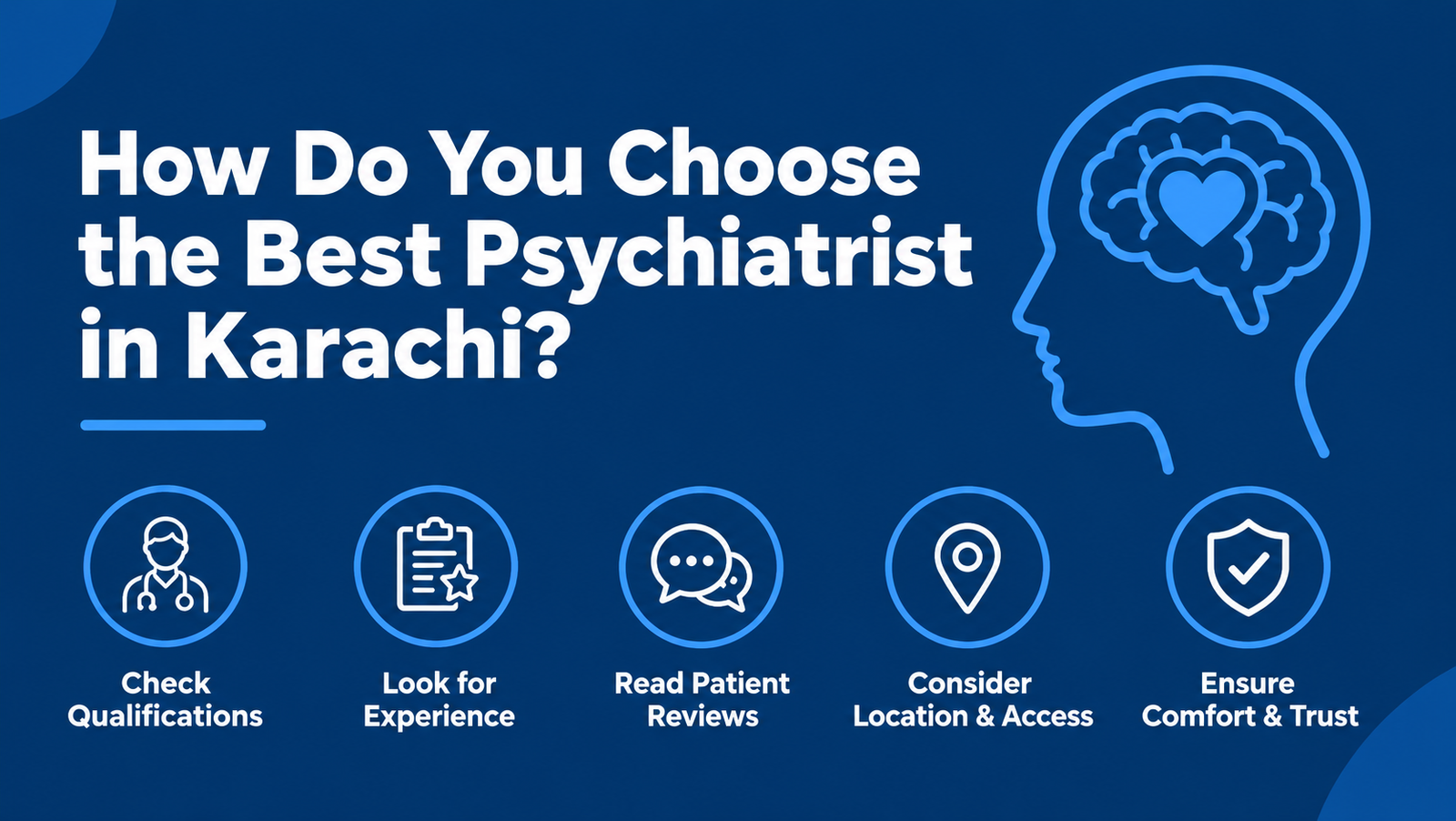
There is no single psychiatrist who is objectively the best for every patient. The right choice depends on your symptoms, age, treatment needs, location, availability, and personal preferences.
Instead of relying only on online ratings or claims such as “the best psychiatrist in Karachi,” look at the doctor’s professional background and whether their experience matches your needs.
Check the Psychiatrist’s Qualifications
One of the first things to consider is the psychiatrist’s medical and professional training. Reliable information can often be verified through a university, hospital, medical institution, or established healthcare provider.
For example, Dow University of Health Sciences lists Dr. Muhammad Ilyas Jat as an Assistant Professor of Psychiatry and records MBBS and FCPS qualifications. This type of independently listed professional information can be more useful than relying solely on promotional claims.
Consider Your Mental Health Concern
Psychiatry covers many different conditions, and your particular symptoms should be considered when choosing a specialist.
Someone experiencing frequent panic attacks may have different treatment needs from a person dealing with severe mood changes, addiction, or symptoms of psychosis. During your search, look for a psychiatrist whose clinical experience is relevant to the concern you want to discuss.
Look for Clear Communication
Talking about mental health can sometimes feel uncomfortable. A good psychiatrist should give you enough time to explain what you are experiencing and should communicate the assessment and treatment plan in language you can understand.
You should also feel comfortable asking about medication, therapy, possible side effects, follow-up appointments, and what to do if your symptoms change.
Consider Availability and Follow-Up
Psychiatric care is often an ongoing process rather than a one-time consultation. Follow-up appointments may be needed to monitor progress and adjust treatment.
Before booking an appointment, consider practical factors such as the clinic location, appointment availability, consultation method, follow-up arrangements, online consultation options, consultation fee, and emergency arrangements where relevant.
A psychiatrist who is reasonably accessible can make it easier to maintain regular care.
Dr. Ilyas Jat as a Psychiatric Care Option in Karachi
People searching for psychiatric care in Karachi may come across Dr. Muhammad Ilyas Jat.
His official website presents services related to adult psychiatry, anxiety-related disorders, addiction-related disorders, schizophrenia, bipolar affective disorder, child psychiatry, and dementia-related disorders.
Dow University of Health Sciences independently lists Dr. Muhammad Ilyas Jat as an Assistant Professor of Psychiatry and records MBBS and FCPS qualifications. The university also lists him within its psychiatry faculty and at the Dr. Abdul Qadeer Khan Institute of Behavioral Sciences.
These details can help patients evaluate a psychiatrist based on professional qualifications and areas of care instead of relying only on general marketing language.
What Mental Health Conditions Can a Psychiatrist Treat?
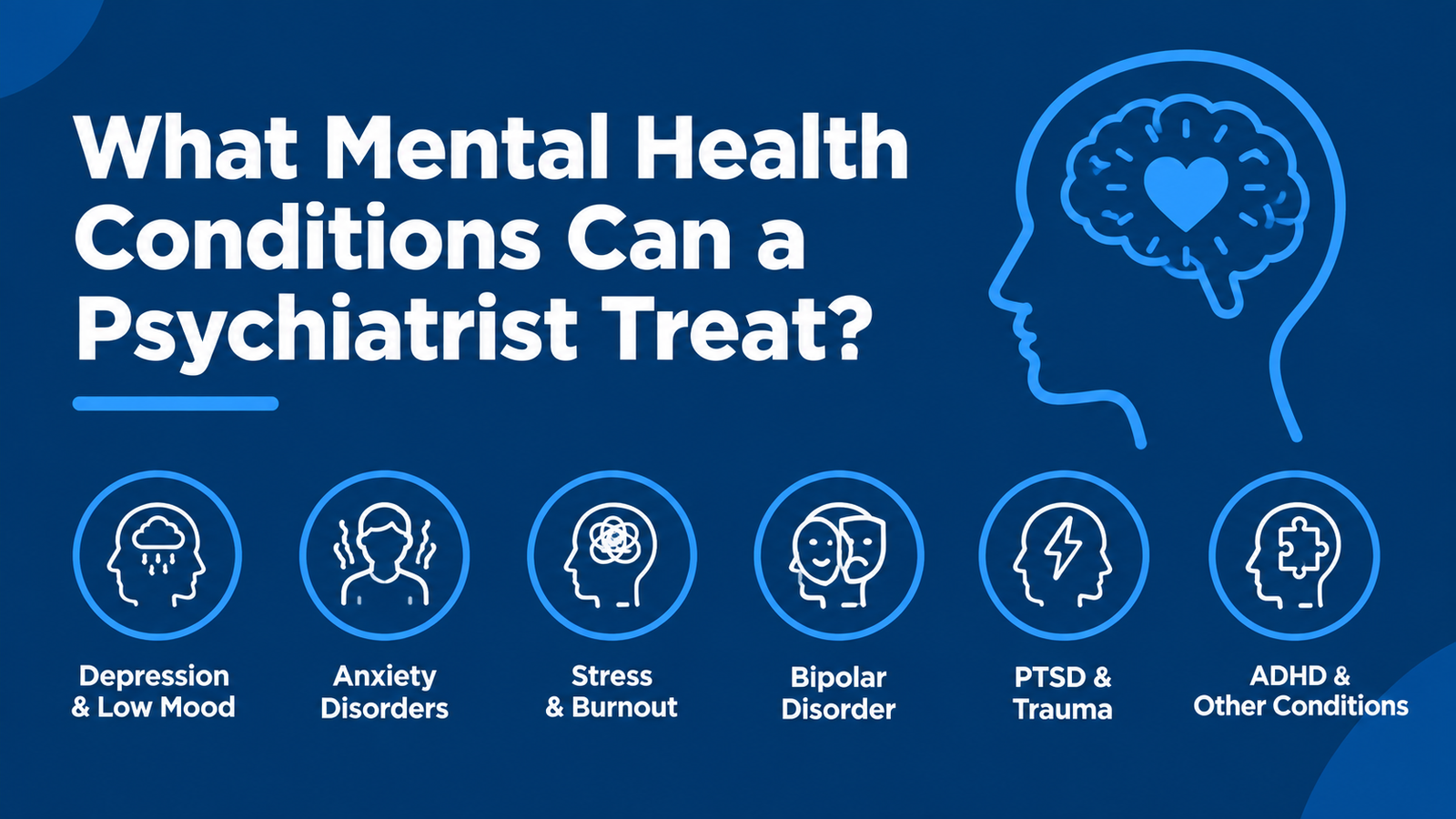
Psychiatrists can assess and treat a wide range of mental health conditions. Because some symptoms can occur in more than one condition, professional assessment is important before deciding what treatment is appropriate.
Anxiety and Panic Disorders
Anxiety can involve persistent worry, fear, restlessness, difficulty concentrating, muscle tension, sleep problems, or panic attacks.
Occasional anxiety is a normal part of life. The situation may need professional attention when symptoms continue or begin interfering with work, education, relationships, sleep, or everyday activities.
A psychiatrist can assess the symptoms and help determine whether treatment may be appropriate.
Depression
Depression is more than feeling sad after a difficult experience. It may involve persistent low mood, loss of interest in activities, tiredness, changes in sleep or appetite, difficulty concentrating, feelings of worthlessness, or thoughts about death.
A psychiatrist can look at the overall pattern and severity of symptoms before discussing possible treatment options.
Bipolar Disorder
Bipolar disorder can involve periods of depression as well as episodes of unusually elevated, expansive, or irritable mood.
During these episodes, a person may experience noticeable changes in energy, activity, sleep, judgment, or behavior. Since bipolar disorder requires a different treatment approach from ordinary depression, an accurate assessment is important.
Schizophrenia and Psychotic Disorders
Psychotic disorders may involve hallucinations, delusions, disorganized thinking, unusual behavior, or major changes in everyday functioning.
These symptoms should be assessed by a mental health professional, particularly when they appear suddenly, become severe, or create a safety concern.
Addiction and Substance Use Disorders
Psychiatrists may also help people experiencing problems related to alcohol, drugs, prescription medicines, or other forms of substance dependence.
Treatment can include medical assessment, psychological support, medication when appropriate, and referral to additional addiction services depending on the person’s needs.
Child and Adolescent Mental Health
Children and teenagers can experience anxiety, depression, behavioral difficulties, developmental concerns, attention problems, and other emotional challenges.
Assessment of younger patients may involve parents or caregivers. The psychiatrist may also consider school, family, developmental, and social factors when understanding the child’s situation.
Psychiatrist vs Psychologist: Which One Should You See?
Psychiatrists and psychologists both work in mental healthcare, but their professional roles are different.
A psychiatrist is a medical doctor who can perform psychiatric and medical assessments and prescribe medication when clinically appropriate and legally authorized. Psychologists primarily focus on psychological assessment, therapy, and behavioral support.
Psychiatrists may also provide psychotherapy, while psychologists generally do not prescribe medication. In some cases, patients benefit from working with both professionals.
The right choice depends on your symptoms and the type of support you need. If medication or a medical psychiatric assessment may be required, a psychiatrist may be appropriate. If your main need is psychological therapy, a psychologist may be a suitable option.
When Should You See a Psychiatrist?
You may want to consider a psychiatric evaluation when emotional, behavioral, or psychological symptoms persist, become difficult to manage, or start affecting your normal life.
Persistent sadness, severe anxiety, repeated panic attacks, major changes in sleep or appetite, significant mood changes, difficulty functioning at work or school, substance-related problems, and unusual experiences such as hearing or seeing things that others do not can all be reasons to seek professional advice.
A general physician or psychologist may also recommend seeing a psychiatrist when symptoms appear to require psychiatric or medical assessment.
What Happens During a Psychiatric Appointment?
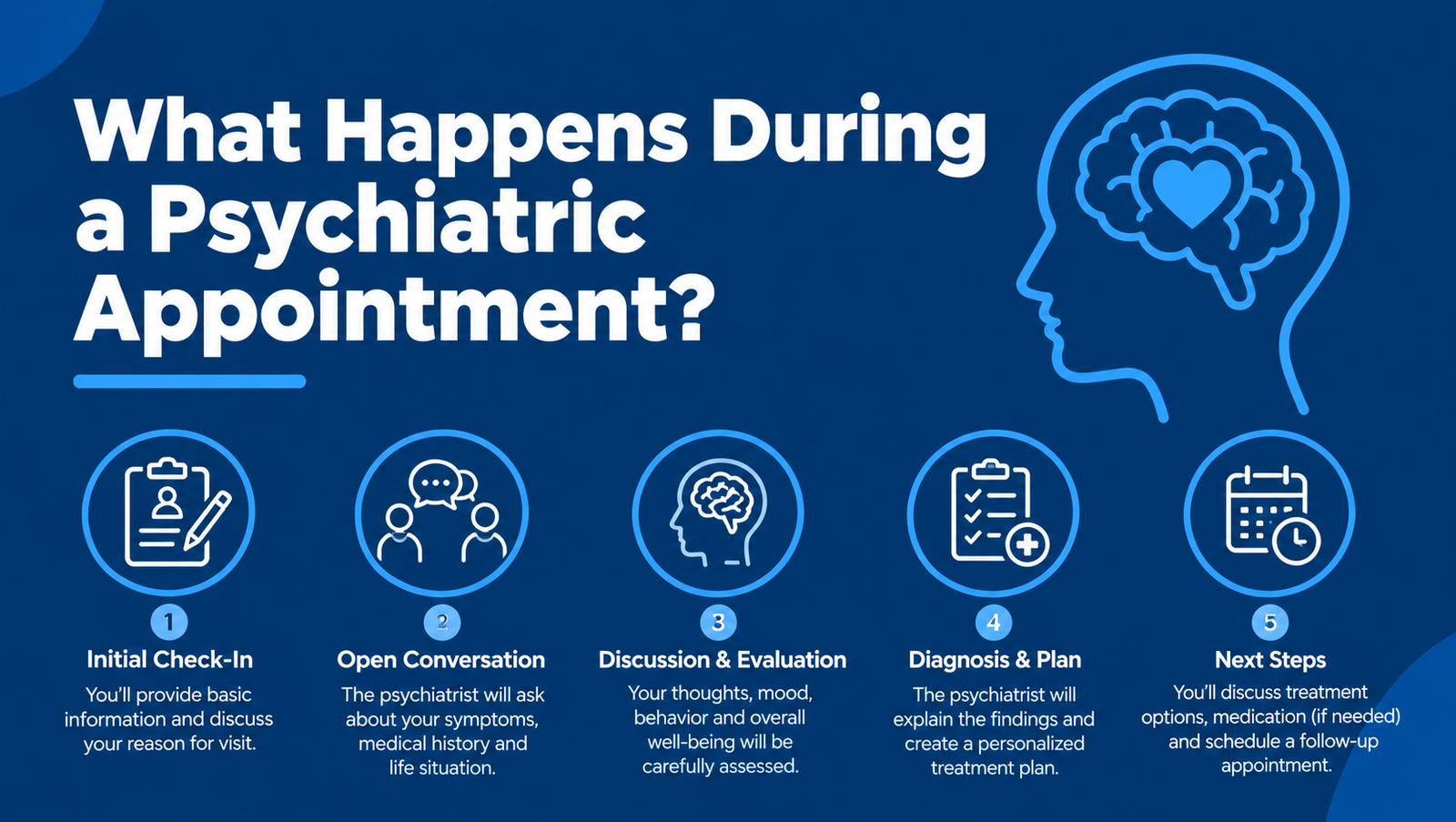
A first psychiatric appointment usually involves a detailed conversation about what you have been experiencing. You do not need to know your diagnosis before the appointment. Explaining your symptoms honestly is more helpful than trying to diagnose yourself.
The psychiatrist may ask about when your symptoms started, how they have changed, your sleep and appetite, mood and anxiety, previous mental health treatment, current medicines, substance use, physical health, family mental health history, and the effect of your symptoms on work, education, relationships, and daily life.
After this discussion, the psychiatrist may recommend further assessment, psychotherapy, medication, lifestyle changes, follow-up appointments, or a combination of treatments.
A diagnosis is not normally based on one symptom. The duration, severity, pattern, and effect of symptoms on everyday life are all important.
What Should You Ask a Psychiatrist?
It is completely reasonable to ask questions during a psychiatric consultation. Understanding your treatment can help you participate more confidently in your care.
Here are some useful questions to keep in mind:
- What could be causing these symptoms?
- Do I need a formal psychiatric assessment?
- What treatment options are available?
- Do I need medication?
- What are the possible benefits and side effects?
- Would psychotherapy be helpful?
- How often will I need follow-up?
- What should I do if my symptoms become worse?
- Are there lifestyle changes that could support treatment?
- When should I seek urgent help?
You do not need to arrive at the appointment with a diagnosis. Simply describing what you have been experiencing can give the psychiatrist useful information.
How to Prepare for Your First Psychiatric Appointment
A little preparation can make your first appointment easier and more productive.
Before the visit, think about when your symptoms started, how often they occur, and whether anything seems to make them better or worse. If you take medicines or supplements, keep a current list available.
It can also help to remember any important changes in your sleep, appetite, energy, concentration, mood, work or study performance, relationships, and daily routine.
If a family member has noticed significant changes in your behavior, their observations may also be helpful, particularly if you find it difficult to describe the changes yourself.
Signs That Require Urgent Mental Health Help
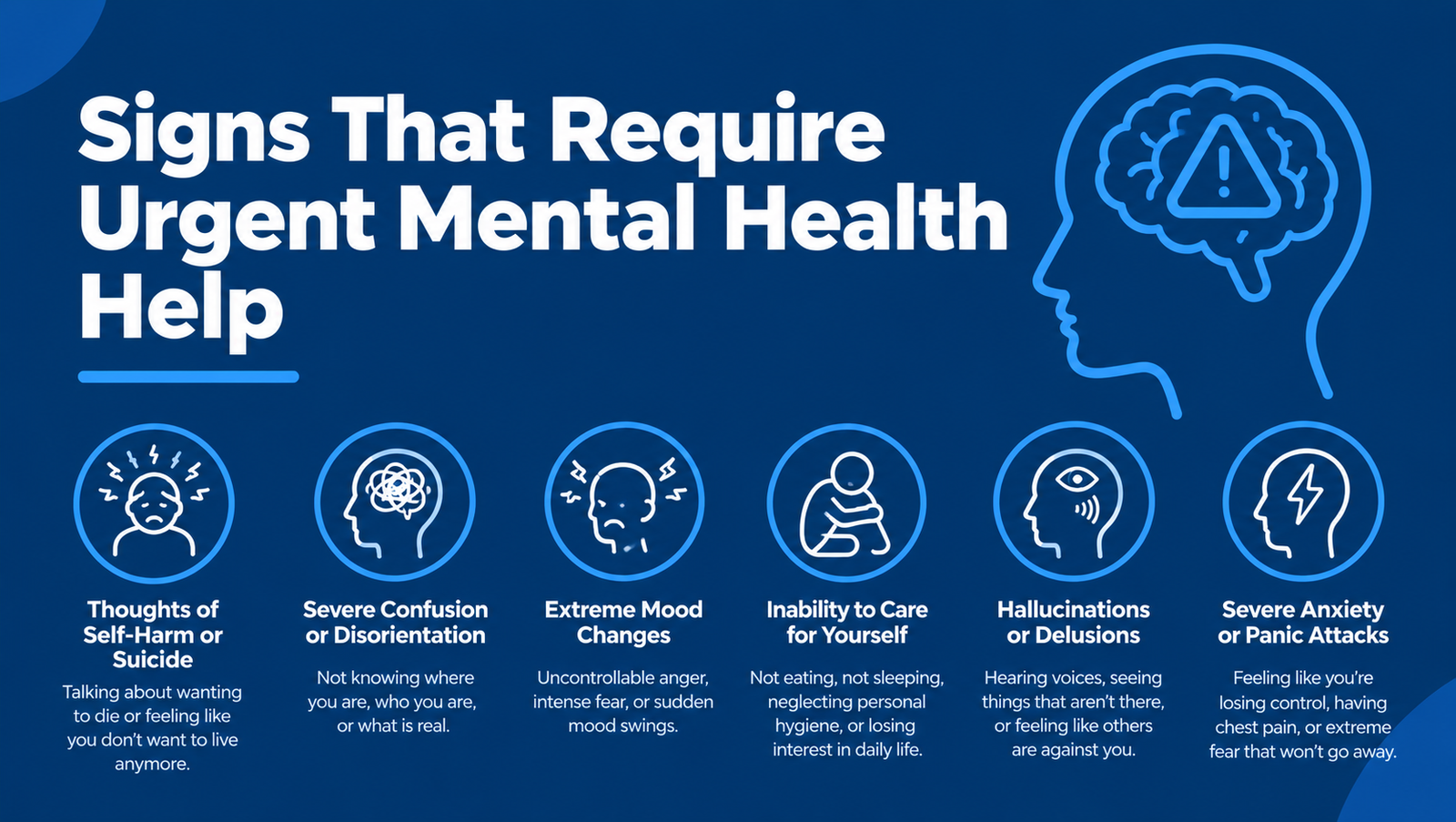
Some mental health situations require immediate professional attention rather than waiting for a routine appointment.
Seek urgent help if someone has thoughts of suicide or self-harm, has an immediate plan or intention to hurt themselves or another person, becomes severely confused or disconnected from reality, experiences severe hallucinations or dangerous behavior, becomes extremely agitated or uncontrollable, or cannot safely care for themselves.
If there is an immediate danger, contact local emergency services or go to the nearest emergency department. Do not wait for a routine psychiatric appointment during an emergency.
Common Mistakes When Choosing a Psychiatrist
One common mistake is choosing a psychiatrist simply because a website describes them as “the best.” That phrase is subjective and does not automatically mean the doctor is the right fit for your situation.
Another mistake is making your decision entirely on consultation fees. Price alone does not tell you whether a psychiatrist is suitable for your needs.
It is also important not to ignore professional qualifications or relevant clinical experience. Consider whether the psychiatrist regularly deals with the type of concern you want to discuss.
Patients should also avoid expecting medication to solve every mental health problem immediately. Depending on the condition, psychotherapy, lifestyle changes, ongoing support, or a combination of treatments may be part of the care plan.
If you are already taking psychiatric medication, do not stop it suddenly without discussing the change with your prescribing clinician. Some medicines may need to be reduced gradually.
What Makes a Good Psychiatric Treatment Experience?
A productive psychiatric treatment relationship usually involves clear communication, trust, realistic expectations, and regular review.
Mental health treatment does not always produce immediate results. Depending on the condition and treatment approach, improvement can take time.
Some people may benefit mainly from psychotherapy, while others may need medication. Some patients may benefit from both. The treatment plan can also change as symptoms, circumstances, and treatment responses change.
For patients in Karachi, practical factors such as clinic accessibility and follow-up availability can also make a difference. Consistent care is often easier when appointments are reasonably convenient.
How Much Does Psychiatric Treatment Cost in Karachi?
Psychiatric consultation fees in Karachi vary between doctors, clinics, hospitals, consultation types, and follow-up arrangements.
An online consultation may have a different fee from an in-person visit, while hospital-based appointments can differ from private clinic consultations.
Because fees and schedules can change, patients should confirm the current consultation fee, clinic timings, and appointment availability directly with the healthcare provider before visiting.
Can You Get Psychiatric Treatment Online?
Online psychiatric consultations may be suitable for some patients, depending on the doctor, condition, available technology, and applicable medical requirements.
Remote consultations can be convenient for people who have difficulty travelling or prefer speaking with a psychiatrist from home.
However, online care is not appropriate for every situation. Severe psychiatric symptoms or immediate safety concerns may require an in-person assessment or emergency care.
The psychiatrist can advise whether online consultation is appropriate for your individual circumstances.