

Neuropsychiatrist in Karachi: Patient Guide & Care
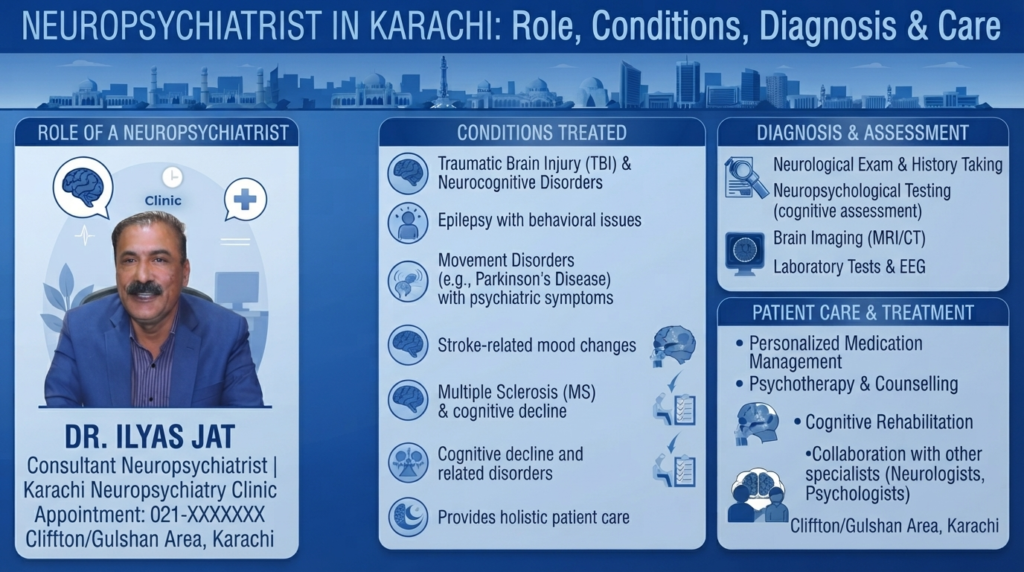
A neuropsychiatrist in Karachi is a medical doctor who looks at the connection between the brain and a person’s mental, emotional, behavioral, and cognitive health. In simple terms, neuropsychiatry brings together ideas from both psychiatry and neurology. This can be especially helpful when a person starts experiencing changes in mood, memory, behavior, personality, or thinking after a brain or nervous system problem. For people in Karachi, it can sometimes be confusing to know whether they should see a psychiatrist, neurologist, neuropsychologist, or neuropsychiatrist. The right choice usually depends on the symptoms and what may be causing them. Conditions such as depression, anxiety, dementia, epilepsy, stroke, Parkinson’s disease, and brain injuries can sometimes involve both neurological and psychiatric symptoms. In this guide, we will look at what a neuropsychiatrist does, the conditions they may be involved in treating, how an evaluation works, and when another specialist may be a better starting point. Book Your Appointment Today What Is a Neuropsychiatrist? A neuropsychiatrist deals with mental, emotional, behavioral, and cognitive problems that are linked to neurological or brain-related conditions. For example, someone may develop major personality changes after a brain injury, depression following a stroke, or behavioral problems along with dementia. In situations like these, simply looking at the psychiatric symptoms may not be enough. The doctor may also need to understand what is happening with the brain and nervous system. During an assessment, the doctor may review the patient’s medical history, medications, neurological symptoms, mental health history, mood, behavior, and changes in memory or thinking. Neuropsychiatric care is not always provided by one doctor alone. Depending on the patient’s situation, a psychiatrist may work with a neurologist, psychologist, neuropsychologist, rehabilitation specialist, or primary care doctor. What Does a Neuropsychiatrist Treat? There is no single list of symptoms that applies to every neuropsychiatric patient. The problems can be quite different depending on the underlying neurological condition. A neuropsychiatrist may be involved when a patient has: Mood or behavioral changes after a stroke Emotional or personality changes following a traumatic brain injury Psychiatric symptoms associated with epilepsy Depression or anxiety occurring alongside a neurological disease Memory and behavioral changes related to dementia Problems with impulse control after brain injury Psychiatric symptoms associated with movement disorders Cognitive difficulties that need further assessment Having a neurological condition does not automatically mean that someone needs a neuropsychiatrist. For example, a person with epilepsy may mainly need a neurologist to control seizures. However, if that person also develops significant depression, anxiety, behavioral changes, or other psychiatric symptoms, mental health assessment may become an important part of their care. Neuropsychiatrist vs Psychiatrist vs Neurologist These medical fields can overlap, which is why choosing the right specialist can sometimes be confusing. Specialist Main Focus Common Examples Psychiatrist Mental, emotional, and behavioral health Depression, anxiety, bipolar disorder, schizophrenia Neurologist Disorders of the brain, spinal cord, and nerves Epilepsy, stroke, Parkinson’s disease, migraines Neuropsychiatrist Psychiatric and behavioral problems connected with brain or neurological conditions Behavioral changes after brain injury, psychiatric symptoms related to neurological disease Neuropsychologist Detailed assessment of cognitive and psychological abilities Memory, attention, language, reasoning, and problem-solving testing A psychiatrist is a medical doctor who diagnoses and treats mental health conditions and can prescribe medication when appropriate. A neurologist mainly deals with disorders affecting the brain, spinal cord, and nervous system. A neuropsychologist has a different role. They commonly use structured tests to understand how well different areas of thinking are working. These may include memory, attention, language, processing speed, reasoning, and problem-solving. Neuropsychological testing can be useful after a brain injury or stroke and in conditions such as epilepsy and neurodegenerative diseases. Because symptoms can overlap, some patients may benefit from seeing more than one specialist. When Should You See a Neuropsychiatrist? A neuropsychiatric assessment may be useful when changes in mood, thinking, personality, or behavior seem to be connected with a neurological condition or brain injury. For instance, a family may notice that an older person who was previously independent has started behaving differently, forgetting important things, or becoming unusually confused. Similarly, someone may experience depression or anxiety after having a stroke or develop psychiatric symptoms while being treated for epilepsy. These situations do not necessarily mean that neuropsychiatry is the only answer. A psychiatrist, neurologist, or primary care doctor can often help decide which type of assessment is needed. Signs That May Need Professional Evaluation It is worth speaking with a healthcare professional if someone develops persistent or noticeable: Memory problems Personality or behavior changes Mood changes after a neurological illness Difficulty concentrating Problems completing familiar activities Depression or anxiety along with a neurological condition Confusion or changes in thinking Behavioral changes after a head injury Psychiatric symptoms along with seizures or another neurological disorder These symptoms can have many different causes. Having one or more of them does not automatically mean that a person has a particular neurological or psychiatric disorder. Conditions That Can Cause Neuropsychiatric Symptoms A number of neurological conditions can affect mood, behavior, memory, and thinking. The symptoms are different for each person and depend on the underlying condition. Stroke A stroke can affect parts of the brain involved in movement, speech, memory, emotions, and behavior. During recovery, some people may experience depression, anxiety, difficulty thinking, emotional changes, or changes in behavior. In such cases, treatment may involve several healthcare professionals, including neurological, psychiatric, and rehabilitation teams. Traumatic Brain Injury A traumatic brain injury can sometimes lead to changes in memory, concentration, mood, personality, or impulse control. The type of care needed depends on the severity of the injury and the symptoms that follow. Some patients may need neurological care, while others may benefit from psychiatric treatment, neuropsychological testing, or rehabilitation. Epilepsy Epilepsy is mainly a neurological condition, but it can also affect a person’s emotional and mental health. People living with epilepsy may experience depression, anxiety, or other psychiatric and behavioral problems. For these patients, treating the seizures and addressing mental health concerns may both be important. Dementia and Cognitive