
A peds psychiatrist is a mental health doctor who evaluates and treats emotional, behavioral, developmental, and psychiatric concerns in children and adolescents.
A pediatric psychiatrist, child psychiatrist, or child and adolescent psychiatrist may work with children, teenagers, parents, teachers, psychologists, pediatricians, and other healthcare professionals to identify concerns and develop an appropriate care plan.
For families in Karachi, knowing when a child may need specialist mental health support can make it easier to seek help at the right time.
Problems such as persistent anxiety, depression, severe behavioral changes, attention difficulties, emotional distress, developmental concerns, sleep problems, or problems affecting school and family life may require professional evaluation.
Child mental health care is particularly important because psychiatric symptoms in children can appear differently from those in adults.
Research from Pakistan also highlights the need for specialized child and adolescent mental health services.
What Is a Peds Psychiatrist?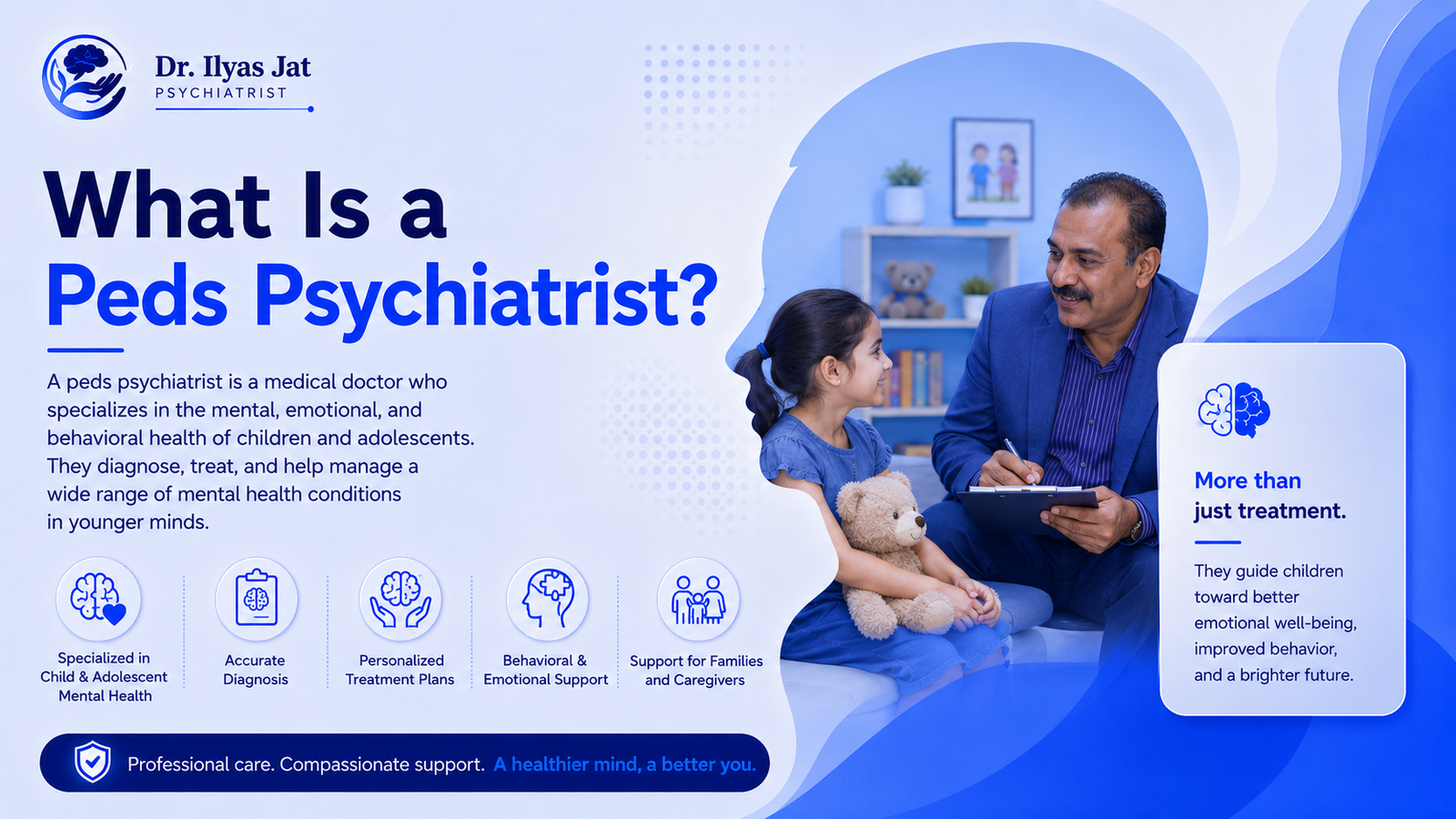
A peds psychiatrist is a medical doctor specializing in the assessment and treatment of mental, emotional, behavioral, and psychiatric conditions affecting children and adolescents.
Unlike general adult psychiatry, child and adolescent psychiatry considers a young person’s age, development, family environment, school experience, relationships, physical health, and behavior.
A child may also have difficulty explaining what they are feeling, so information from parents, caregivers, teachers, and other professionals can sometimes be important.
A pediatric psychiatrist, child psychiatrist, or child and adolescent psychiatrist may assess concerns such as anxiety, depression, attention difficulties, behavioral problems, emotional regulation difficulties, trauma-related symptoms, and other mental health conditions.
The exact assessment and treatment approach depends on the child’s symptoms, age, developmental stage, family circumstances, and overall health.
When Should a Child See a Child Psychiatrist?
Children naturally experience changes in mood, fears, frustration, and challenging behavior.
Not every emotional or behavioral change means a child has a psychiatric disorder.
Professional evaluation becomes more important when a problem is persistent, severe, unusual for the child’s developmental stage, or begins to interfere with everyday life.
Parents may consider seeking a child psychiatrist when a child experiences:
- Persistent sadness, anxiety, fear, anger, or irritability
- Major changes in sleep, appetite, energy, or daily behavior
- Difficulty concentrating that significantly affects school or home life
- Severe or persistent behavioral problems
- Social withdrawal or loss of interest in activities
- Repeated emotional outbursts that are difficult to manage
- Distressing reactions following trauma or major life changes
- Problems that interfere with school attendance or performance
- Recurrent unexplained physical complaints associated with emotional distress
- Thoughts or statements about self-harm or suicide
- Significant developmental, emotional, or behavioral concerns
A child does not need to have a confirmed psychiatric diagnosis before seeing a specialist.
An evaluation can help determine what may be contributing to the difficulties and whether further assessment or treatment is appropriate.
What Problems Can a Pediatric Psychiatrist Treat?
A pediatric mental health specialist may assess a broad range of emotional, behavioral, developmental, and psychiatric concerns.
Common areas may include:
Anxiety and Excessive Fear
Children can experience excessive worry, separation anxiety, social fears, panic symptoms, or persistent fears that interfere with school, friendships, sleep, or family activities.
Depression and Persistent Low Mood
Depression in children may not always appear as obvious sadness. Irritability, withdrawal, loss of interest, changes in sleep or appetite, poor concentration, declining school performance, and frequent physical complaints can also occur.
Attention and Hyperactivity Concerns
Children with significant attention, impulsivity, or hyperactivity problems may struggle at school and at home. Assessment is important because concentration difficulties can have multiple causes and should not automatically be attributed to one condition.
Behavioral Difficulties
Persistent aggression, severe defiance, emotional outbursts, rule-breaking, or other behaviors that significantly affect family and school functioning may require professional assessment.
Developmental and Emotional Concerns
Some children experience difficulties related to communication, social interaction, learning, emotional regulation, or development. A child psychiatrist may work with other professionals when a broader multidisciplinary evaluation is needed.
Trauma-Related Difficulties
A child who has experienced a frightening event, loss, abuse, family conflict, accident, or another traumatic experience may develop emotional or behavioral symptoms. Professional support can help determine appropriate care.
Child Psychiatrist vs Pediatrician vs Psychologist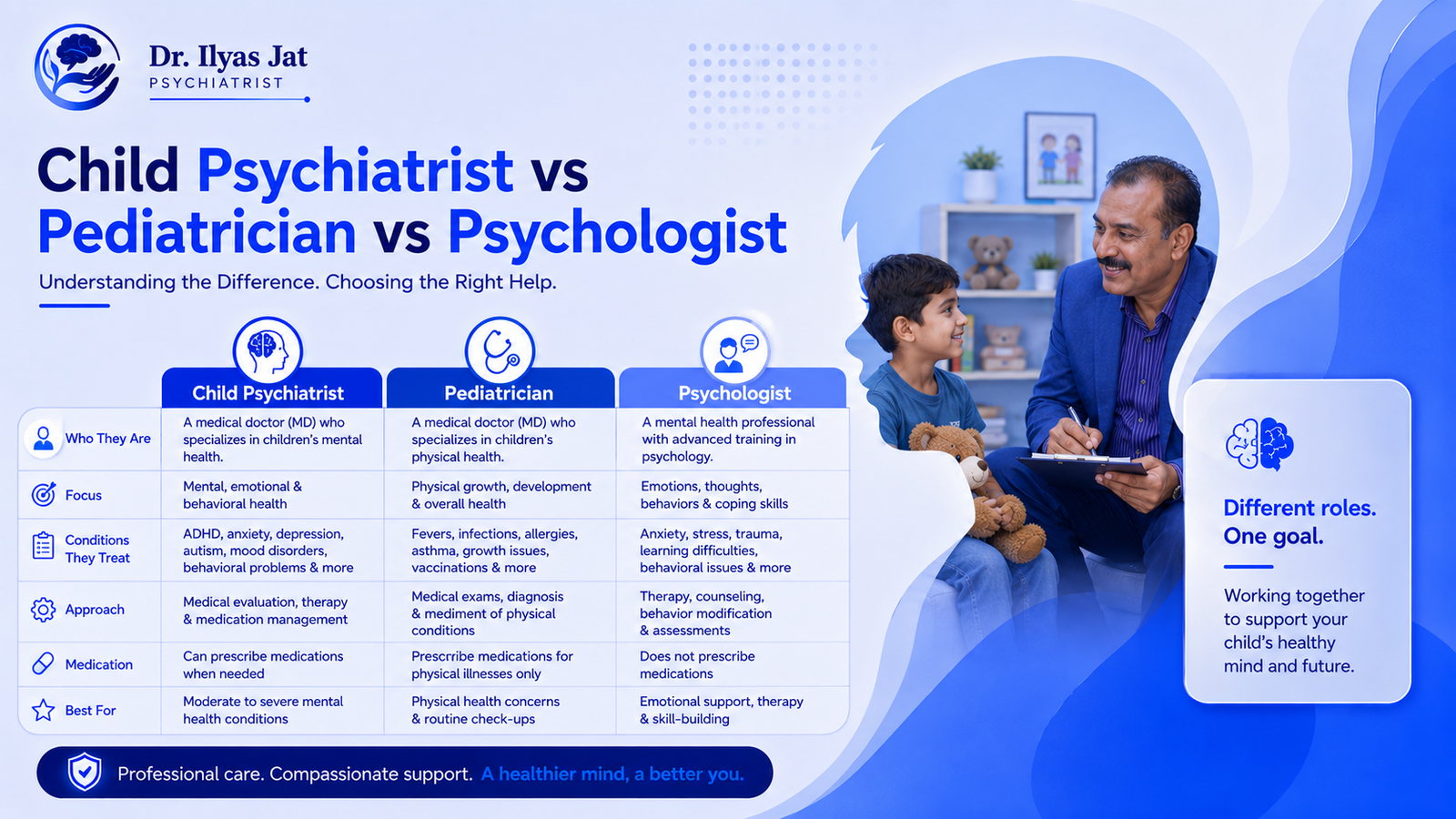
Parents sometimes find it difficult to know which professional they should approach first. These professionals can have different roles, although they may work together.
|
Professional |
Main role |
When they may help |
|
Pediatrician |
General medical assessment and child health care |
Physical health problems, developmental concerns, initial screening, or referral |
|
Child Psychiatrist |
Medical assessment and psychiatric treatment |
Significant emotional, behavioral, or psychiatric concerns |
|
Clinical Psychologist |
Psychological assessment and therapy |
Emotional, behavioral, cognitive, and psychological concerns and psychotherapy |
|
Child Behavioral Health Specialist |
Behavioral and emotional support |
Behavioral difficulties, coping skills, family, and school related concerns |
The most suitable professional depends on the child’s symptoms. In some situations, a pediatrician may begin the assessment and recommend a referral to a child psychiatrist or psychologist.
What Happens During a Child Psychiatry Appointment?
The first consultation usually involves gathering detailed information rather than immediately deciding on a diagnosis.
A child psychiatrist may ask about:
- The child’s current symptoms
- When the problem started
- Changes in behavior or mood
- School performance and attendance
- Relationships with parents, siblings, and peers
- Sleep and eating patterns
- Developmental history
- Medical history
- Family mental health history
- Major stressful events
- Current medications or treatments
- The child’s strengths and interests
Depending on the situation, the specialist may also want information from parents, caregivers, teachers, pediatricians, psychologists, or other professionals.
A comprehensive evaluation can be particularly important because children may express emotional difficulties through behavior or physical complaints rather than clearly describing their feelings.
How Is Child Mental Health Diagnosed?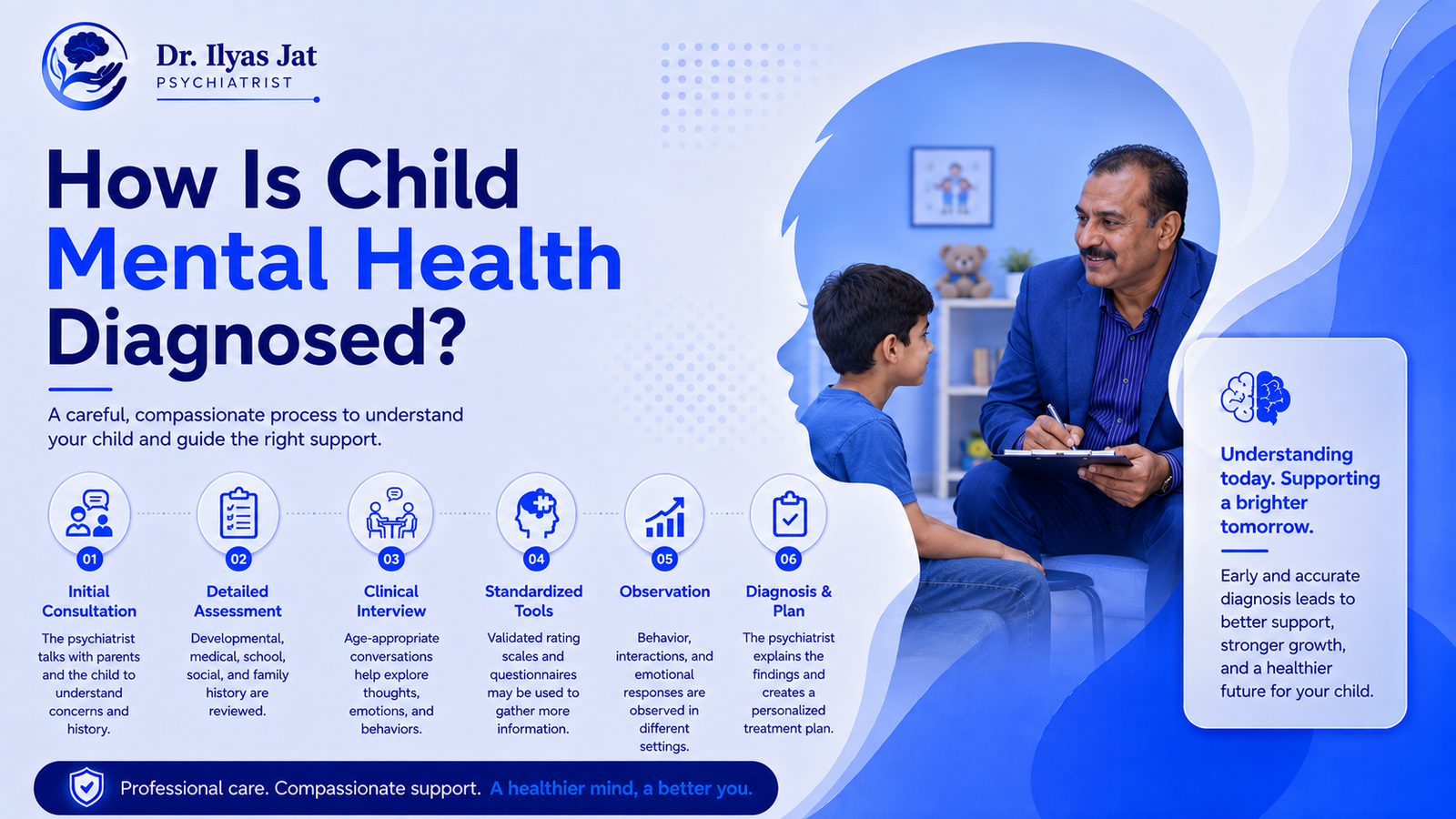
There is no single test that can diagnose every child mental health condition.
Assessment may involve a clinical interview, developmental history, behavioral observations, questionnaires, psychological assessment, school information, physical health evaluation, or other investigations when medically appropriate.
The psychiatrist considers the pattern, duration, severity, and impact of symptoms rather than relying on one behavior or one questionnaire.
This is why parents should avoid self-diagnosing a child based only on online symptom lists.
What Treatment Can a Peds Psychiatrist Provide?
Treatment depends on the child’s individual circumstances and the underlying problem. There is no single treatment that works for every child.
Depending on the evaluation, care may involve psychotherapy, behavioral interventions, family support, parent-focused strategies, school coordination, or medication when clinically appropriate.
In more complex situations, a psychiatrist may collaborate with a psychologist, pediatrician, neurologist, speech therapist, occupational therapist, school counselor, or other professional.
Pakistan’s developing child and adolescent mental health services demonstrate why coordinated specialist care can be valuable for children with complex needs.
A published Pakistani service model described collaboration among psychiatrists, clinical psychologists, play therapists, speech therapists, nurses, and families.
Does Every Child Need Medication?
No. Medication is not automatically required when a child sees a psychiatrist.
Depending on the concern, treatment may focus on psychotherapy, behavioral approaches, family support, environmental changes, school-based strategies, or other interventions.
Medication may be considered in selected cases when the clinician believes its potential benefits outweigh its risks.
Parents should discuss the reason for any recommended medicine, expected benefits, possible side effects, duration, monitoring, and alternatives with the prescribing doctor.
Why Early Professional Support Can Matter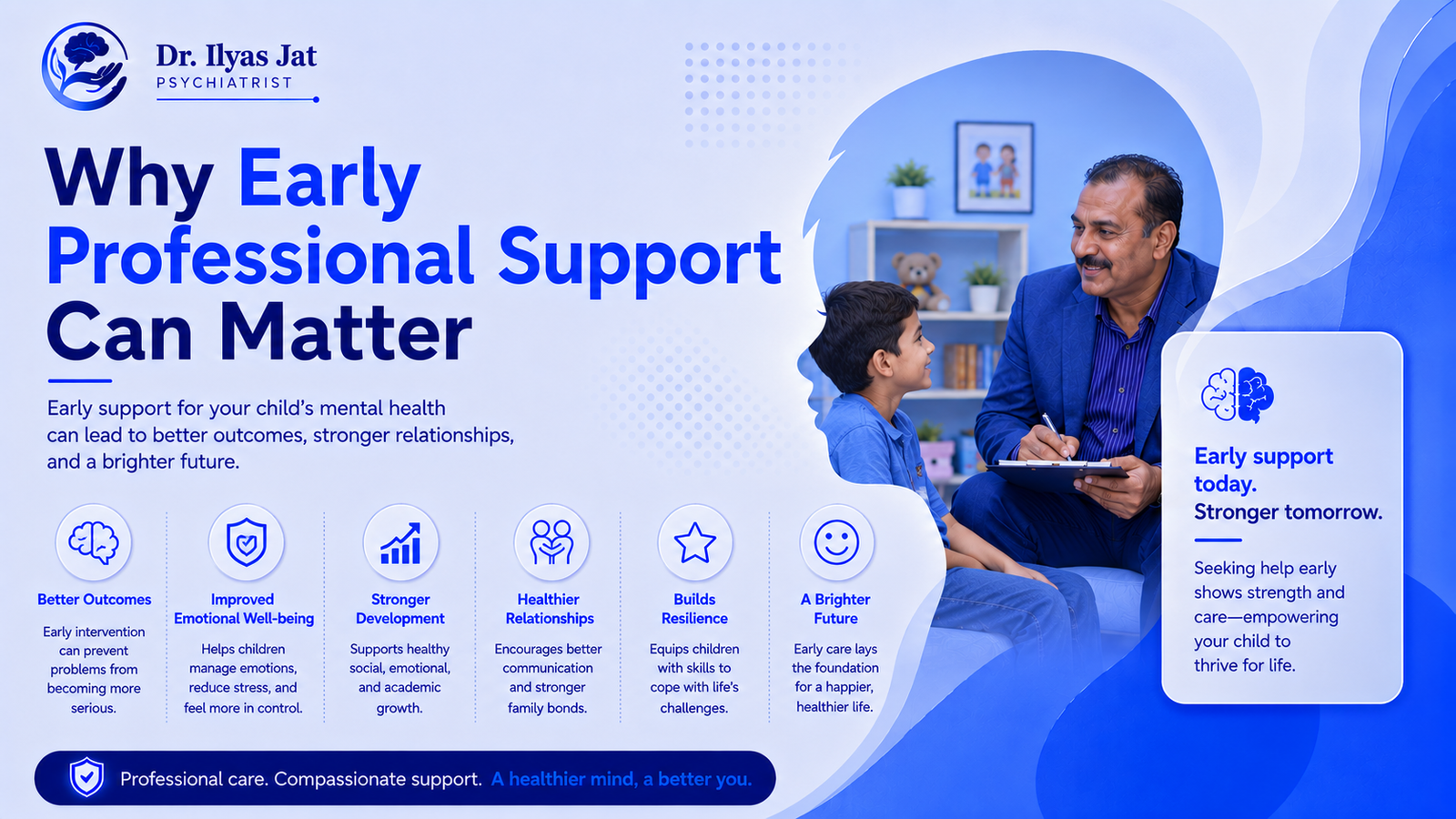
Early attention to persistent emotional or behavioral problems can help families identify difficulties before they become more disruptive to school, relationships, or daily functioning.
For example, imagine a teenager who has gradually stopped socializing, is frequently missing school, sleeps excessively, and has lost interest in activities they previously enjoyed.
Parents may initially interpret this as ordinary teenage behavior. If the changes persist or become severe, a professional assessment can help determine whether there is an underlying mental health concern.
Research involving adolescents in Karachi has also examined anxiety in school-going young people, highlighting the relevance of emotional health during adolescence.
Early evaluation does not necessarily mean a child will receive a psychiatric diagnosis.
It provides an opportunity to identify possible causes and determine what kind of support is appropriate.
How to Choose a Child and Adolescent Psychiatrist in Karachi
Finding a suitable specialist is about more than searching for a doctor with the words “child psychiatrist” in a profile.
Parents should consider:
- Relevant training and credentials
Check the clinician’s medical qualifications, psychiatric training, and relevant child and adolescent mental health experience. - Age group treated
Confirm that the specialist regularly works with the child’s age group. - Assessment approach
Ask how the initial assessment is conducted and whether parents or caregivers are involved. - Treatment options
Find out whether the approach may include therapy, family work, behavioral strategies, medication when appropriate, or referrals to other professionals. - Communication style
Children need to feel safe enough to communicate. A respectful and age-appropriate approach can make consultations more productive. - Follow-up arrangements
Ask how progress is monitored and how follow-up appointments are handled. - Coordination with other professionals
Some children benefit from coordinated care involving pediatricians, psychologists, teachers, speech therapists, or other specialists.
If a family is considering a consultation with Dr Ilyas Jat, they should verify his current qualifications, relevant child and adolescent psychiatry services, consultation availability, and the age groups he treats before booking an appointment.
This allows parents to select care based on current, verifiable information rather than unsupported claims.
Questions Parents Can Ask a Child Psychiatrist
Parents often feel nervous during the first appointment and may forget important questions. It can help to prepare a short list beforehand.
Useful questions include:
- What could be contributing to my child’s symptoms?
- Does my child need further assessment?
- Could another medical or developmental issue be contributing?
- What treatment options are available?
- Is psychotherapy appropriate?
- If medication is recommended, why is it being considered?
- What changes should we monitor?
- How can parents support treatment at home?
- Should the school or teacher be involved?
- When should we schedule a follow-up?
Writing down examples of concerning behaviors, when they started, and how frequently they occur can also make the appointment more informative.
When Is Urgent Mental Health Help Needed?
Some situations require urgent professional attention rather than waiting for a routine appointment.
Parents or caregivers should seek immediate emergency assistance if a child or teenager is at immediate risk of harming themselves or another person, has made a serious suicide attempt, is experiencing severe confusion or loss of contact with reality, or is otherwise in immediate danger.
Do not leave a child alone when there is an immediate safety concern. Contact an appropriate emergency medical service or take the child to the nearest emergency department.
Common Mistakes Parents Should Avoid
Parents can unintentionally make emotional and behavioral problems harder to discuss.
Common mistakes include:
- Assuming every behavior is simply “bad behavior”
- Labeling a child as lazy, difficult, or attention-seeking
- Comparing the child negatively with siblings or classmates
- Starting medication without medical supervision
- Stopping prescribed treatment without consulting the clinician
- Relying exclusively on online self-diagnosis
- Ignoring persistent changes in mood or functioning
- Waiting until a problem becomes severe before seeking professional advice
A calm, non-judgmental conversation can make it easier for a child to share concerns.
Frequently Asked Questions
What is a peds psychiatrist?
A peds psychiatrist is a medical doctor who specializes in mental health concerns affecting children and adolescents.
They can assess emotional, behavioral, developmental, and psychiatric problems and recommend an individualized treatment approach.
What is the difference between a pediatric psychiatrist and a child psychiatrist?
In most everyday healthcare searches, the terms pediatric psychiatrist and child psychiatrist refer to a specialist who focuses on children’s and adolescents’ mental health.
The exact training and scope of practice should be checked for the individual clinician.
When should I take my child to a psychiatrist?
Consider professional evaluation when emotional or behavioral changes are persistent, severe, unusual for the child’s developmental stage, or interfere with school, relationships, sleep, family life, or daily functioning.
Can a child psychiatrist prescribe medication?
A psychiatrist is a medical doctor and may prescribe medication when clinically appropriate.
However, medication is not necessary for every child. The treatment plan depends on the child’s symptoms, diagnosis, health, age, and individual circumstances.
Does seeing a child psychiatrist mean my child has a mental illness?
No. A psychiatric consultation is an assessment. The purpose may be to determine whether symptoms are related to a mental health condition, developmental issue, medical concern, environmental stress, or another factor.
Should parents attend a child’s psychiatric appointment?
Parents or caregivers are often an important source of information, particularly for younger children.
The exact involvement of parents depends on the child’s age, circumstances, privacy considerations, and clinical needs.
Is child psychiatry available in Pakistan?
Child and adolescent mental health services are available in Pakistan, although access and availability vary by city and healthcare setting.
Published Pakistani research has identified a need for further development of specialized child and adolescent services.
How do I find a child psychiatrist in Karachi?
Look for a qualified clinician with relevant psychiatric training and experience working with children or adolescents.
Verify current credentials, age groups treated, consultation location, treatment approach, and follow up arrangements before making an appointment.
Conclusion
A peds psychiatrist can help evaluate emotional, behavioral, developmental, and psychiatric concerns in children and teenagers.
Persistent anxiety, depression, severe behavioral changes, attention difficulties, social withdrawal, trauma-related symptoms, or problems affecting school and family life may justify professional assessment.
For parents in Karachi, the best approach is to focus on the child’s actual needs rather than choosing a provider based only on an online title or keyword.
Verify qualifications, relevant specialist experience, assessment methods, treatment options, and follow-up arrangements.
If you are considering Dr Ilyas Jat, verify his current child and adolescent mental health services and professional credentials before scheduling a consultation.
Most importantly, seek timely professional help when a child’s symptoms are persistent, worsening, or affecting safety and daily functioning.