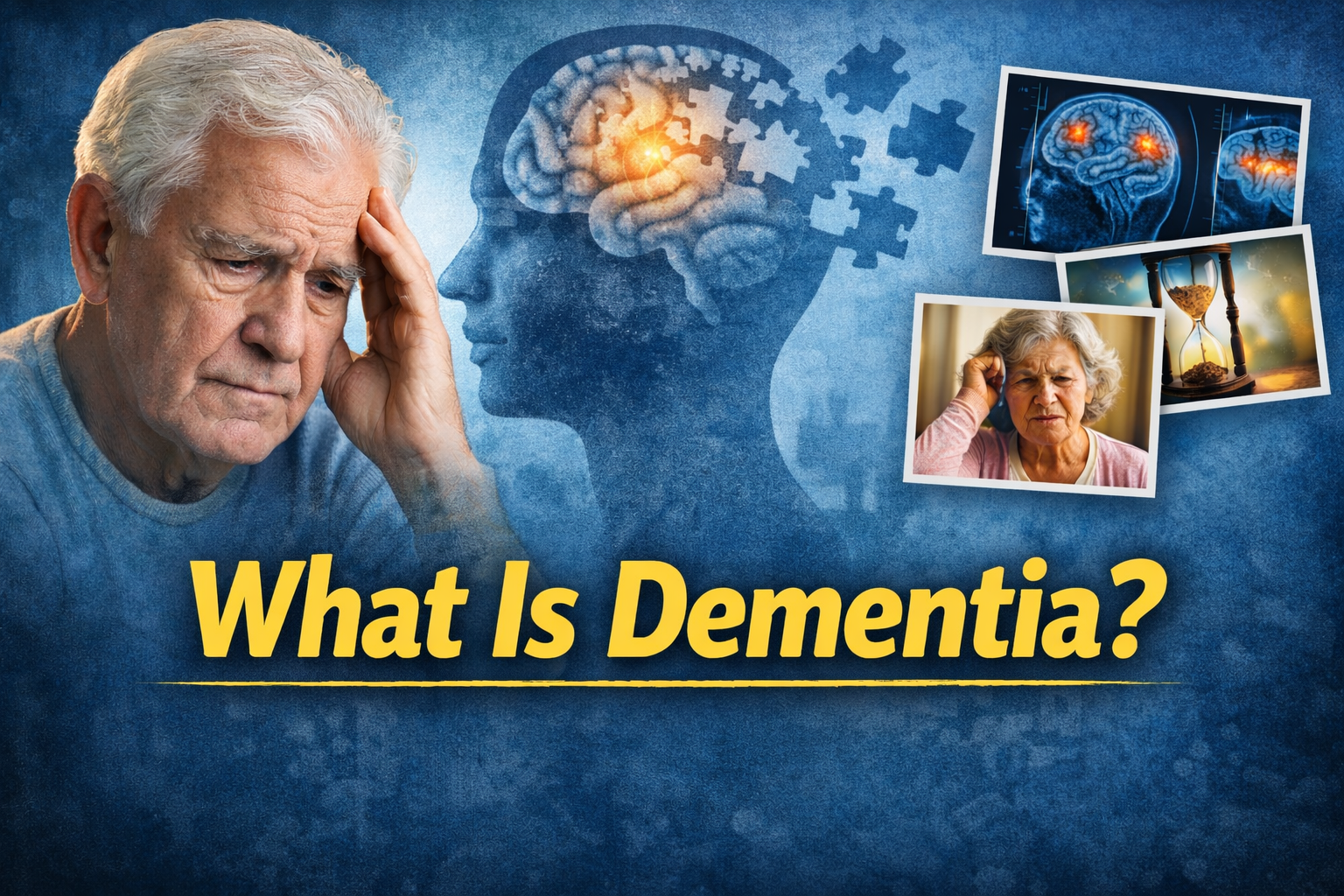
By Tekcurio / January 22, 2026 Dementia and Related Disorder | Published: January 21, 2026 What Is Dementia? Early Signs, Causes, and Related Disorders Explained More on : All Blogs youtube-app Summarize this post with Chat GPT Perplexity [chatgpt_button] This page covers: – What Is Dementia –What Is Dementia Disease – Dementia and Related Disorder – Dementia Symptoms – Dementia Disease Causes – Dementia Treatment Options – Daily Life With Dementia – Amnesia vs Dementia – Emotional and Behavioral Changes – Risk Factors of Dementia – Diagnosis Process – Can Dementia Be Prevented – Living With Hope and Support FAQs: – What other disorders are related to dementia? – What are the signs of dementia? – What is the best treatment for dementia? – Can dementia be treated if caught early? – Which disease is similar to dementia? – What is sundown syndrome? – What is the first indicator of dementia? – Conclusion When the process begins to weaken gradually, the family tends to ignore it by claiming that it is a normal age related process. However, when a loved one loses the names, places, or even talks or engages in daily activities, the fear sets in. Many people search online asking what is dementia because they want clear answers without medical confusion. Dementia is not only a loss of memory. It influences decision making, thinking, and behavior. The patients are lost in their world, and families are helpless just by watching someone they love transform day by day. This emotional strain turns out to be a big sore point for both the caregivers and the patients. Here in this detailed guide, you will get to know what dementia actually is, how it progresses, what symptoms should never be overlooked, and what treatment measures can aid in improving the quality of life. All the sections are authored using very simple language, so any person can read and study without any complications. Book An Appointment For Best Treatment What Is Dementia The common belief among people is that dementia is one disease, but that is not the case. Dementia is a general disease that is used to refer to a deterioration in mental capacities to such an extent that it disrupts normal life. It impacts the memory, thinking capabilities, problem solving, communications, and behavior. All affairs of the body are governed by the brain. Communication between the brain cells is weakened when the brain cells are damaged. This causes confusion, memory loss, personality loss, and inability to perform normal tasks. The older adults are mostly those who experience dementia, although not a normal aspect of aging. Healthy aging can incorporate a slight degree of forgetfulness, and dementia leads to severe and progressive mental impairment. What Is Dementia Disease Many people also ask what is dementia disease because doctors often use this phrase. Dementia is used to refer to the health conditions that deteriorate the brain cells. Alzheimer’s disease is the most prevalent, and several other disorders may result in dementia. The types have different impacts on the brain, but the result is the same, which is loss of mental abilities. Dementia tends to impair gradually and increase as it progresses. Early diagnosis aids patients in coping with symptoms and makes future care plans that are effective. Dementia and Related Disorder Dementia and other disorders are various diseases that lead to impaired cognition. The disorders involve memory, language, reasoning, attention, and emotional control. Other related disorders that are prevalent are Alzheimer’s disease, vascular dementia, Lewy body dementia, and frontotemporal dementia. In each of them, the brain is harmed in various sections. Overlapping of the symptoms necessitates a medical history, a brain scan, and cognitive tests in order to be diagnosed. Early diagnosis helps the family to be ready emotionally and medically. Dementia Symptoms Recognizing dementia symptoms early can make a significant difference. The symptoms usually come out slowly and get worse with time. Frequent memory loss, which interferes with day to day life, is one of the first indications. Human beings can remember past things but forget new ones with ease. Time and place confusion also occurs. The other symptoms comprise the inability to find words, pose repetitive questions, lose things, not judge correctly, change moods, and avoid social life. Some will get nervous or violent without any apparent justification. Later on, the patients might have difficulty with personal cleanliness, food consumption, and identification of family members. Dementia Disease Causes Brain cell damage is the primary cause of dementia. Such an injury does not enable the brain cells to communicate effectively. Various conditions result in different kinds of damage. The buildup of proteins in the brain is a result of Alzheimer’s disease. Vascular dementia is caused as a result of reduced blood flow or blocked vessels. Others are head trauma, infections, chronic alcoholism, vitamin depletion, and some neurological conditions. In most instances, the causes of dementia are a combination of several factors. Dementia Treatment Options There is currently no complete cure, but dementia treatment focuses on slowing progression and improving daily life. Doctors can prescribe drugs that aid in memory, concentration, and thinking capacity. These drugs do not cure the illness but can slow the symptoms down to some extent. Non medical treatment is also significant. Mental exercises, routine, exercise, and emotional support could be of much help in helping the patients become independent to the later stages. Caregiver support is also necessary. Counseling and education have alleviated stress and better quality of care. Daily Life With Dementia Dementia is an emotionally draining condition to live with. Failure to recall familiar faces or places may cause fear among the patients. There are basic chores that become daunting. Families tend to be frustrated, depressed, and guilty. Patience, empathy, and consistency are needed in caregiving. Comfort and safety of patients can be enhanced by creating a non stressed environment, reminders, living at a soft tone, and routines. Amnesia vs Dementia Many people confuse memory loss conditions, so knowing amnesia vs dementia is important. Memory is primarily affected by amnesia. An individual can lose his or her past experiences, but he or she can still reason, decide, and articulate. Dementia influences the functions of the brain in several ways. There is a loss of memory and confusion ensues, as well as poor judgment, a change of behavior, and impairment in performing daily activities. Amnesia is not permanent and might happen in a moment with or without injury or trauma. Dementia is progressive and deteriorates with time. Emotional and Behavioral Changes Dementia does not just affect memory. The emotional changes experienced are normal and painful to observe by the family. Patients can be depressed, anxious, suspicious, or even angry. Even in peaceable people, personality changes can be observed. An example of these changes is a result of damage to brain parts that control emotions. Knowing this will assist the families to react with compassion rather than frustration. Risk Factors of Dementia Some risk factors predispose one to dementia. The most significant factor is age, and those who are above 65 years old. Others are family history, high blood pressure, diabetes, smoking, obesity, lack of physical activity, and social isolation. It can be considered that maintaining the health of the brain during the course of life can help to lower the risk, though it is not a complete measure that can be taken against dementia. Diagnosis Process A dementia diagnosis is based on a medical examination. Physicians evaluate memory, language, problem solving, and functioning. Blood tests, brain imaging, and cognitive testing aid in the determination of the causes and in the exclusion of other conditions. Early diagnosis gives time for treatment planning, lifestyle change, and legal preparation. Can Dementia Be Prevented No prevention is certain, but healthy habits could mitigate the risk. Exercising on a regular basis, maintaining a nutritious diet, mental stimulation, good sleep, and social activity are helpful in keeping the brain healthy. It is also important to manage blood pressure, cholesterol, and diabetes. Living With Hope and Support Despite the difficulty of dementia, it is still possible to live a good life. Empathy and understanding, as well as sympathy and patience, matter. Family coping is made easier by community programs, groups of caregivers, and professional support services. During each phase of the condition, love, respect, and dignity are still necessary. FAQs: What other disorders are related to dementia? Several disorders are related to dementia, including Alzheimer’s disease, vascular dementia, Lewy body dementia, and frontotemporal disorders. These conditions damage brain cells and affect memory, thinking, and behavior in different ways. What are the signs of dementia? Common signs of dementia include frequent memory loss, confusion, difficulty finding words, trouble completing daily tasks, mood changes, and poor judgment. These symptoms usually worsen gradually over time. What is the best treatment for dementia? There is no single cure for dementia, but treatment focuses on managing symptoms. Medications, mental activities, healthy routines, and emotional support help slow progression and improve daily quality of life. Can dementia be treated if caught early? Early diagnosis allows better symptom control and planning. While dementia cannot be fully cured, early treatment can slow decline and help patients maintain independence for a longer time. Which disease is similar to dementia? Alzheimer’s disease is the condition most similar to dementia because it is the most common cause. Other brain disorders may share symptoms, but dementia affects multiple mental functions together. What is sundown syndrome? Sundown syndrome refers to increased confusion, anxiety, or agitation that occurs in the evening or at night in people with dementia. It is linked to fatigue, low lighting, and changes in the body clock. What is the first indicator of dementia? The earliest indicator of dementia is persistent memory loss that affects daily life, such as forgetting recent conversations, repeating questions, or struggling with familiar tasks. Conclusion Many people search online asking what is dementia because they want clarity during a stressful and emotional time. Dementia is a serious condition that affects memory, thinking, emotions, and daily independence. It is not a normal part of aging, and early signs should never be ignored. With proper medical care, emotional support, and lifestyle management, patients and families can face dementia with strength and preparation. Knowledge reduces fear, and awareness helps create better care and compassion for those living with this condition. Please enable JavaScript in your browser to complete this form.Please enable JavaScript in your browser to complete this form.Name *Email * Name Email Phone Phone Number *Comment or MessageSubmit