

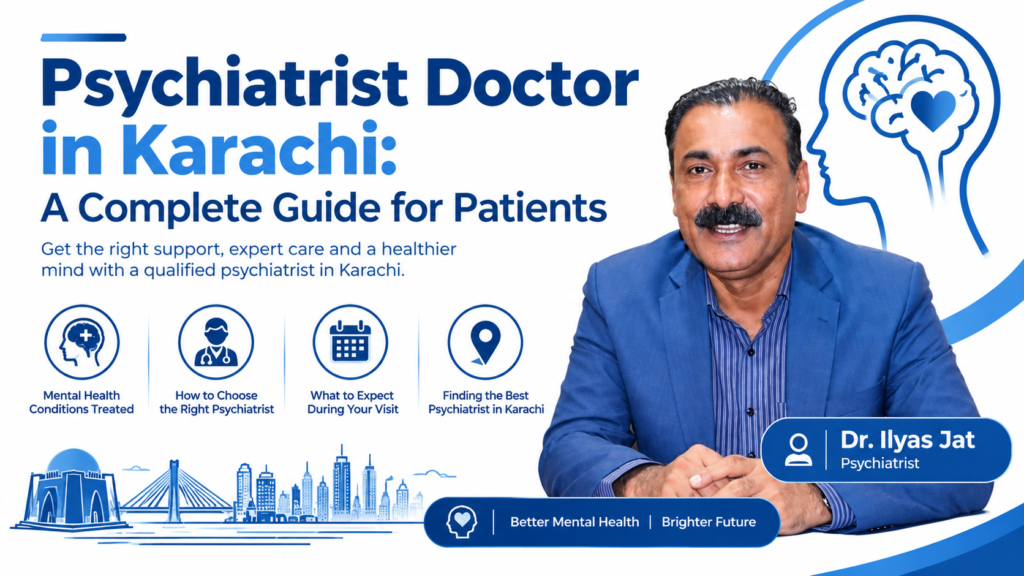
What Is a Psychiatrist Doctor?
A psychiatrist is a medical doctor who is specialised in mental health. Whereas psychiatrists may have more medical training and be able to determine mental health problems through both medical and psychological means, professionals specializing in psychological therapy do not.
They can make a diagnosis of mental health disorders, prescribe proper medication if needed, deliver or coordinate psychotherapy, and track treatment as it progresses.
Questions about depression and anxiety are not the only parts of a psychiatric evaluation. Various factors, including symptoms, medical history, medication history, substance use, family history, sleep, relationships, work or school, and other factors that could impact mental health, may be considered by a psychiatrist. A detailed assessment will help to decide what kind of support to seek.
For instance, chronic anxiety may go along with an anxiety disorder, depression, a side effect of a medication, substance abuse, a physical health issue, or another mental health disorder.
It is therefore better to make a proper evaluation than to attempt to determine the cause from symptoms.
What Does a Psychiatrist Treat?
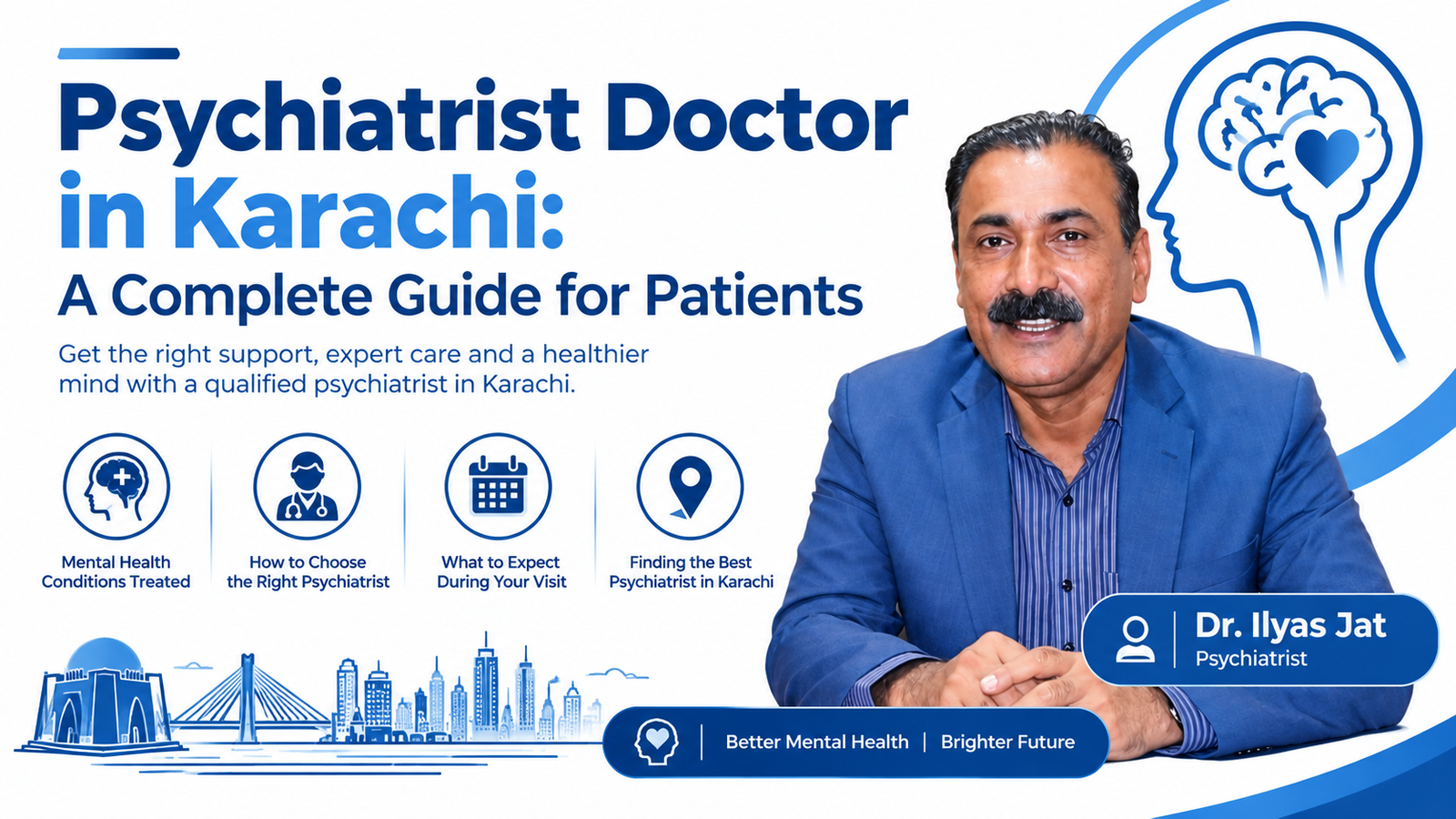
Psychiatrists specialize in the treatment of a spectrum of mental health disorders. Treatment will vary depending on the individual’s symptoms, diagnosis, medical history, level of severity, age, and personal situation.
The psychiatrist also treats patients for the following conditions:
- Depression / low mood (recurrent)
- Panic attacks and anxiety disorders.
- Bipolar disorder
- Obsessive-compulsive disorder
- Post-traumatic stress disorder
- Schizophrenia and other psychosis (psychotic disorders.
- The use of substances and the need to control them.Substance use and addiction.
- Any sleep disturbances that are related to mental health issues
- Some behavioral and emotional disorders
- Some memory, thinking, or cognitive issues
Depending on their specialty, psychiatrists can also treat children, adolescents, adults, and senior citizens.
In more complex circumstances, a wider team can be involved in psychiatric care, including psychologists, therapists, psychiatric nurses, occupational therapists, and social workers.
When Should You See a Psychiatrist?
It’s not necessary to wait until a mental health problem is serious before getting professional help. Psychiatric evaluation could be beneficial if emotional, behavioral, or psychological symptoms are persistent, worsening, or interfering with daily living.
If you have persistent changes, such as:
- Profound or enduring sadness
- Regular anxiety or panic attacks
- Significant shifts in eating and/or sleeping habits.
- Poor focus or normal functioning
- Extreme mood changes
- Recurrent persistent and intrusive thoughts or actions
- Seeing or hearing things that others don’t.Seeing or hearing things that others do not.
- Abnormal doubt or suspicion or odd ideas
- Alcohol/drug issues
- Discussions about self harm/suicide
- Radical shifts in behavior or emotions
An evaluation by a professional is especially critical if symptoms are interfering with work, school, relationships, personal safety, or ability to manage daily living.
In cases where the individual is at immediate risk of harming self or others, a psychiatric appointment should be postponed, and immediate medical emergency assistance should be sought.
What Happens During a Psychiatric Assessment?
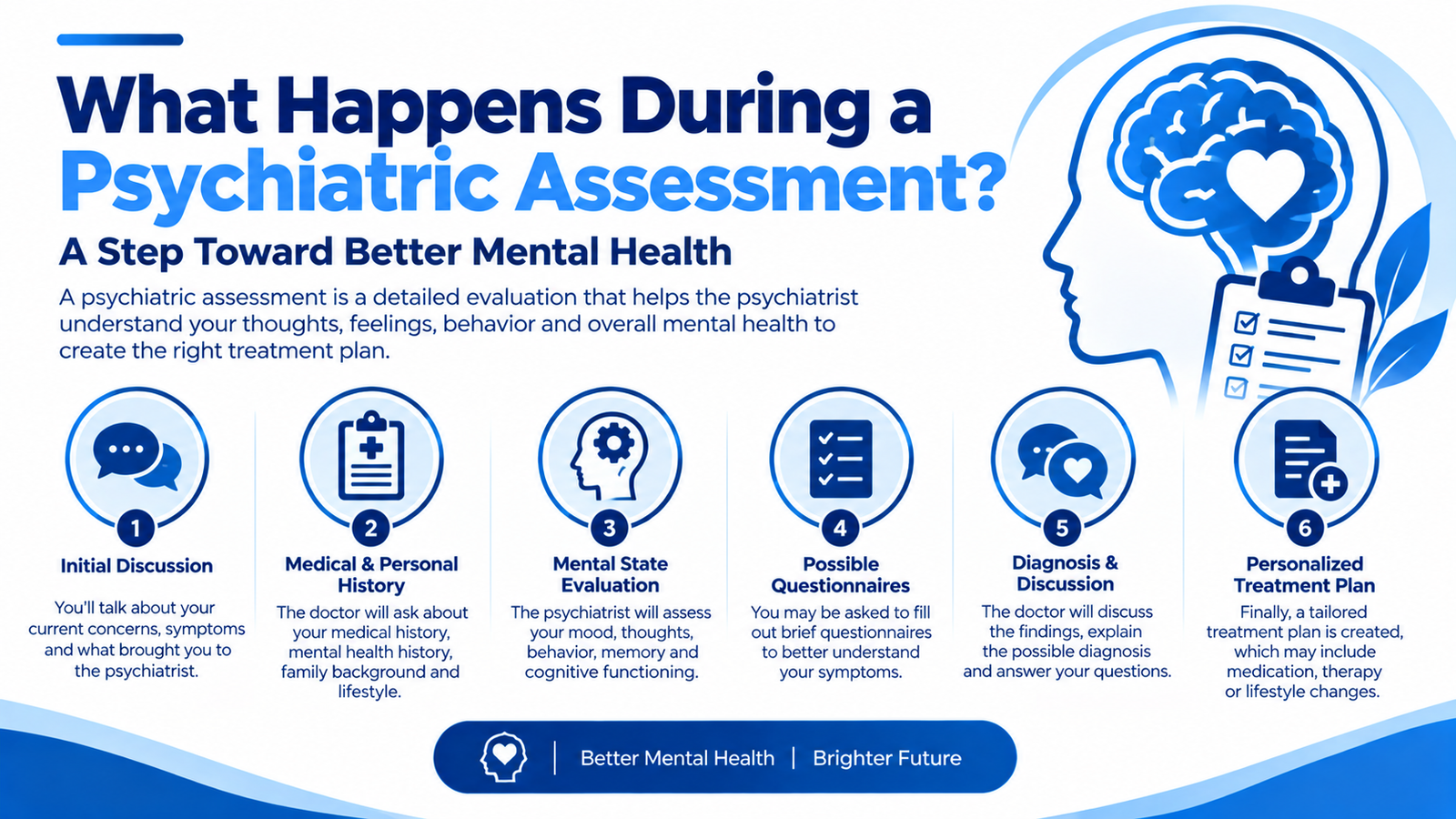
The initial part of a psychiatric appointment is likely to involve a thorough discussion. The psychiatrist will ask questions regarding your current symptoms, when they began, how often they occur, and how they impact your life.
Other areas the assessment might look at include past mental health issues, physical health, medications, family, sleep, substance use, relationships, work, education, and other factors.
Mental health assessments are not meant to be a pass or fail examination, but rather used to identify the type of help and support that could be useful.
What to say to the psychiatrist?
Describe your symptoms as accurately as you can and as honestly as possible. Do not required to use medical terminology.
Instead of expressing the feeling of being sad, worried, restless, exhausted, unable to sleep, socially withdrawn, unable to concentrate, express each of these feelings as opposed to saying merely, “I feel bad.
It’s also beneficial to take note of:
- When the symptoms occurred.At the onset of symptoms.
- Their frequency or incidence.The rate of occurrence.
- If they are getting better or worse
- If there are any significant changes in sleep patterns or appetite.
- Prescription or over-the-counter medications you are already using or supplements.
- Previous treatment
- Alcohol or drug abuse (if applicable), and
- Any ideas of hurting herself
- The questions that you want to ask the psychiatrist
The more pertinent information the doctor has, the easier he may be able to develop an appropriate care plan.
How Is a Mental Health Condition Diagnosed?
However, there is no single test that would rule out any mental health condition. Diagnosis typically requires a clinical evaluation of the symptoms, history, functioning, and other factors.
A psychiatrist might also explore physical health issues, side effects of medication, substance abuse, and other medical issues that may be affecting symptoms. For example, assessment for psychosis consists of an examination of symptoms and potential causes, and not a single laboratory test.
The intention isn’t just to give a label to a person’s symptoms. A clear assessment can be helpful for treatment and to identify the type of professional assistance that may be of benefit.
Psychiatric Treatment Options
Various people receive different treatments. Both psychotherapy and medication, or lifestyle modification or a combination of these, may be indicated in some cases.
Medication
When indicated, psychiatric medications may be prescribed by psychiatrists. Medicines can be used to treat the symptoms of the disorder; depending upon the condition, these may include severe depression, anxiety, mood instability, psychosis, or other psychiatric conditions.
Medication should be prescribed and monitored by a competent health care worker. Patients should not begin, discontinue, or adjust psychiatric medications without consulting the treating clinician.
Psychotherapy
It is a form of treatment based on talking to people, using structured conversations and psychological methods to help them cope with emotional, behavioral, and mental health issues.
The practitioner of psychotherapy can be a psychologist, a therapist, or a psychiatrist, depending on the professional’s training and practice. Sometimes, medicine and psychological treatment are combined.
Combined Treatment
In certain mental health disorders, medication and psychotherapy might be indicated. It is dependent on the diagnosis, severity of the symptoms, prior treatment, and other factors.
No one treatment fits all. Therefore, treatment should be evaluated from time to time and not simply considered a one-size-fits-all treatment.
Psychiatrist vs Psychologist: What Is the Difference?
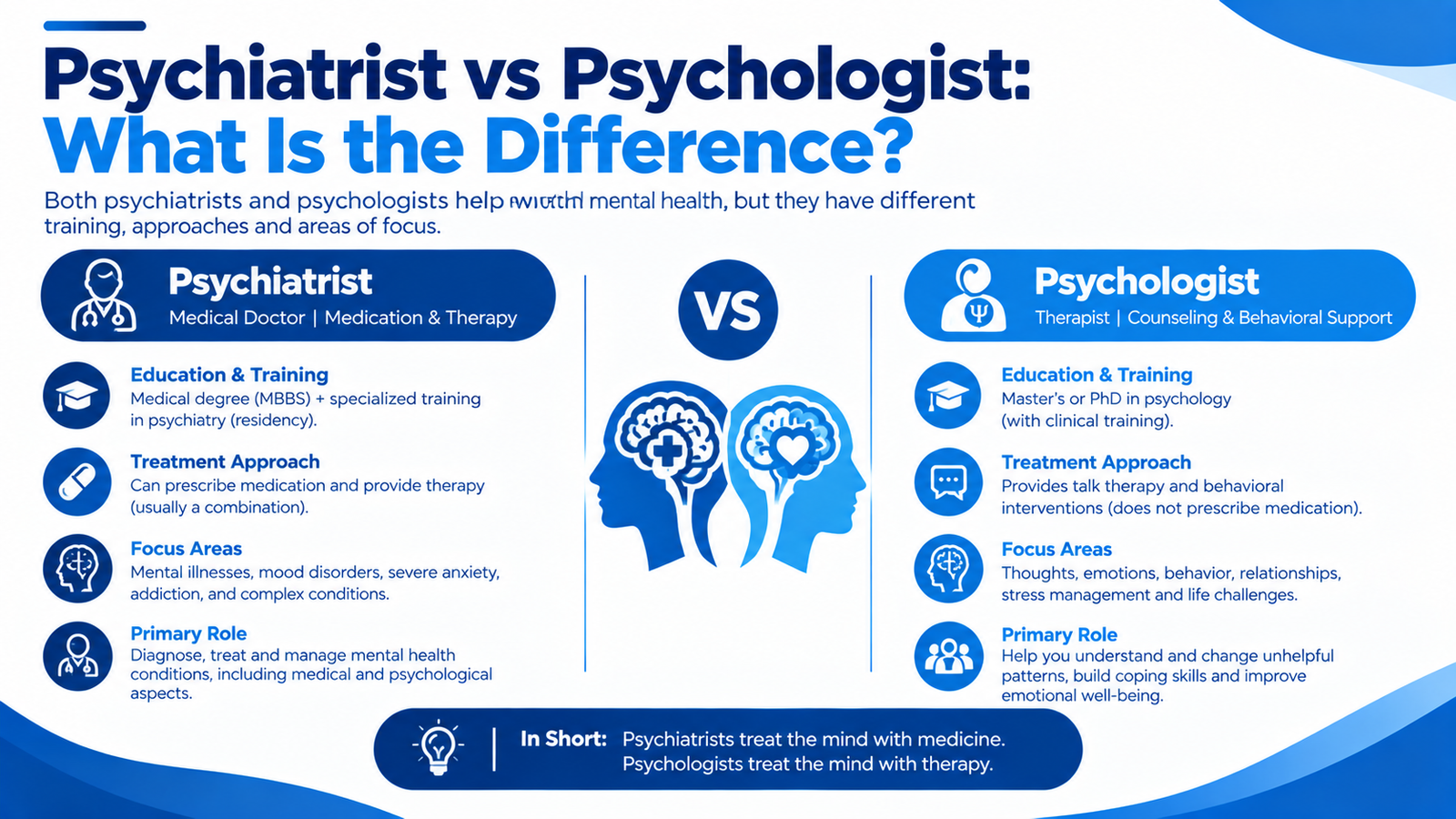
Patients often search for a psychiatrist when they actually need help deciding between a psychiatrist and psychologist. Both can play important roles in mental healthcare, but their training and responsibilities differ.
Factor | Psychiatrist | Psychologist |
Medical doctor | Yes | Usually no |
Mental health assessment | Yes | Yes |
Psychological assessment | May perform or coordinate it | Yes |
Can prescribe medication | Yes, where legally authorized | Usually no |
Psychotherapy | May provide it | Core part of many psychologists’ work |
Medical factors | Can assess these as a doctor | Usually works within psychological scope |
Common role | Diagnosis, medical treatment, medication and care coordination | Psychological assessment and therapy |
Psychiatrists complete medical training followed by specialist psychiatric training. Psychologists generally have specialized academic and clinical training in psychology and psychological treatment. Exact professional roles and prescribing laws can vary by jurisdiction.
If medication may be needed, symptoms are severe, or the situation involves complex psychiatric symptoms, a psychiatrist may be an appropriate professional to consult.
How to Choose a Psychiatrist Doctor in Karachi
When searching for a psychiatrist, it’s not simply about selecting the first name that comes up on the web. Professional qualifications, specialty and specialization in the relevant field, clinic location, communication style, and treating the patient’s type of problem are considerations.
Check prior to booking an appointment:
- Professional qualifications: Check for medical and psychiatric qualifications and registration as relevant.
- Relevant expertise: A psychiatrist who frequently deals with the sort of problem you have should be a better fit for your needs.
- Consultation setting: Determine if you’re okay with an in-person consultation or an appropriate online service.
- Communication: You should be comfortable with discussing delicate issues without being judged.
- Approach to treatment: What is the psychiatrist’s usual method of trying to address your kind of concern?
Follow-up: Monitor and adjust the mental healthcare; ensure follow-up appointments can be made.
Dr. Ilyas Jat as a Psychiatrist in Karachi
Researching a psychiatrist in Karachi will find Dr. Ilyas Jat as one of the psychiatrists that professionals can be found online.
According to the academic role listed by Dow University of Health Sciences, Dr Muhammad Ilyas Jat is an Assistant Professor of Psychiatry.
He is also listed as a psychiatrist on his professional profile, where he has also been reported as qualified with both MBBS and FCPS.
He has a list of services on his official website, including adult psychiatry, anxiety-related disorders, addiction-related disorders, schizophrenia, bipolar disorder, child psychiatry, and dementia related disorders.
These service descriptions come from the doctor’s website and should be considered provider-supplied information.
Even if patients are interested in Dr. Ilyas Jat, they should confirm the availability of consultations, the treatment cost, the location, and the specifics of the treatment before booking a consultation since this can be subject to change.
What Should You Ask a Psychiatrist During Your First Appointment?
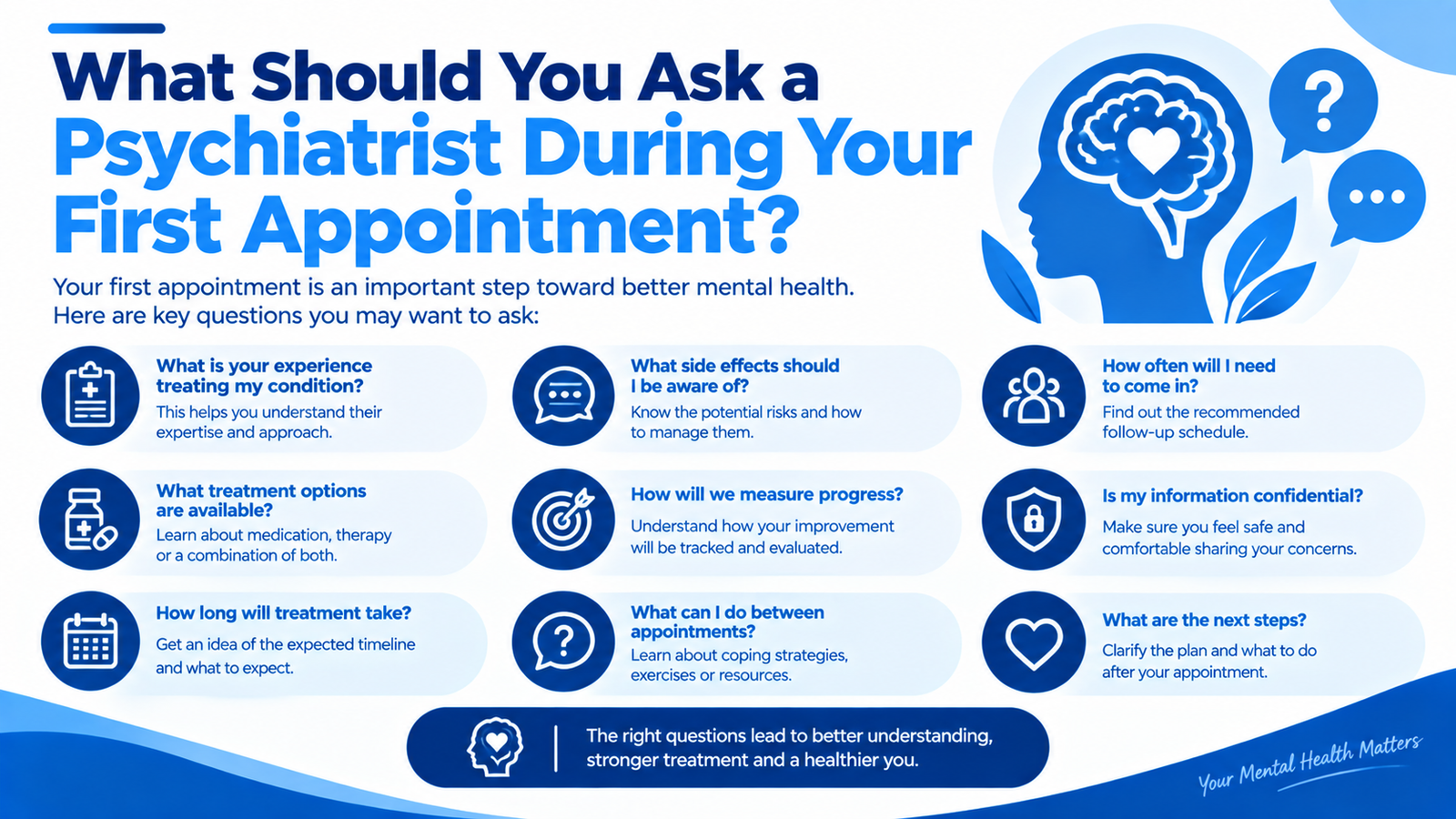
Sometimes patients do not ask questions, or ask them but forget to bring to mind. It helps to have a short list in hand to make the appointment more productive.
Useful questions include:
- What might be causing these symptoms?
- How do you think I look?
- Should I take medication or psychotherapy, or a combination of both?
- What might be the advantages and disadvantages of the suggested treatment?
- How long will it take to determine the effectiveness of treatment?
- What can I do if my symptoms get worse?
- What should the frequency of follow-up be?
- Are there lifestyle changes that can support my treatment?
- Do I need to see a psychologist or other expert?
Mental health practitioners need to provide patients with space to discuss their diagnosis, potential causes, treatment, and impact of treatment on daily life.
Psychiatric Care in Karachi: Practical Considerations
People from Karachi come in with various mental health-related issues, ranging from anxiety and depression to more severe psychiatric disorders.
Factors to take into account when selecting a psychiatrist for your care include clinical appropriateness and location, scheduling, privacy, follow-up arrangements, and consultation style.
If patients are uncomfortable discussing mental health concerns in the first appointment, it may be challenging in this session. There is no need to make everything clear to the teacher.
Begin with those symptoms that are most challenging; let the psychiatrist lead the questioning.
Sometimes family members can be of assistance by bringing in relevant information, especially if the patient is extremely confused, has memory deficits, is experiencing psychosis, or has significant behavioral changes.
But if possible, the patient’s right to his/her privacy and consent must be honored.
When Is Urgent Psychiatric Help Needed?
Certain mental health issues need immediate attention and not a regular appointment.
If a person:
- Is in immediate danger of suicide or self harm
- Is threatening to cause serious harm to another person
- Has very poor judgment or lost contact with reality
- Has intense psychotic disturbance
- Is unable to take care of himself or herself
- Is facing a severe mental health emergency and is getting worse quickly
- For example, if someone experiences hallucinations or delusions, is in severe distress, or is at risk of harming themselves or others, they may need an urgent specialist assessment, such as a psychosis evaluation.
Please call local emergency services or attend the nearest emergency department if there is immediate danger – do not wait for an outpatient psychiatric appointment.
Common Mistakes Patients Make When Seeking Psychiatric Care
A frequent error is waiting too long due to fear or stigma. Persistent mental health symptoms can have an impact on sleep, relationships, work, education, and physical wellbeing and these should be treated accordingly.
Another common error is thinking that all psychiatric visits will lead to a prescription for medication. Treatment should be based on an assessment. Psychotherapy, medication, referral, monitoring, or a combination of these may be considered, depending upon the circumstances.
Patients should also not be allowed to switch their prescribed medicines on their own. When medicines have unwanted effects or if they appear to be having no effect, talk to the health care provider about the problem.