

What Is OCD?
OCD is a mental health condition that involves obsessions, compulsions, or both.
Obsessions are unwanted thoughts, fears, images, or urges that keep coming back. They can cause anxiety or distress.
Compulsions are repeated actions or mental routines. A person may feel that they must perform them to reduce anxiety or prevent something bad from happening.
For example, someone may worry that their hands are dirty. They may wash their hands many times, even when they are already clean.
Another person may keep checking the door because they fear it is not locked. They may check it several times before leaving home.
OCD can also involve mental rituals. These may include counting, repeating words in the mind, reviewing past events, or asking others for reassurance.
Having an unwanted thought does not mean that you have OCD. A mental health professional can look at the full pattern and how it affects your life.
Common OCD Symptoms
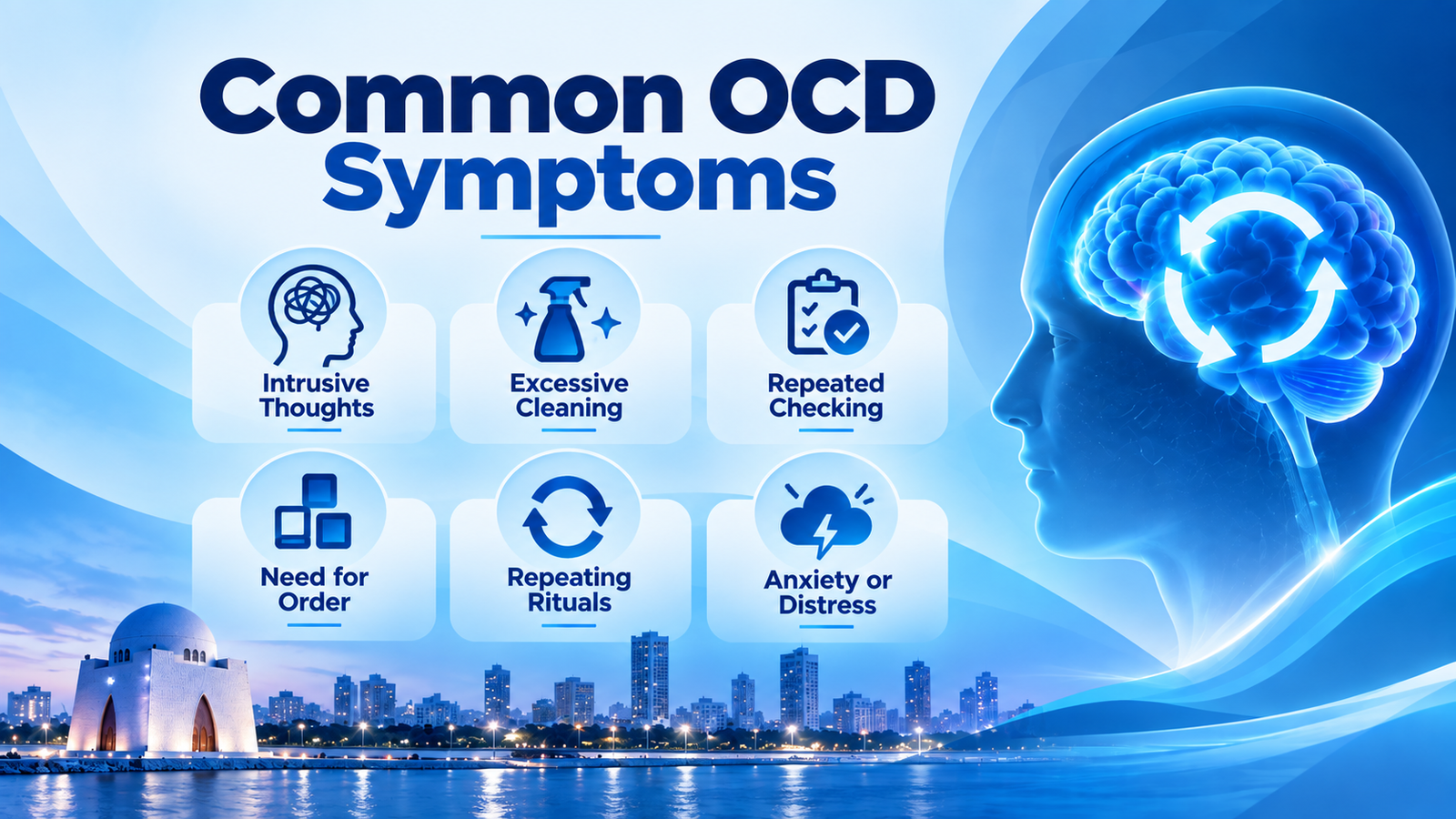
OCD symptoms can be different for each person. Some people mainly have unwanted thoughts, while others have both thoughts and repeated behaviors.
Common symptoms may include:
- Fear of germs or contamination
- Repeated washing or cleaning
- Constant checking of doors, switches, or appliances
- Fear of making a serious mistake
- Unwanted aggressive or sexual thoughts
- Counting or arranging things in a certain way
- Asking others for repeated reassurance
- Repeating words, actions, or thoughts
- Avoiding situations that cause fear
- Mental rituals that are difficult to stop
These symptoms can take up a lot of time. They may also make normal tasks harder.
How Does the OCD Cycle Work?
OCD often follows a repeated pattern. An unwanted thought or fear appears first. This creates anxiety or discomfort. The person then performs a compulsion to feel better.
The relief may last for a short time. The same fear can then return, which may lead to another compulsion.
For example, a person may think, “What if I left the stove on?” They check the stove and feel better for a while. Later, the same doubt may return, so they check again.
This cycle can become difficult to break without proper support.
When Should You See an OCD Psychiatrist in Karachi?
You may want to seek professional help when OCD symptoms begin to affect your daily life.
This may happen when checking, cleaning, avoiding situations, or seeking reassurance takes a lot of time. Some people may also find it difficult to study, work, sleep, or maintain relationships because of their symptoms.
You do not have to wait until symptoms become severe before asking for help. A psychiatrist can assess what you are experiencing and discuss possible treatment options.
A professional assessment can also help determine whether the symptoms are related to OCD or another mental health condition. Some people may experience OCD along with anxiety, depression, or other concerns.
How Is OCD Diagnosed?
There is no blood test that confirms OCD. Diagnosis usually starts with a detailed discussion with a mental health professional.
The psychiatrist may ask when your symptoms started and how often they occur. They may also ask about situations that trigger your thoughts, how you respond to them, and how much time the symptoms take.
The doctor may also ask about your mood, sleep, anxiety, medicines, previous treatment, and general health.
It is important to be open during the appointment. Some OCD thoughts can feel embarrassing or frightening. Having an unwanted thought does not mean that you want to act on it.
Sharing your symptoms honestly can help the psychiatrist understand your situation more clearly.
What Treatments Are Used for OCD?
OCD treatment is different for each person. Common options include psychological therapy, medication, or a combination of both.
The treatment plan may depend on the severity of symptoms, how long they have been present, previous treatment, and how the person responds to care.
CBT and ERP for OCD
Cognitive behavioral therapy, or CBT, is commonly used to treat OCD.
A specific form of CBT called exposure and response prevention, or ERP, can also be used. ERP helps a person face feared thoughts or situations while learning not to perform the usual compulsion.
For example, someone who checks a locked door many times may gradually learn to reduce the number of checks. The process is planned and adjusted to the person’s needs.
The aim is not to force someone into a frightening situation. Instead, therapy helps the person learn new ways to respond to anxiety and unwanted thoughts.
ERP is usually provided by a trained mental health professional.
Medication for OCD
Medication may also be used to manage OCD symptoms. Certain antidepressants, including SSRIs, are commonly used for OCD.
These medicines can take time to work. The choice of medicine and dose depends on the individual.
A doctor should monitor the treatment and any possible side effects. Do not start, stop, or change psychiatric medication without talking to your doctor.
OCD Treatment Options
Treatment | Main Purpose | Important Point |
CBT with ERP | Helps change responses to obsessive thoughts and compulsions | Usually done with a trained therapist |
Medication | May help reduce OCD symptoms | Requires medical supervision |
CBT and medication | Combines both treatment approaches | May be considered based on symptoms |
Psychiatric assessment | Helps understand symptoms and treatment needs | Helps create an individual treatment plan |
There is no single treatment that works in the same way for everyone. A qualified professional can discuss the most suitable options after an assessment.
What Can You Expect From an OCD Psychiatrist Appointment?
A first appointment usually focuses on understanding your symptoms.
The psychiatrist may ask when the problem started, what triggers it, and how it affects your daily routine. They may also ask about repeated actions, unwanted thoughts, anxiety, sleep, and previous treatment.
It can help to prepare some examples before your appointment. You could note how often you check something, how long cleaning takes, or how much time you spend seeking reassurance.
You should also mention symptoms that feel difficult or embarrassing to discuss. Mental health professionals are used to talking about these concerns.
A clear discussion can help your doctor develop a better understanding of your situation.
How Can You Choose an OCD Psychiatrist in Karachi?
When choosing psychiatric care, look for a qualified professional who takes time to understand your symptoms.
Check the psychiatrist’s qualifications and experience. It is also useful to ask whether they provide a full assessment and explain treatment options clearly.
Good communication is important. You should feel comfortable asking questions about medication, therapy, possible side effects, and follow up care.
If CBT or ERP is needed, the psychiatrist may also work with a psychologist or therapist. This can allow different parts of treatment to be managed together.
Clinic location, consultation fees, appointment times, and online options may also matter. These details can change, so confirm them before your visit.
Dr. Muhammad Ilyas Jat
For people researching psychiatric care in Karachi, Dr. Muhammad Ilyas Jat is listed by Dow University of Health Sciences as an Assistant Professor of Psychiatry. The university also lists his MBBS and FCPS qualifications.
Patients should confirm current clinic details, appointment times, and consultation arrangements before visiting, as these details may change.
Questions to Ask Your Psychiatrist
Your appointment is a good time to ask questions about your symptoms and treatment. You may want to ask:
- Do my symptoms look like OCD?
- Could another condition cause these symptoms?
- Would CBT or ERP help me?
- Do I need medication?
- What side effects should I know about?
- How will we track my progress?
- How often should I have follow up visits?
- Should I also see a psychologist or therapist?
You do not need to understand everything during the first appointment. Ask your doctor to explain anything that is unclear.
Common Mistakes People Make When Dealing With OCD
One common problem is seeking reassurance again and again. For example, a person may repeatedly ask a family member if they are sure that nothing bad happened.
Reassurance may make the person feel better for a short time. However, repeated reassurance can sometimes become part of the OCD cycle.
Avoiding every situation that causes anxiety can also make daily life more difficult. It may prevent a person from learning how to manage uncomfortable thoughts and feelings.
Another common mistake is stopping treatment without speaking with a doctor. OCD treatment can take time. If you feel that treatment is not helping enough, discuss your concerns with your healthcare professional.
When Is Urgent Mental Health Help Needed?
OCD can be very distressing, but most symptoms can be managed through planned mental health care.
Urgent help is needed if there is an immediate risk of self-harm or harm to another person. It is also important to seek urgent care if someone cannot take care of their basic needs or is experiencing another serious mental health emergency.
If there is immediate danger, go to the nearest emergency department or contact local emergency services rather than waiting for a routine appointment.
Can OCD Be Treated?
Yes. OCD can be treated and managed.
Treatment can help reduce obsessive thoughts and compulsive behaviors. It may also help people return to work, studies, family activities, and other parts of daily life.
Some people may improve with therapy. Others may need medication. Some may benefit from both.
Progress can take time, and the treatment plan may need to change based on the person’s response.
The goal is not always to remove every unwanted thought. Instead, treatment can help a person respond to these thoughts in healthier ways and reduce the control OCD