

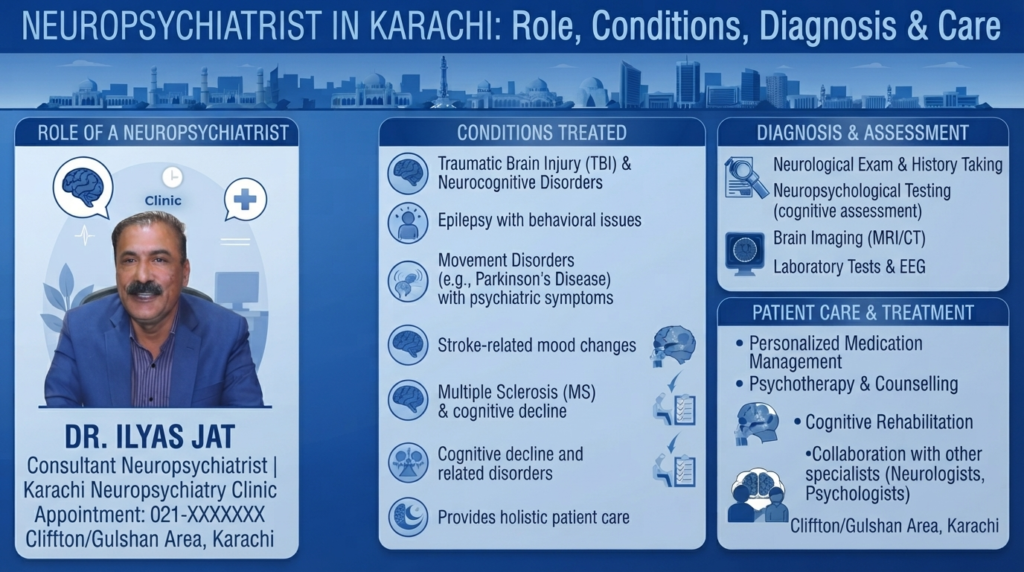
What Is a Neuropsychiatrist?
A neuropsychiatrist deals with mental, emotional, behavioral, and cognitive problems that are linked to neurological or brain-related conditions.
For example, someone may develop major personality changes after a brain injury, depression following a stroke, or behavioral problems along with dementia. In situations like these, simply looking at the psychiatric symptoms may not be enough. The doctor may also need to understand what is happening with the brain and nervous system.
During an assessment, the doctor may review the patient’s medical history, medications, neurological symptoms, mental health history, mood, behavior, and changes in memory or thinking.
Neuropsychiatric care is not always provided by one doctor alone. Depending on the patient’s situation, a psychiatrist may work with a neurologist, psychologist, neuropsychologist, rehabilitation specialist, or primary care doctor.
What Does a Neuropsychiatrist Treat?
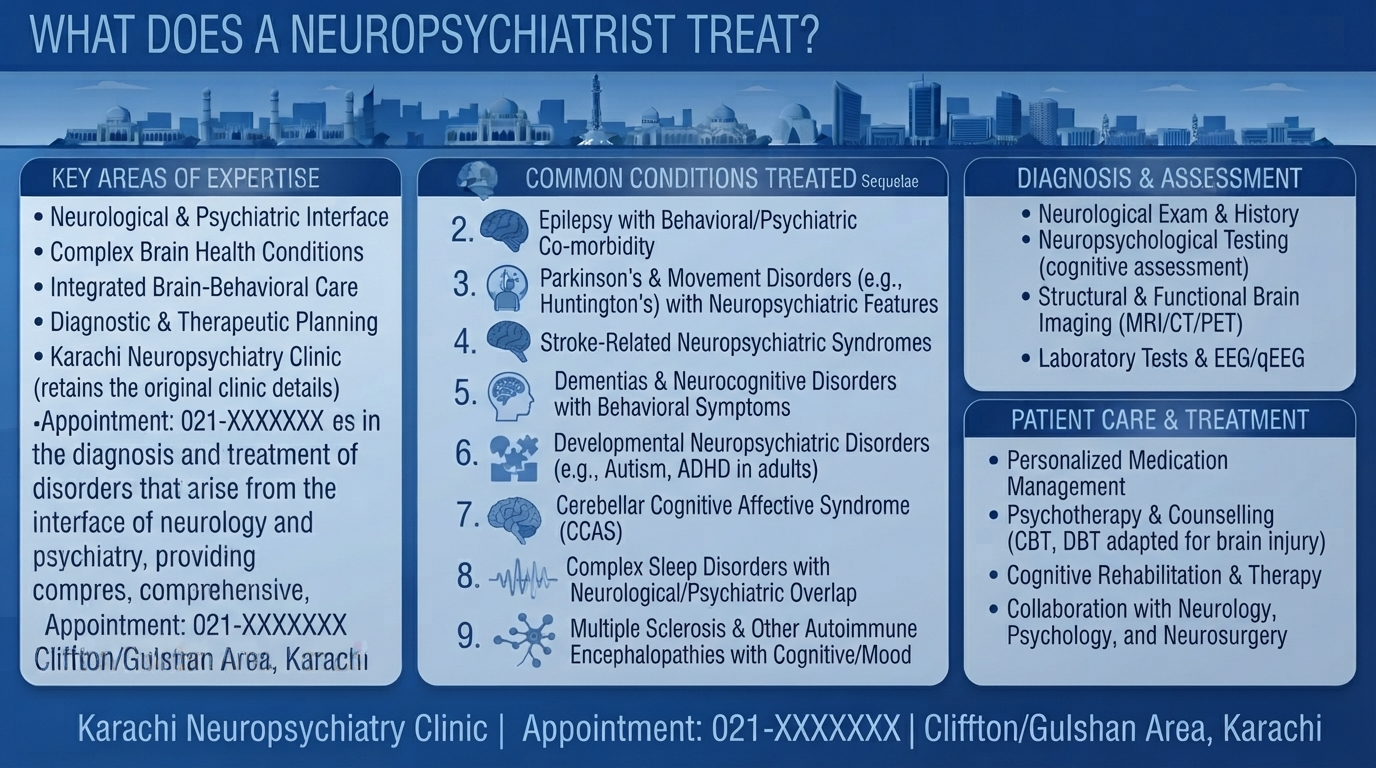
There is no single list of symptoms that applies to every neuropsychiatric patient. The problems can be quite different depending on the underlying neurological condition.
A neuropsychiatrist may be involved when a patient has:
- Mood or behavioral changes after a stroke
- Emotional or personality changes following a traumatic brain injury
- Psychiatric symptoms associated with epilepsy
- Depression or anxiety occurring alongside a neurological disease
- Memory and behavioral changes related to dementia
- Problems with impulse control after brain injury
- Psychiatric symptoms associated with movement disorders
- Cognitive difficulties that need further assessment
Having a neurological condition does not automatically mean that someone needs a neuropsychiatrist.
For example, a person with epilepsy may mainly need a neurologist to control seizures. However, if that person also develops significant depression, anxiety, behavioral changes, or other psychiatric symptoms, mental health assessment may become an important part of their care.
Neuropsychiatrist vs Psychiatrist vs Neurologist
These medical fields can overlap, which is why choosing the right specialist can sometimes be confusing.
Specialist | Main Focus | Common Examples |
Psychiatrist | Mental, emotional, and behavioral health | Depression, anxiety, bipolar disorder, schizophrenia |
Neurologist | Disorders of the brain, spinal cord, and nerves | Epilepsy, stroke, Parkinson’s disease, migraines |
Neuropsychiatrist | Psychiatric and behavioral problems connected with brain or neurological conditions | Behavioral changes after brain injury, psychiatric symptoms related to neurological disease |
Neuropsychologist | Detailed assessment of cognitive and psychological abilities | Memory, attention, language, reasoning, and problem-solving testing |
A psychiatrist is a medical doctor who diagnoses and treats mental health conditions and can prescribe medication when appropriate. A neurologist mainly deals with disorders affecting the brain, spinal cord, and nervous system.
A neuropsychologist has a different role. They commonly use structured tests to understand how well different areas of thinking are working. These may include memory, attention, language, processing speed, reasoning, and problem-solving.
Neuropsychological testing can be useful after a brain injury or stroke and in conditions such as epilepsy and neurodegenerative diseases.
Because symptoms can overlap, some patients may benefit from seeing more than one specialist.
When Should You See a Neuropsychiatrist?
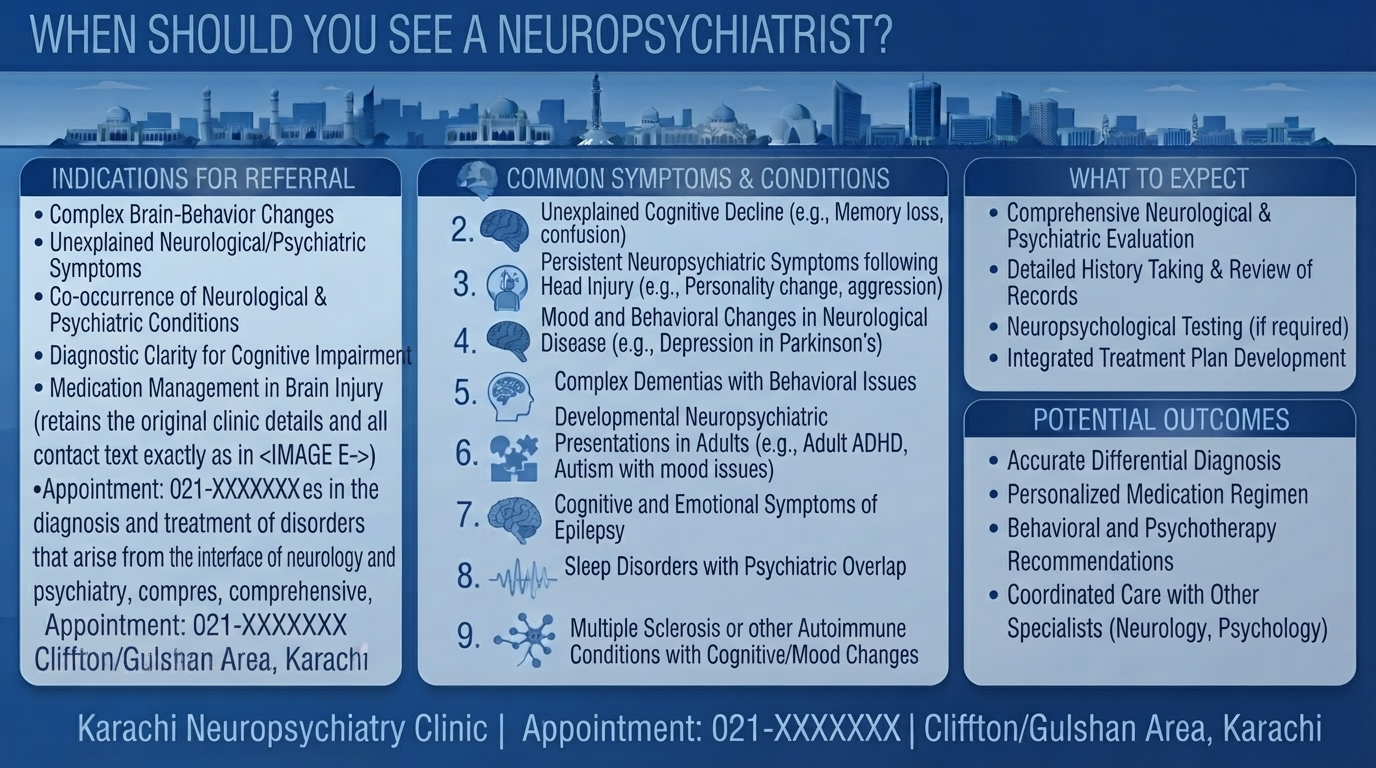
A neuropsychiatric assessment may be useful when changes in mood, thinking, personality, or behavior seem to be connected with a neurological condition or brain injury.
For instance, a family may notice that an older person who was previously independent has started behaving differently, forgetting important things, or becoming unusually confused. Similarly, someone may experience depression or anxiety after having a stroke or develop psychiatric symptoms while being treated for epilepsy.
These situations do not necessarily mean that neuropsychiatry is the only answer. A psychiatrist, neurologist, or primary care doctor can often help decide which type of assessment is needed.
Signs That May Need Professional Evaluation
It is worth speaking with a healthcare professional if someone develops persistent or noticeable:
- Memory problems
- Personality or behavior changes
- Mood changes after a neurological illness
- Difficulty concentrating
- Problems completing familiar activities
- Depression or anxiety along with a neurological condition
- Confusion or changes in thinking
- Behavioral changes after a head injury
- Psychiatric symptoms along with seizures or another neurological disorder
These symptoms can have many different causes. Having one or more of them does not automatically mean that a person has a particular neurological or psychiatric disorder.
Conditions That Can Cause Neuropsychiatric Symptoms
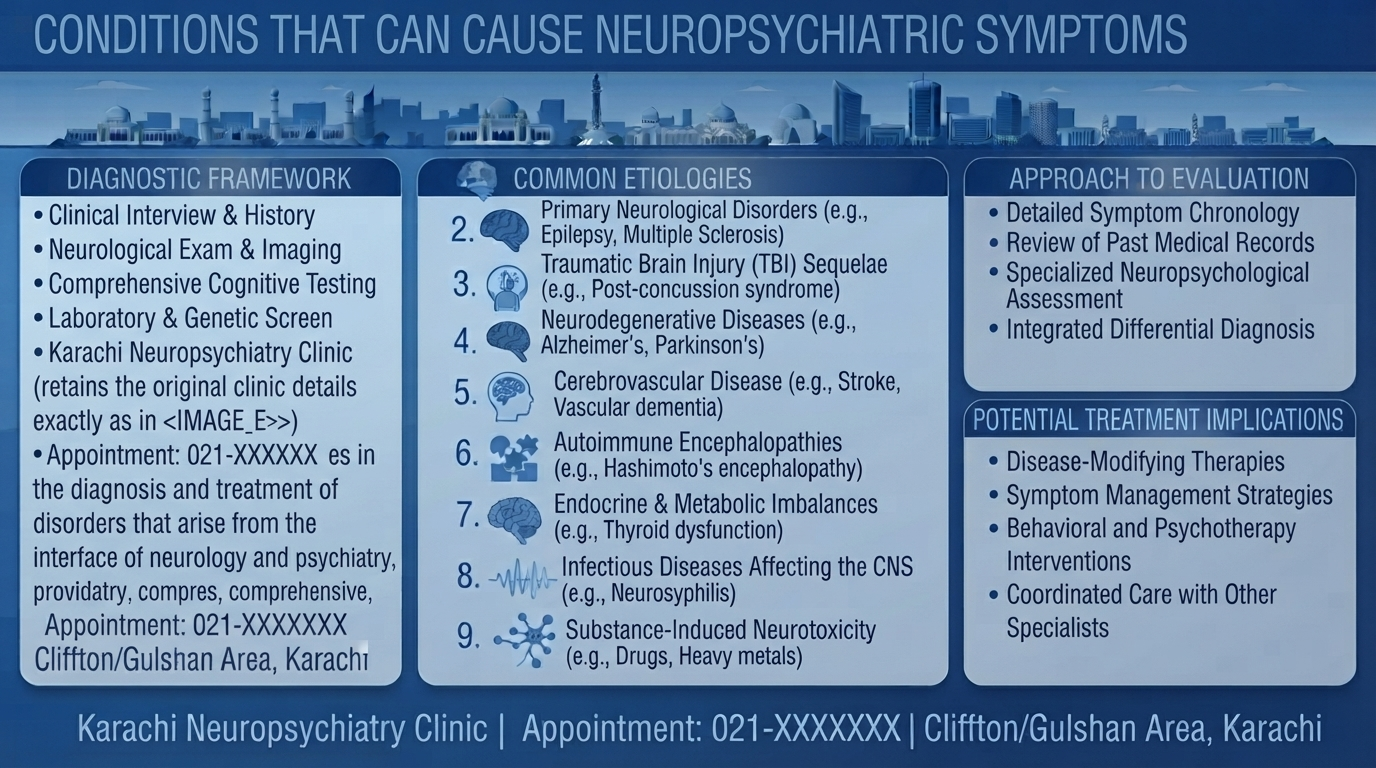
A number of neurological conditions can affect mood, behavior, memory, and thinking. The symptoms are different for each person and depend on the underlying condition.
Stroke
A stroke can affect parts of the brain involved in movement, speech, memory, emotions, and behavior.
During recovery, some people may experience depression, anxiety, difficulty thinking, emotional changes, or changes in behavior. In such cases, treatment may involve several healthcare professionals, including neurological, psychiatric, and rehabilitation teams.
Traumatic Brain Injury
A traumatic brain injury can sometimes lead to changes in memory, concentration, mood, personality, or impulse control.
The type of care needed depends on the severity of the injury and the symptoms that follow. Some patients may need neurological care, while others may benefit from psychiatric treatment, neuropsychological testing, or rehabilitation.
Epilepsy
Epilepsy is mainly a neurological condition, but it can also affect a person’s emotional and mental health.
People living with epilepsy may experience depression, anxiety, or other psychiatric and behavioral problems. For these patients, treating the seizures and addressing mental health concerns may both be important.
Dementia and Cognitive Disorders
Dementia can gradually affect memory, thinking, communication, behavior, and the ability to manage everyday activities.
Some people with dementia may also experience depression, anxiety, agitation, or other behavioral changes. Their care often requires a broader assessment that considers medical history, medications, cognitive changes, and daily functioning.
Depending on the situation, several specialists may be involved.
Parkinson’s Disease and Other Movement Disorders
Parkinson’s disease and other movement disorders can sometimes affect more than physical movement.
Some patients may develop depression, anxiety, sleep problems, cognitive changes, or behavioral symptoms. When these problems become significant, psychiatric input may be useful alongside neurological treatment.
How Is a Neuropsychiatric Evaluation Performed?
The assessment usually starts with a detailed conversation about the patient’s symptoms and medical history.
The doctor may ask:
- When did the symptoms begin?
- Have they become better or worse over time?
- Has the patient had a stroke, head injury, seizure disorder, or another neurological condition?
- What medicines is the patient currently taking?
- Have there been changes in sleep, mood, memory, or behavior?
- Has the patient’s ability to manage daily activities changed?
If memory or behavior has changed significantly, the doctor may also speak with a family member or caregiver. Their observations can sometimes provide information that the patient may not notice themselves.
Depending on the situation, the evaluation may include a neurological examination, psychiatric assessment, cognitive testing, blood tests, or brain imaging.
Not every patient needs all of these tests. The doctor decides what is appropriate based on the symptoms and medical history.
The main purpose of the evaluation is to understand what may be causing the changes and what type of treatment or specialist care is needed.
What Happens During Treatment?
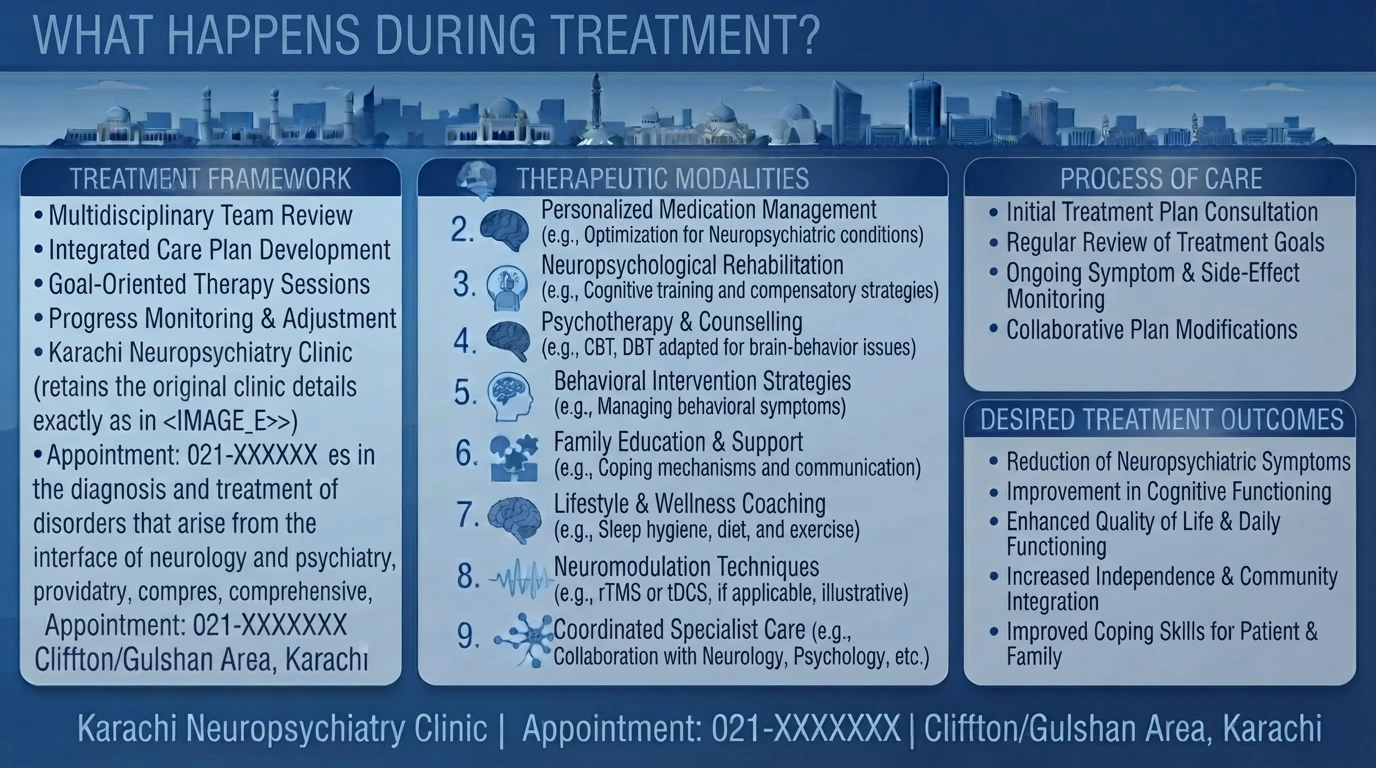
Treatment is different for every patient because the underlying cause can be different.
Depending on the diagnosis, treatment may include:
- Psychiatric medication
- Psychological therapy
- Behavioral strategies
- Cognitive rehabilitation
- Treatment of the underlying neurological condition
- Support for family members or caregivers
- Coordination between psychiatric and neurological specialists
Medication should always be selected by a qualified healthcare professional after reviewing the patient’s condition and other medicines.
Patients should not start, stop, or change psychiatric medication on their own.
Why Does a Complete Medical History Matter?
Changes in memory, mood, behavior, or thinking do not always have one obvious cause.
For example, poor sleep, medication side effects, hormonal or metabolic problems, substance use, neurological illness, and mental health conditions can all contribute to similar symptoms.
That is why a complete medical history is often an important part of the assessment.
Before an appointment, it can be helpful to bring:
- A list of current medicines
- Previous medical reports
- Brain scans or other relevant test results
- Information about previous diagnoses
- Details about when the symptoms first started
If there have been noticeable changes in memory or behavior, a family member or caregiver may also be able to provide useful information.
Choosing the Right Specialist in Karachi
If you are looking for neuropsychiatric care in Karachi, start by thinking about the main problem rather than simply searching for a particular title.
If the main concern is depression, anxiety, bipolar disorder, schizophrenia, or another primary mental health condition, a psychiatrist may be the appropriate starting point.
If the main problem is seizures, movement problems, suspected stroke, headaches, or another neurological symptom, a neurologist may be more suitable.
If the main concern is memory, attention, language, reasoning, or other cognitive abilities, a neuropsychologist may be involved, especially when formal cognitive testing is needed.
Some patients may need a combination of these services.
Questions to Ask Before an Appointment
Before booking an appointment, you can ask:
- Does the doctor regularly deal with symptoms like mine?
- Do I need psychiatric, neurological, or cognitive assessment?
- Will I need any additional tests?
- Should I bring previous reports or scans?
- Should I bring my current medication list?
- If another specialist is needed, can care be coordinated?
These questions can help you find care based on your actual needs rather than choosing a doctor simply because a website describes them as the “best” specialist.
Dr. Ilyas Jat and Psychiatric Care in Karachi
For people researching psychiatric care in Karachi, Dr. Muhammad Ilyas Jat is publicly identified as a psychiatrist and Assistant Professor of Psychiatry at Dow University of Health Sciences. Publicly available information lists his qualifications as MBBS and FCPS.
His professional information includes psychiatric care for conditions such as anxiety, depression, bipolar disorder, schizophrenia, addiction, and other mental health concerns. His website also lists adult psychiatry, child psychiatry, and dementia-related disorders among his areas of service.
However, there is an important distinction to keep in mind.
Public university and professional information identifies Dr. Ilyas Jat as a psychiatrist. This information does not, by itself, establish a separate qualification specifically in neuropsychiatry.
Therefore, if you are specifically looking for neuropsychiatric care, it is a good idea to confirm his current scope of practice before making an appointment.
For people looking for general psychiatric care in Karachi, his publicly available professional information may be useful when comparing available options. Appointment timings, clinic locations, and fees can change, so these details should be confirmed before visiting.
When Is Neuropsychiatric Care Urgent?
Not every neurological or psychiatric symptom should wait for a routine appointment.
Get urgent medical help if someone suddenly develops:
- Weakness or numbness
- Difficulty speaking
- Severe or sudden confusion
- Loss of consciousness
- A new seizure
- A serious head injury
- A sudden and major change in neurological function
Mental health emergencies also need immediate attention. This includes situations where someone is at immediate risk of harming themselves or another person, is experiencing severe agitation or psychosis, or cannot safely care for themselves.
In these situations, seek emergency medical care rather than waiting for a routine specialist appointment.
Common Mistakes When Searching for Neuropsychiatric Care
One common mistake is assuming that every brain-related problem needs the same type of specialist.
Psychiatrists, neurologists, neuropsychologists, and neuropsychiatrists can all be involved in brain-related problems, but their training and roles are not identical.
Another mistake is choosing a doctor simply because they are described online as the “best” or “number one.” A better approach is to look at the doctor’s qualifications, specialty, current areas of practice, and experience with the type of problem you are dealing with.
It is also important not to diagnose yourself based only on information found online. Memory problems, anxiety, confusion, depression, and behavioral changes can happen for many different reasons.
A proper medical assessment is needed to find the underlying cause.