

What Is a Kids Psychiatrist?
A children’s psychiatrist (also called a child psychiatrist or paediatric psychiatrist) is a doctor who has undertaken extra specialist training in the care of children and young people with mental health problems.
The psychiatrist’s medical expertise is the distinction between him or her and other mental health practitioners: a kids psychiatrist is able to identify psychiatric disorders, exclude medical factors that might be causing behavioural symptoms and prescribe medicine when clinically appropriate.
Child psychiatrists in Karachi will not usually find themselves working alone in practice.
They typically work closely with child psychologists, speech and occupational therapists, and special educators to develop a comprehensive care plan.
Normally a psychiatrist makes the diagnosis and will make medical decisions, while therapists will do the ongoing behavioral work.
Kids Psychiatrist vs Child Psychologist: What’s the Difference?
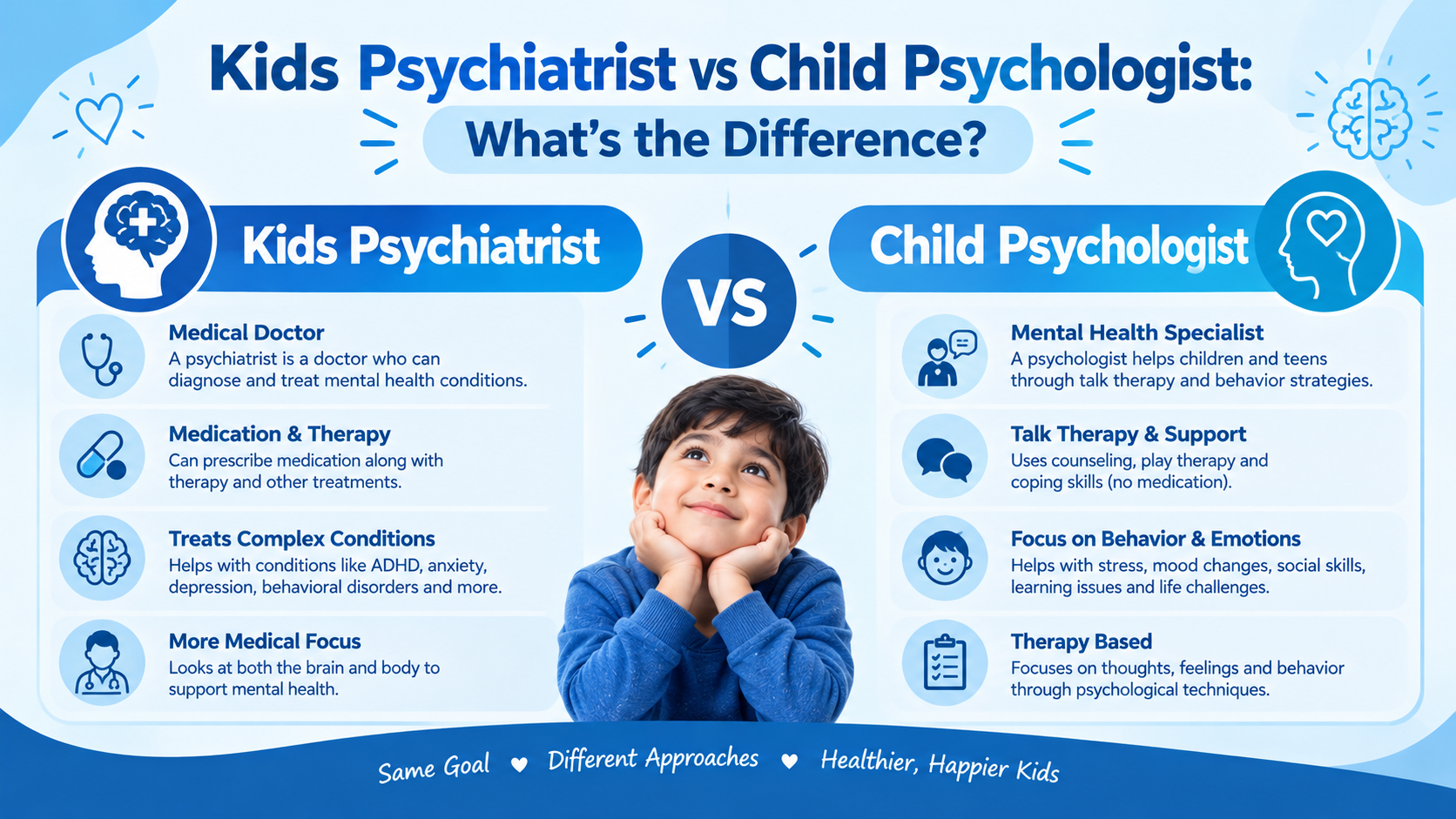
Parents often use these titles interchangeably, but the roles are distinct. Knowing the difference helps you seek the right help first.
Factor | Kids Psychiatrist | Child Psychologist |
Training | Medical doctor (MBBS or equivalent) with specialization in psychiatry | University degree in psychology with clinical or child specialization |
Diagnosis | Yes — including medical and psychiatric conditions | Yes — through psychological testing and assessment |
Medication | Can prescribe when clinically needed | Cannot prescribe |
Main tools | Medical evaluation, diagnosis, medication management, treatment planning | Talk therapy, play therapy, behavioral therapy, cognitive testing |
Best suited for | Suspected ADHD, depression, anxiety disorders, or any concern needing medical evaluation | Emotional support, behavioral strategies, learning assessments, counseling |
Many children benefit from both. A common arrangement is a psychiatrist managing the diagnosis and any medication, while a psychologist provides regular therapy sessions.
Signs Your Child Might Need a Kids Psychiatrist
If your child’s behaviour and emotions persist for weeks, are causing problems at school, at home or with friends, or are more severe than the situation you think is going on in their life, you may want to talk to a kids psychiatrist.
Frequent moodiness and temper tantrums are a normal part of childhood — problems begin when it happens too often, and function is impaired.
Keep an eye out for these warning signs:
Sadness and crying for weeks, or irritability (anger) for weeks.
Unexpected decline in schoolwork or loss of enjoyment in favorite activities
Isolation from friends and family members
High levels of anxiety, worry, or fear that interfere with everyday functioning.
Aggression, defiance, or destructive behavior
Persistent fidgeting, impulsiveness or failure to sustain attention
Witnessed differences in eating or sleeping habits
Talk about hurting oneself or others — must be treated immediately by professionals
Follow your instincts as a parent. You know your child better than anyone else.
But if there is a sense that something is wrong for an extended period, there is a point to an evaluation even if it turns out to be a minor issue — early assessment will typically result in simpler solutions.
Common Conditions Treated
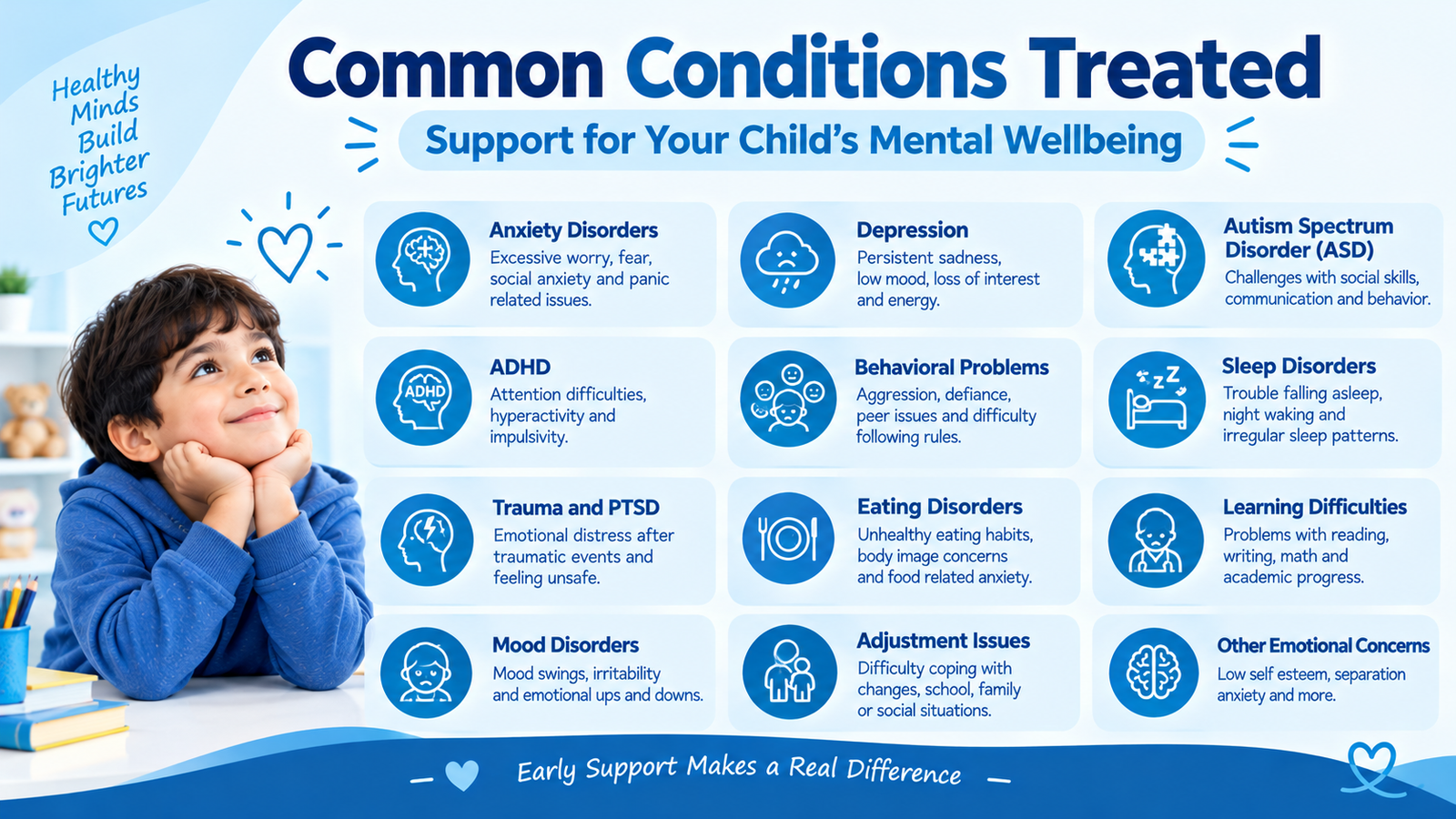
ADHD (Attention-Deficit/Hyperactivity Disorder).
Children with ADHD have trouble paying attention, sitting still, and controlling their impulses more than their age.
A child psychiatrist assesses whether the pattern is that of ADHD or if the child’s problem is another one, like anxiety, sleep difficulties, or a learning difficulty.
Usually treatment involves behavior modification, parents’ guidance, school support, and/or medication in certain instances.
Anxiety disorders.
Common reasons parents seek treatment for child anxiety include separation anxiety, social anxiety, and generalized anxiety.
Children with anxiety are unlikely to return to school, report stomachaches for no reason, or fail to go out socially.
The first treatment is usually therapy, especially cognitive-behavioral therapy (CBT), which has been modified to suit children.
Child and adolescent depression.
Childhood depression doesn’t always look like adult depression. It may manifest itself as irritability, anger, boredom, poor school performance, or physical symptoms.
Depression in young people is a serious issue and a health professional specialising in the care of children and young people is important.
A mental health professional will evaluate the severity of the depression and determine the level of care needed.
Behavioral disorders.
Child behavioral disorders treatment includes oppositional defiant disorder, conduct problems, and disruptive behavior patterns.
These are not just bad behavior, as they are a reflection of emotional, developmental, and/or family stressors that can be identified by a specialist.
Developmental and emotional issues.
One of the child’s parents could also be referred to a child development specialist or psychiatrist to assess autism-related behaviors, trauma reactions, and coping problems following significant life transitions, like a divorce or move.
Typically, diagnosis here is a collaborative process among several professionals.
How Does a Child Psychiatric Evaluation Work?
A child psychiatric evaluation is not a test, but a structured conversation. Typically, one or two sessions are required.
The psychiatrist will discuss with you your child’s developmental history, when the concerns began, your child’s performance at school, your family’s background, and any medical problems.
They will also speak with or observe your child directly, rather than interrogate, hear the child’s words, and use the child’s age-appropriate language and activities.
Parents and teachers may be asked to complete questionnaires to provide standardized data, and input is often useful a teacher sees your child in a structured social environment every day.
Bringing in previous assessments, school reports, and medical records will fill in the picture. Finally, the psychiatrist will only share their findings and explain what to try next with you.
What Are the Treatment Options?
There is no one-size-fits-all approach to treatment for child and adolescent mental health services; it is dependent upon diagnosis, severity, and the individual.
Therapy.
Play therapy for younger children, cognitive-behavioral therapy for anxiety and depression, and family therapy when the problem is related to family styles. A child’s first, and sometimes only, treatment is therapy.
Guidance and training for parents.
When parents learn specific strategies, a lot of childhood problems get a lot better – how to reinforce positive behaviours, set consistent boundaries, or gently support a worried child without encouraging them to avoid it.
A skilled psychiatrist is not a bystander, he is a parent’s partner.
School coordination.
For children with ADHD and/or anxiety, any changes to the classroom setting, such as accommodation, to adjust workload or seating arrangements can make a huge difference. Schools can be given formal recommendations from psychiatrists when necessary.
Medication.
Medication should be considered if symptoms are moderate to severe, if therapy alone has not proven to be beneficial, or if the condition has a high biological component.
Only a full examination will ascertain the best approach, which begins conservatively, after which a health professional will closely watch the child. You should feel free to ask your parents if there are any benefits, side effects or how long the treatment will last.
What to Expect at the First Appointment
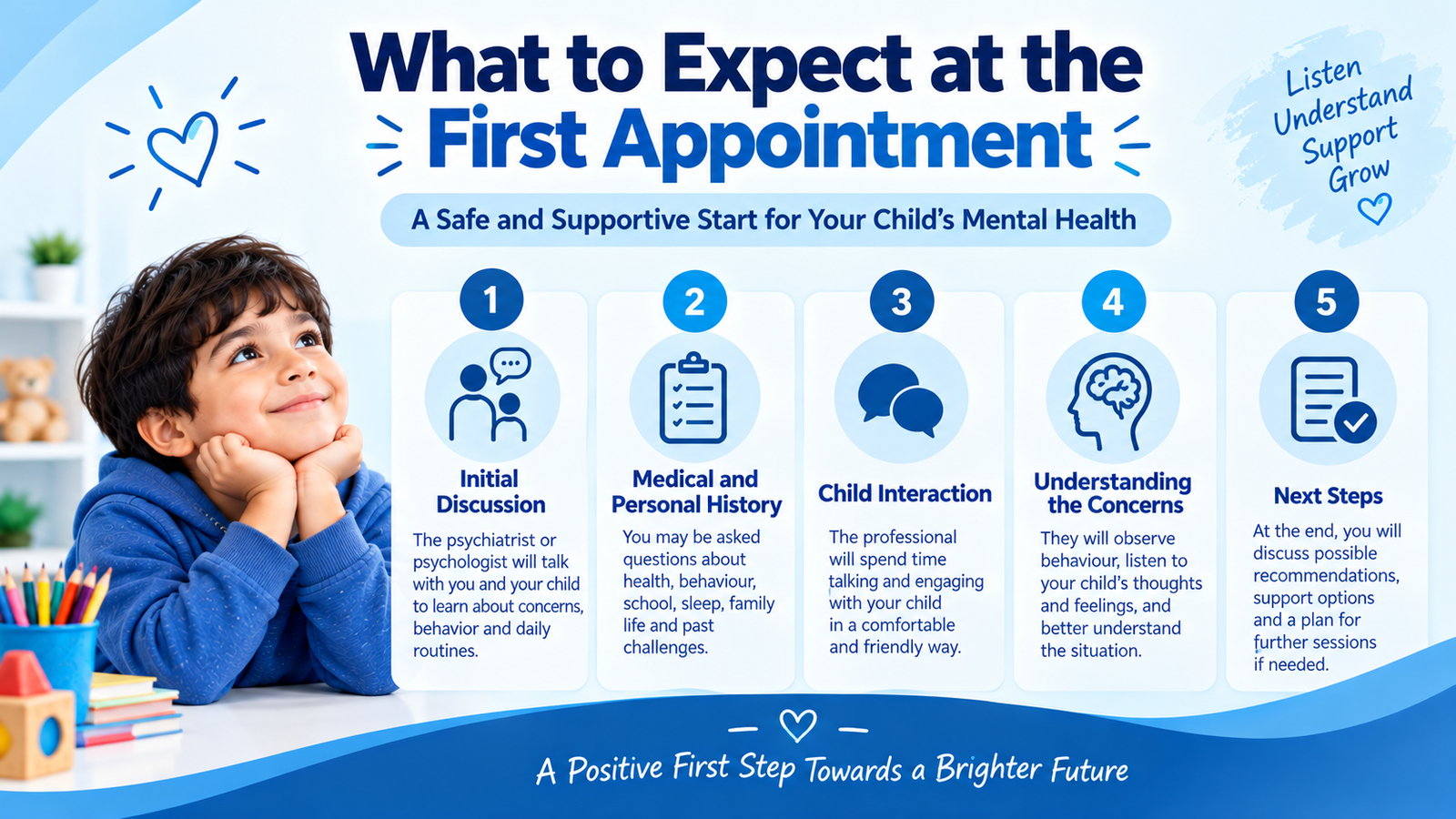
The initial visit is primarily an information session; there is no diagnosis or treatment plan given after 20 minutes.
Bring a brief history of concerns, including when they began, how they happen to be better or worse, and how they impact life.
Bring school reports, report cards, and any psychological and medical assessments from previous years.
Have a short list of your own questions, too: What is your working diagnosis? What are our treatment options?
How will we know if it’s working? How many times will we be meeting? One psychiatrist who is open to questions and explains things clearly is a good sign.
Additionally, observe your child’s reaction to them: If your child is comfortable with the doctor, then all that follows depends on that.
How to Choose a Kids Psychiatrist in Karachi
First, make sure that the doctor is not a general psychiatrist, since children’s mental health is different from adult mental health.
Inquire if they have had any prior experience with your child’s particular problem, such as ADHD, anxiety, behavioral problems.
Things are practical too. Take clinic location and timing into account — regular followups are easier when the clinic is easily accessible from DHA, Gulshan, Clifton, or wherever you are based in Karachi.
Be sure to inquire about any fees for consulting at the outset, as well as if the psychiatrist will work with psychologists and schools because integrated care often is most effective.
If you have several child psychiatrists listed under the “child psychiatrist near me” search, you can call them for an introduction before you schedule an appointment.
Exercise extreme caution when it comes to any physician who promises a quick fix, a prescription that lasts for an extended period of time without any set dates for review, or who makes it hard for you to get a second opinion. Informed questioning parents are welcome in ethical practices.