

Anxiety can affect anyone, regardless of age, profession, or lifestyle.
While occasional stress is a normal part of life, persistent fear, excessive worry, panic attacks, or constant nervousness may indicate an anxiety disorder that requires professional care.
Many people delay seeking help because they assume their symptoms will disappear on their own.
Unfortunately, untreated anxiety often becomes more severe and starts affecting work, relationships, physical health, and overall quality of life.
The good news is that anxiety disorders are highly treatable.
With the right diagnosis, evidence-based therapy, healthy lifestyle changes, and medical support when needed, many people experience significant improvement.
If you are looking for anxiety disorder treatment in Karachi, this guide explains available treatment options, when to seek help, and what to expect from professional mental health care.
Whether you experience generalized anxiety, panic attacks, social anxiety, or anxiety linked with depression, this article will help you make informed decisions about your mental wellbeing.
Why Do Anxiety Disorders Develop?
Anxiety disorders rarely have a single cause. Instead, they usually develop through a combination of biological, psychological, and environmental factors.
Some common causes include:
- Family history of anxiety disorders
- Long-term stress
- Financial difficulties
- Workplace pressure
- Academic stress
- Traumatic life experiences
- Chronic medical illnesses
- Hormonal changes
- Substance misuse
- Sleep deprivation
Mental health specialists often evaluate all these factors before recommending a personalized treatment plan.
What Are the Most Common Symptoms of Anxiety?
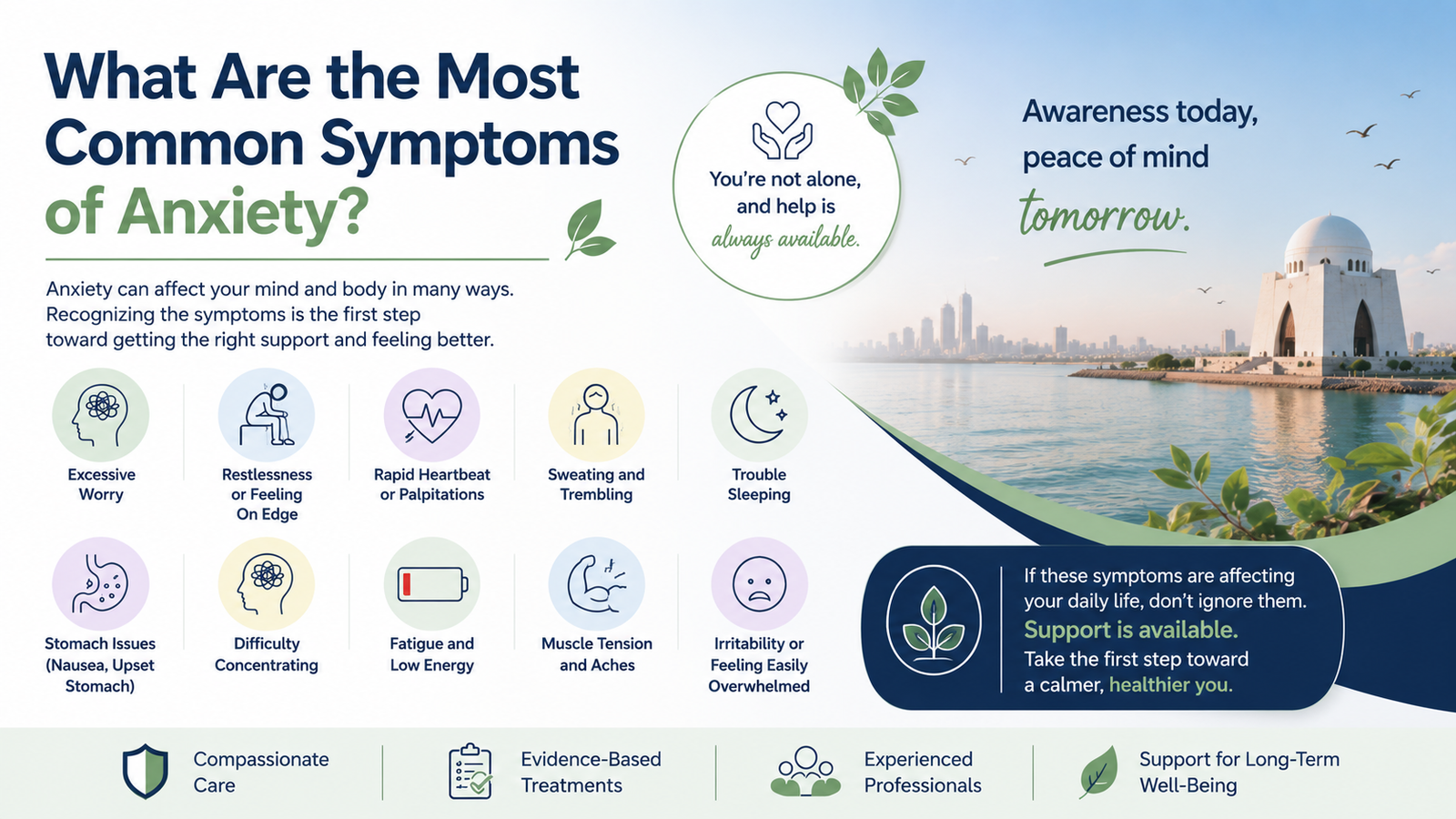
Many people confuse everyday stress with an anxiety disorder.
The difference lies in the intensity, frequency, and impact on daily life.
Emotional Symptoms
- Constant worry
- Feeling restless
- Fear without a clear reason
- Difficulty relaxing
- Irritability
- Feeling overwhelmed
Physical Symptoms
- Rapid heartbeat
- Chest tightness
- Shortness of breath
- Sweating
- Trembling
- Dizziness
- Upset stomach
- Muscle tension
- Fatigue
Behavioral Symptoms
- Avoiding social situations
- Difficulty concentrating
- Trouble sleeping
- Reduced productivity
- Seeking constant reassurance
Featured Snippet
Common symptoms of anxiety include excessive worry, nervousness, panic attacks, restlessness, rapid heartbeat, sweating, sleep problems, muscle tension, difficulty concentrating, and avoidance of stressful situations.
If these symptoms persist for several weeks and interfere with daily life, professional evaluation is recommended.
When Should You See an Anxiety Disorder Specialist in Karachi?
Many people wait until anxiety becomes unbearable before seeking help. Early intervention often leads to faster recovery and reduces the risk of complications.
Consider visiting an anxiety disorder specialist in Karachi if:
- Anxiety lasts for more than several weeks
- Panic attacks occur repeatedly
- Fear affects work or education
- Sleep becomes consistently poor
- Daily activities become difficult
- You avoid people or public places
- Physical symptoms continue despite normal medical tests
- Anxiety occurs alongside depression
Mental health professionals assess emotional and physical symptoms together to rule out other medical conditions before confirming an anxiety disorder.
How Is Anxiety Diagnosed?
There is no single laboratory test for anxiety disorders. Instead, diagnosis involves a comprehensive psychological evaluation.
A psychiatrist or mental health specialist may:
- Discuss your medical history
- Review current symptoms
- Assess emotional wellbeing
- Evaluate stress levels
- Review medications
- Rule out thyroid disorders or other medical causes
- Identify the specific anxiety disorder
Early diagnosis allows treatment to begin before symptoms worsen.
What Types of Anxiety Disorders Can Be Treated?
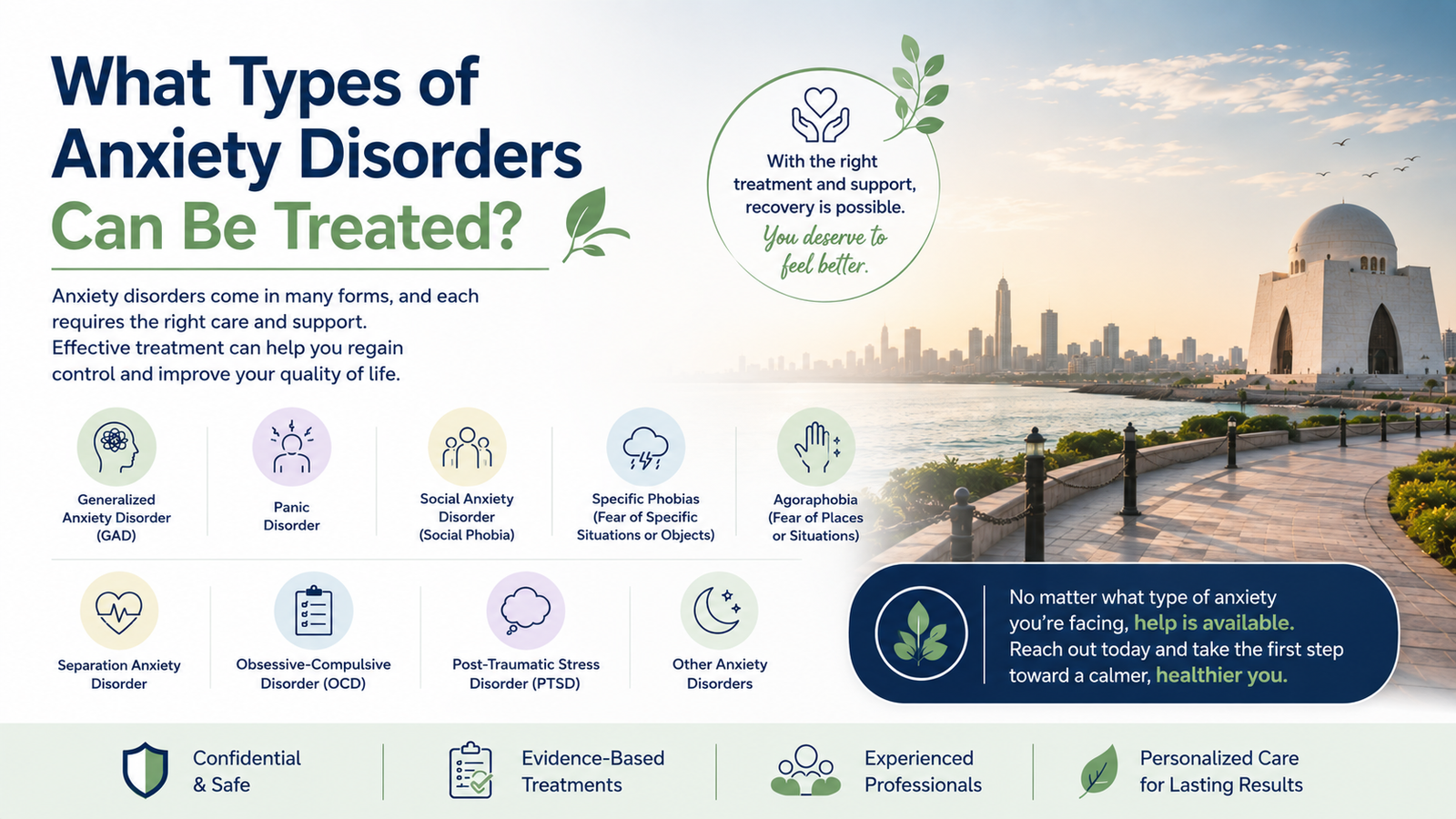
Several anxiety-related conditions respond well to professional treatment.
Generalized Anxiety Disorder (GAD)
People with generalized anxiety disorder experience excessive worry about work, health, finances, or family, even when there is little reason for concern.
Generalized anxiety disorder treatment usually combines therapy, stress management techniques, and medication when appropriate.
Panic Disorder
Panic disorder causes sudden episodes of intense fear known as panic attacks.
Symptoms may include:
- Chest pain
- Racing heartbeat
- Sweating
- Feeling unable to breathe
- Fear of losing control
- Dizziness
Fortunately, panic disorder treatment in Karachi helps many patients reduce both the frequency and intensity of panic attacks.
Social Anxiety Disorder
Social anxiety goes beyond shyness. Individuals often fear embarrassment, criticism, or being judged during social interactions.
Common examples include:
- Speaking in meetings
- Giving presentations
- Eating in public
- Meeting new people
- Attending gatherings
With proper social anxiety treatment in Karachi, many individuals regain confidence and comfortably participate in daily activities.
Anxiety with Depression
Anxiety and depression frequently occur together.
A person may experience:
- Persistent sadness
- Loss of motivation
- Constant worry
- Fatigue
- Poor concentration
- Sleep disturbances
Professional anxiety and depression treatment in Karachi focuses on treating both conditions simultaneously, leading to better long-term outcomes.
What Treatment Options Are Available for Anxiety?
Most treatment plans combine multiple approaches depending on symptom severity and individual needs.
Treatment | Best For | Benefits |
Psychological Therapy | Mild to severe anxiety | Long-term symptom management |
Medication | Moderate to severe anxiety | Reduces persistent symptoms |
Lifestyle Modification | All anxiety disorders | Supports recovery and prevents relapse |
Stress Management | Everyday anxiety | Improves emotional resilience |
Family Support | Long-term recovery | Encourages consistent progress |
Mental health professionals tailor treatment rather than using the same approach for every patient.
How Does Cognitive Behavioral Therapy Help Anxiety?
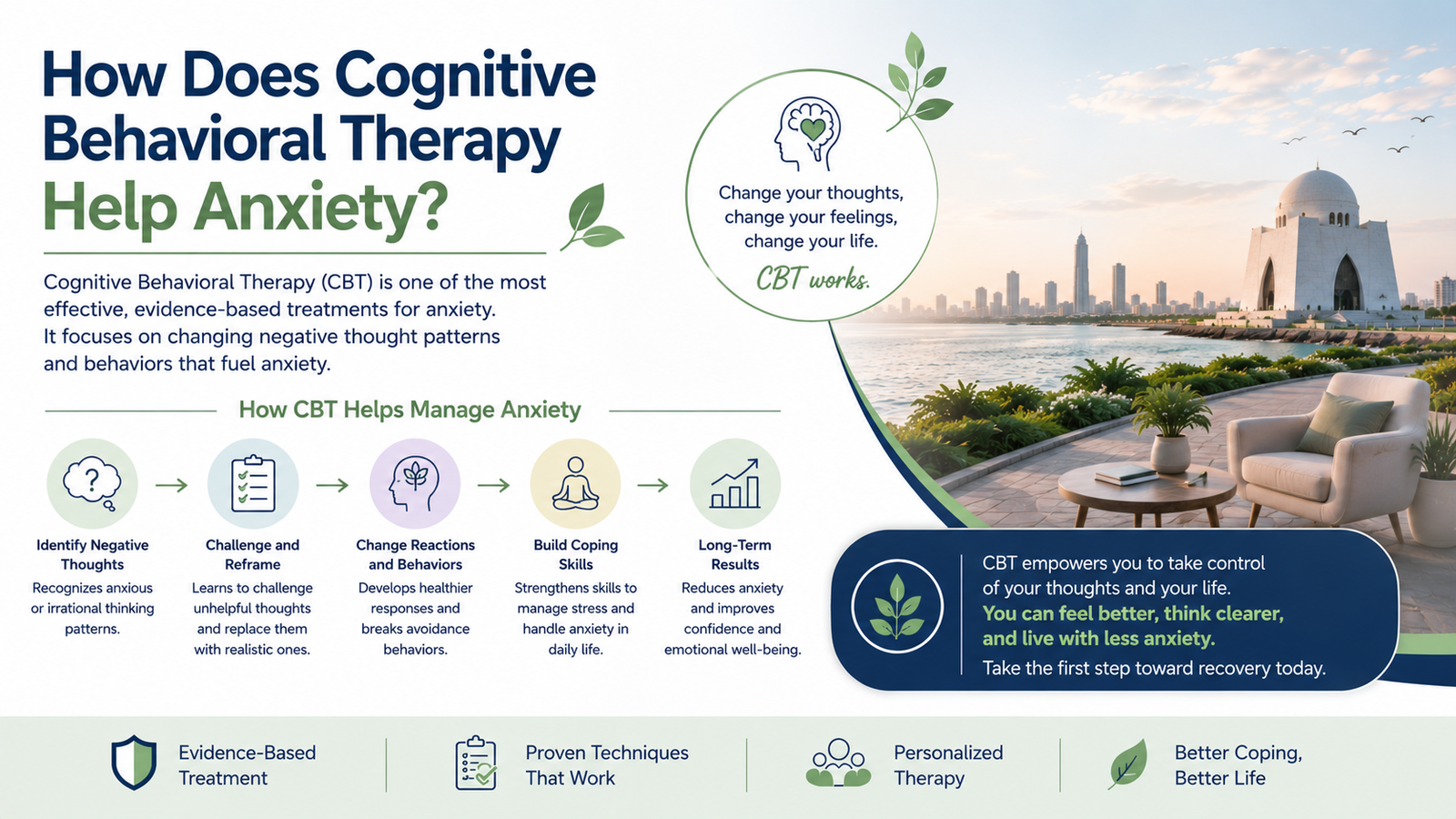
One of the most researched treatments for anxiety is Cognitive Behavioral Therapy for anxiety.
CBT focuses on identifying negative thinking patterns and replacing them with healthier responses.
People receiving CBT therapy in Karachi often learn practical skills such as:
- Managing excessive worry
- Reducing panic symptoms
- Challenging irrational fears
- Building confidence
- Improving emotional regulation
- Developing healthy coping strategies
Unlike temporary solutions, CBT teaches lifelong techniques that many patients continue using after therapy ends.
Can Anxiety Medication Help You Recover?
Medication is not necessary for everyone. However, for moderate to severe anxiety, a psychiatrist may recommend anxiety medication treatment alongside therapy.
The choice of medication depends on factors such as:
- Type of anxiety disorder
- Severity of symptoms
- Age and overall health
- Other medical conditions
- Pregnancy status
- Current medications
Common categories include:
- Selective Serotonin Reuptake Inhibitors (SSRIs)
- Serotonin and Norepinephrine Reuptake Inhibitors (SNRIs)
- Short-term anti-anxiety medicines (only when clinically appropriate)
Important: Never start, stop, or change psychiatric medication without consulting a qualified psychiatrist. Self-medication may worsen symptoms or cause unwanted side effects.
Research from organizations such as the World Health Organization (WHO) and the American Psychiatric Association (APA) supports combining medication with psychotherapy for many moderate to severe anxiety disorders.
How Effective Is Anxiety Therapy in Karachi?
Many people expect therapy to provide immediate relief after one or two sessions.
In reality, meaningful improvement takes time, commitment, and regular attendance.
Professional anxiety therapy in Karachi helps patients:
- Recognize anxiety triggers
- Build healthier thinking patterns
- Reduce avoidance behaviors
- Improve emotional regulation
- Strengthen resilience
- Gain confidence in daily situations
The effectiveness of therapy increases when patients actively practice the techniques between sessions.
Real Life Example
Sarah, a 29-year-old marketing executive, avoided presentations because she feared making mistakes in front of colleagues.
After several weeks of CBT and gradual exposure exercises, she learned to challenge negative thoughts and slowly rebuilt her confidence.
Today, she regularly leads team meetings with far less anxiety.
While every person’s journey is unique, this example shows how consistent treatment can create lasting positive change.
What Happens During Anxiety Counseling in Karachi?
Many people hesitate because they are unsure what counseling involves.
A typical anxiety counseling session in Karachi may include:
Initial Assessment
The therapist discusses:
- Symptoms
- Medical history
- Lifestyle
- Family background
- Personal goals
Identifying Triggers
You may explore situations that increase anxiety, including:
- Work pressure
- Academic stress
- Family conflict
- Financial concerns
- Health worries
Developing Coping Skills
Therapists often teach practical strategies such as:
- Deep breathing exercises
- Progressive muscle relaxation
- Mindfulness techniques
- Stress management
- Problem-solving skills
Tracking Progress
Over time, treatment plans are adjusted according to your progress.
What Lifestyle Changes Support Anxiety Recovery?
Professional treatment works best when combined with healthy daily habits.
Prioritize Quality Sleep
Adults generally benefit from 7 to 9 hours of sleep each night.
Stay Physically Active
Regular exercise releases endorphins that naturally improve mood and reduce stress.
Eat a Balanced Diet
A nutritious diet supports both brain and body health.
Reduce Excess Caffeine
Too much caffeine may worsen:
- Restlessness
- Rapid heartbeat
- Panic symptoms
- Difficulty sleeping
Practice Relaxation
Helpful techniques include:
- Meditation
- Yoga
- Controlled breathing
- Journaling
- Spending time outdoors
Stay Connected
Talking with trusted friends or family members can reduce feelings of isolation.
What Mistakes Can Make Anxiety Worse?
Many people unintentionally strengthen anxiety by adopting unhealthy coping strategies.
Avoid these common mistakes:
- Ignoring symptoms for months or years
- Self-diagnosing through social media
- Stopping medication suddenly
- Avoiding every stressful situation
- Using alcohol or drugs to cope
- Sleeping very little
- Constantly seeking reassurance online
- Missing therapy appointments
Early professional support often prevents anxiety from becoming more severe.
How Can You Choose the Best Anxiety Doctor in Karachi?
Finding the right healthcare professional is an important step toward recovery.
When searching for the best anxiety doctor in Karachi, consider:
Factor | Why It Matters |
Qualifications | Ensures specialized mental health expertise |
Clinical Experience | Helps with accurate diagnosis and personalized care |
Communication Style | Encourages trust and open discussion |
Treatment Approach | Offers evidence-based therapy and medication when needed |
Patient Reviews | Provides insight into patient satisfaction |
Follow-Up Care | Supports long-term recovery |
You may also benefit from consulting a psychiatrist for anxiety in Karachi if medication could be part of your treatment plan.
How Do Therapy and Medication Compare?
Many patients ask whether therapy or medication is the better option.
Feature | Therapy | Medication |
Addresses root causes | ✔ | Limited |
Teaches coping skills | ✔ | ✘ |
Provides symptom relief | Moderate | Often faster |
Long-term benefits | Excellent | Best when combined with therapy |
Risk of side effects | Minimal | Possible |
Prevents relapse | Strong | Better with continued therapy |
For many individuals with severe anxiety treatment needs, healthcare providers recommend combining psychotherapy with medication for the best results.
Can Anxiety Be Prevented?
Although anxiety cannot always be prevented, healthy habits can lower the risk and reduce symptom severity.
Helpful preventive measures include:
- Managing daily stress effectively
- Exercising regularly
- Building supportive relationships
- Limiting alcohol and recreational drugs
- Practicing mindfulness
- Seeking help early instead of waiting for symptoms to worsen
- Maintaining a consistent sleep schedule
- Learning healthy coping techniques
These habits also support people receiving stress and anxiety treatment by improving overall emotional well-being.
What Should You Expect During Recovery?
Recovery is rarely a straight line. Some weeks will feel easier than others, and occasional setbacks are normal.
Most people notice gradual improvements such as:
- Fewer panic attacks
- Better sleep quality
- Improved concentration
- Increased confidence
- Better relationships
- Reduced excessive worry
- Greater ability to manage stressful situations
Consistent treatment, patience, and follow-up care play a key role in achieving long-term success.
Frequently Asked Questions
What is the most effective treatment for anxiety disorders?
The most effective treatment depends on the type and severity of anxiety.
Many mental health professionals recommend a combination of Cognitive Behavioral Therapy (CBT), healthy lifestyle changes, and medication when clinically necessary.
A personalized treatment plan often provides the best long-term results.
How do I know if I should see an anxiety specialist in Karachi?
You should consider consulting an anxiety specialist doctor in Karachi if excessive worry, panic attacks, fear, or nervousness continue for several weeks, interfere with work or relationships, or affect your daily routine.
Early treatment can prevent symptoms from becoming more severe.
Can anxiety disorders be treated without medication?
Yes. Many individuals with mild to moderate anxiety improve through anxiety therapy in Karachi, counseling, stress management techniques, regular exercise, improved sleep, and CBT.
Medication is generally recommended only when symptoms are moderate to severe or significantly impact daily functioning.
How long does anxiety treatment usually take?
The recovery timeline varies from person to person.
Some individuals notice improvement within a few weeks of therapy, while others may require several months of consistent treatment.
Following your therapist’s or psychiatrist’s recommendations and attending regular sessions greatly improves long-term outcomes.
Can anxiety return after successful treatment?
Yes, anxiety symptoms can return during periods of significant stress.
However, people who continue practicing coping strategies learned through CBT therapy in Karachi, maintain healthy lifestyle habits, and attend follow-up appointments are better equipped to manage future challenges and reduce the risk of relapse.
Conclusion
Living with anxiety can feel overwhelming, but it does not have to control your life.
Modern mental health care offers effective solutions that help people regain confidence, improve relationships, and enjoy a better quality of life.
Whether you experience occasional panic attacks, persistent worry, or anxiety alongside depression, early intervention often leads to better outcomes.
If you or someone you care about is experiencing ongoing symptoms, seeking anxiety disorder treatment in Karachi is a positive first step toward recovery.
A qualified mental health specialist can develop a personalized treatment plan that may include therapy, lifestyle changes, medication when appropriate, and long-term support.
Remember, asking for help is a sign of strength, and with the right care, recovery is possible.