

What Is Bipolar Disorder?
Bipolar disorder psychiatrist Karachi is a mental illness that affects a person’s mood, energy, activity, sleep and concentration. These changes will differ from the normal fluctuations that everyone goes through. Episodes can include abnormally high or irritated mood, activity levels or depression.
Between episodes there may be times when a person’s mood is relatively stable. Some might experience multiple episodes that disrupt functioning in relationships, work, school, finances or activities. Bipolar disorder tends to be a chronic disorder, but with consistent treatment, many people are able to control symptoms and live normal lives.
A psychiatrist cannot make a diagnosis of bipolar disorder from a single mood change. The physician typically examines a person’s signs and symptoms and how they have changed over time.
What Are the Main Symptoms of Bipolar Disorder?
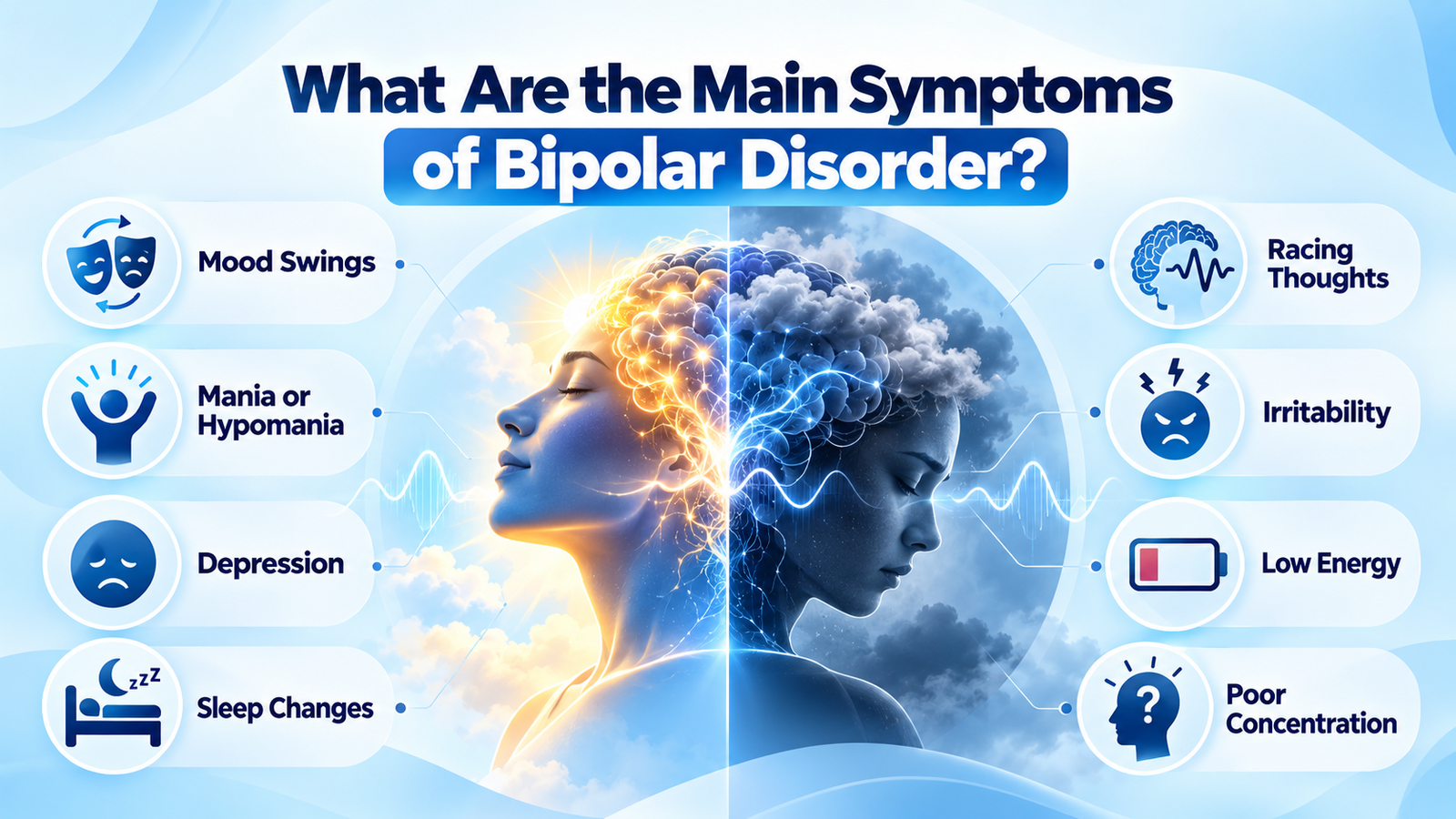
Different people with bipolar may experience different symptoms. There are two main categories of mood episodes: manic or hypomanic episode, depressive episode.
A person who has experienced a manic episode may feel energetic, need less sleep, talk faster and/or have racing thoughts, be more active, or act impulsively. With severe cases, the mania can impair judgment and may lead to hospital treatment.
Depression can include sadness, loss of interest, low energy, changes in sleep, difficulty paying attention, a sense of worthlessness, and/or thoughts of death or suicide.
Not everyone will have all of the symptoms. When a psychiatrist considers a diagnosis of bipolar disorder, all of these factors is important: the length, intensity, and frequency of episodes, as well as how much they interfere with daily life.
What Are the Types of Bipolar Disorder?
There are three main types of bipolar disorder: bipolar I disorder, bipolar II disorder, and cyclothymic disorder.
Bipolar I disorder includes manic episodes that interfere significantly with functioning or result in hospitalization, or that persist for at least seven days. Depression is also possible.
Depression and hypomanic episodes are part of bipolar II disorder. Hypomania is not as severe as mania, but can still be a considerable shift from the person’s normal behaviours.
In cyclothymic disorder there are recurring episodes of hypomanic and depressive symptoms, but not enough to diagnose hypomanic or depressive episodes.
It is only a mental health professional who may be qualified to make a diagnosis for any person.
When Should You See a Bipolar Disorder Psychiatrist in Karachi?
Psychiatric evaluation may be warranted if mood, sleep, energy, behavior or functioning changes continue to recur or are starting to affect functioning in daily life.
In particular, it is important to have a professional evaluation if a person experiences unusually energized periods of time during which he or she sleeps little or feels very irritated, impulsive, has racing thoughts, or experiences severe levels of depression.
When mania or severe depression is suspected, and there is a risk of harm to others or to the person, specialist mental health assessment is recommended by NICE.
A psychiatrist might also be beneficial if a person has already received treatment for depression and then experiences a few weeks of unusually high energy, decreased sleep requirements, or a noticeable change in behavior.
It’s important to have a comprehensive history since bipolar disorder can occasionally be confused with other mental health disorders.
How Does a Psychiatrist Diagnose Bipolar Disorder?
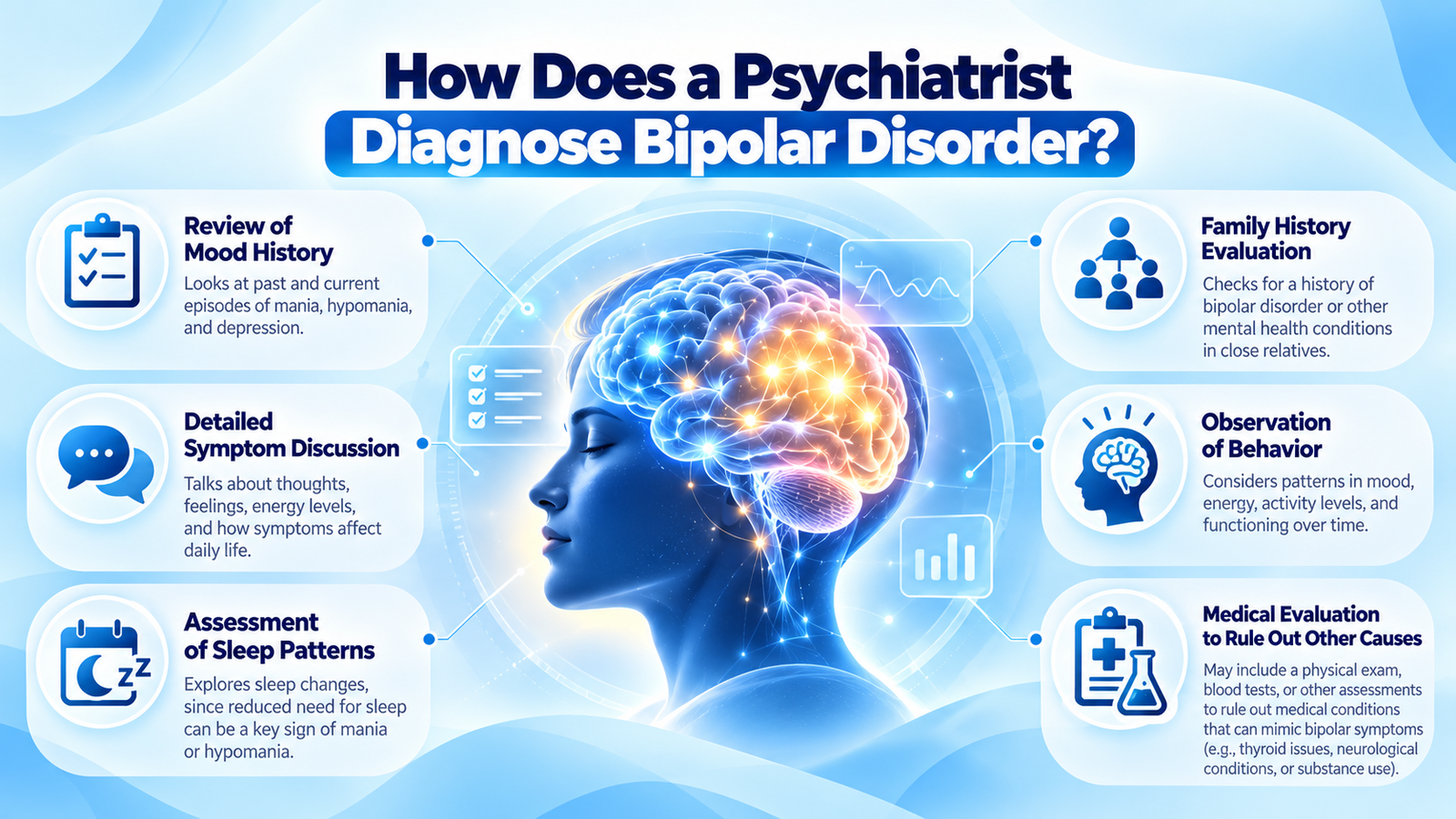
There is no blood test to confirm bipolar disorder. The diagnosis is primarily a thorough psychiatric evaluation.
A psychiatrist takes into account the individual’s current symptoms, previous mood episodes, behavior, sleep, family history, medical history, medications and substance use.
Because symptoms are sometimes shared with other psychiatric and/or physical disorders, a detailed assessment is important.
When evaluating suspected bipolar disorder, NICE suggests that conditions like schizophrenia spectrum disorders, attention deficit hyperactivity disorder (ADHD), substance abuse disorders and thyroid disorders be considered.
It is the psychiatrist’s job to ask the following questions:
- When did the changes in mood occur first?
- Is it normal for them to have periods of high or low mood for a long or short time?
- During unusually energetic times has the person needed significantly less sleep?
- Have there been significant changes in spending, relationships, work or behavior?
- Is mental health illness such as bipolar disorder or similar experienced by any member of the family?
- What have been the previous treatments/medications?
- Do you have any other medical or psychological issues?
A family member may also be able to offer valuable information as the person experiencing mania may not be able to recognize all of the changes in their behavior. NICE offers a specific recommendation for taking into account information from a family member/carer if applicable.
What Treatment Can a Bipolar Psychiatrist Provide?
Bipolar disorder treatment is personalized. This can include medication, psychological treatment, lifestyle support, monitoring or some mix of these.
The proper treatment plan will be determined based on the diagnosis, the current episode, the patient’s response to past treatment, the patient’s physical health and other individual considerations.
Medication
Mood stabilizers and some antipsychotic medications can be used in the treatment of bipolar disorder. Medication depends on whether the person is in a manic state or a bipolar depressed state or if it is a longer term medication for prevention of future episodes.
Don’t begin or discontinue or change drugs without talking to your doctor. There are also medicines that need physical health monitoring.
For instance, those using lithium for an extended period of time might need to be checked for kidney and thyroid function and other health parameters.
Caution should be used when prescribing anti-depressants in bipolar disorders as well. Because of concerns about triggering mania or rapid cycling in some patients, antidepressants are not usually used as sole treatment for bipolar disorder, NIMH notes.
Psychotherapy
Medications may be supplemented by psychotherapy. Methods that can be used include cognitive behavioural therapy, family interventions, interpersonal therapy, structured psychological interventions based on the individual’s needs.
Patients can learn to become aware of mood changes, learn coping skills, learn to improve routines and learn to work with issues that impact upon relationships or functioning during psychotherapy.
Psychological interventions are recommended as a component of the treatment of bipolar depression and longer term treatment by NICE.
Long Term Monitoring
Treatment for bipolar disorder may require ongoing treatment instead of a crisis treatment. Seeing a psychiatrist regularly helps them track your mood swings, effects of the medication, side effects, physical health and early indicators of a relapse.
To help patients and families understand what to do when symptoms start changing, a written care plan or crisis plan can be helpful.
Medication Treatment and Therapy: How Are They Different?
Aspect | Medication | Psychotherapy |
Main role | Helps manage mood symptoms and reduce episodes | Helps with coping, behavior, relationships, and symptom management |
Common use | Mania, bipolar depression, or long-term maintenance depending on the medicine | Bipolar depression and long-term support |
Monitoring | May require medical follow-up and side effect monitoring | Progress is reviewed during therapy sessions |
Individual adjustment | Medicine and dose depend on the patient’s clinical situation | Therapy approach depends on symptoms and personal needs |
Can they be combined? | Yes | Yes |
For many patients, treatment is not about choosing between medication and psychological support. A psychiatrist may recommend a combination when clinically appropriate.
What Should You Take to a Psychiatric Appointment?

Preparing information in advance can make the assessment more useful. Record significant changes of mood, sleep, past diagnoses, current medications, past psychiatric treatment and any important medical conditions.
Notes on behavior changes by family members may also be helpful if they’ve noticed significant changes.
Information about past episodes, not just the symptoms on the day of the appointment, might be needed by the psychiatrist.
- Do’s and Don’ts for Your Visit.
- Make a list of current medicines and supplements.
- Make note of changes in sleep/energy/mood/behaviour.
- Write down previous psychiatric diagnoses and treatments.
- Bring accurate medical information, if available.
- Note important family mental health history.
- Have questions ready regarding treatment, side effects, follow-up, and warning signs.
What Should You Look for in a Bipolar Psychiatrist in Karachi?
If you are seeking psychiatric help in Karachi, check if the doctor is qualified and has experience in psychiatric medicine, if you get sufficient time to evaluate, and if follow up is provided in the event of requiring a change in treatment.
Also, when talking to the psychiatrist about bipolar disorder, it’s helpful to ask questions about the management of acute episodes and the long term management.
The key to a good assessment is to take into account the person as a whole, not just the current mood.
If you have any questions about the clinic location, the way you will be seen for a consultation, the follow up plans, monitoring that is expected and what to do if symptoms get worse between appointments you can ask.
Dr. Muhammad Ilyas Jat and Bipolar Disorder Care in Karachi
Dr. Muhammad Ilyas Jat is an Assistant Professor of Psychiatry at Dow University of Health Sciences. According to the university profile he did MBBS and FCPS and his academic qualification is in Psychiatry.
Bipolar affective disorder is listed on his official site as one of the psychiatric conditions that he treats.
Dr. Muhammad Ilyas Jat is mentioned in a current doctor listing as a psychiatrist with MBBS and FCPS qualifications, and listed as a doctor who treats bipolar disorder.
Clinic locations, appointments and fees are subject to change, please check current information before visiting.
Dr. Ilyas Jat is thus one local psychiatrist that one can check out on his profile for a consultation if they are looking for a psychiatrist who specializes in bipolar disorders in Karachi.
Details about his appointments and the contact information are available on his official website.
Dr. Ilyas Jat official website
What Questions Should You Ask a Bipolar Psychiatrist?
Patients are not sure about what to ask in their initial consultation. You may ask the psychiatrist how he or she will evaluate your symptoms, what the psychiatrist thinks is the most likely diagnosis, and whether any other conditions should be excluded.
Also, one may ask what will happen in the monitoring of the treatment and what side effects should be documented.
If prescribed, ask what the medicine is meant to treat, how long it might take before the medicine starts to work, and what to do if they forget to take it or have any worrying side-effects.
Do not discontinue psychiatric medication without consulting a physician if you are already on them, simply because you feel better or because of side effects. Talk to your health care provider about changes.
Can Bipolar Disorder Be Managed Long Term?
Yes. Bipolar disorder is usually a chronic condition and, with appropriate long-term treatment, people can manage their symptoms and function better.
Treatment may vary over time based on mood episodes, how well patients respond to treatment, side effects, physical health and personal needs.
Long term management may involve routine psychiatric consultations, medication if needed, psychotherapy, managing sleep and daily activities, family support and surveillance for early signs of another episode.
Maintaining a mood record may also be useful to identify mood, sleep, energy and behaviorpatterns for patients and their clinicians.
When Is Bipolar Disorder an Emergency?
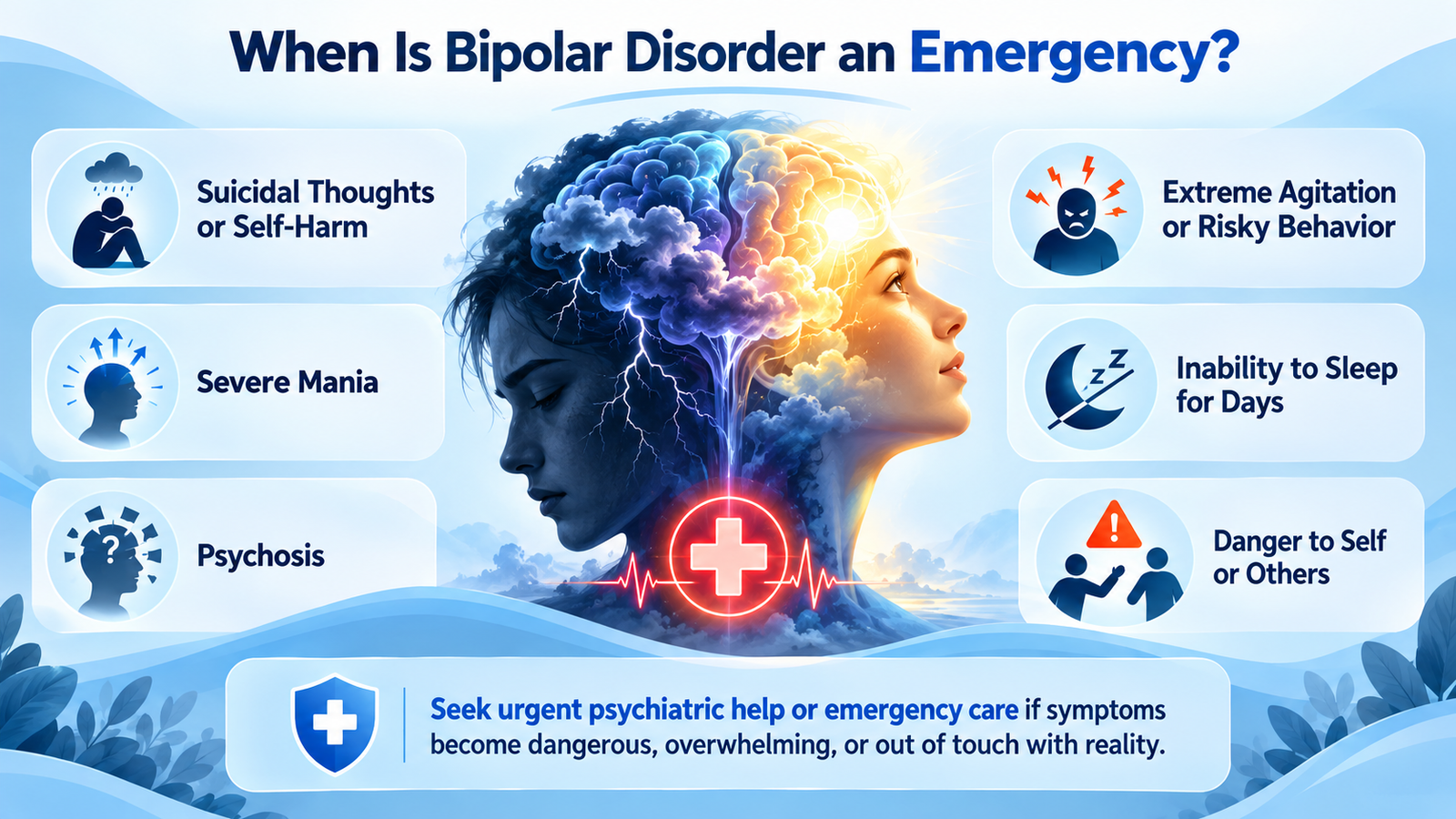
Serious signs can mean an emergency evaluation is required. This can involve suicidal or self harm thoughts, severe confusion or psychosis, dangerous behaviour, extreme agitation or a manic or depressive episode with the person being unable to keep themselves or others safe.
NICE advises for urgent specialist mental health assessment in the case of suspected mania or severe depression or if a person is at risk of harm to themselves or others.
In cases of danger, self-harm or inability to stay safe, do not wait for a scheduled psychiatric appointment, but seek immediate medical attention.