

Why Should You Book a Psychiatrist Appointment in Karachi?
Seeing a psychiatrist can be helpful for discussing emotional, psychological, and behavioral issues with a medical professional who is trained in mental health. A psychiatric consultation provides a person-centered evaluation that is based on your symptoms, medical history, and personal circumstances, as opposed to general recommendations from friends or from the internet.
Mental health issues can impact various aspects of life such as relationships, learning, employment, sleep, and physical health. Getting the right service provision from the outset can help to determine the root cause and set up a suitable care plan.
If you are feeling consistently sad or anxious, have mood swings that you don’t understand, trouble sleeping, frequent panic attacks, or trouble with daily activities, you might want to make an appointment.
A psychiatrist can also provide treatment, follow-up appointments, and review medications for individuals who already have a mental health diagnosis.
What Mental Health Conditions Can a Psychiatrist Help With?
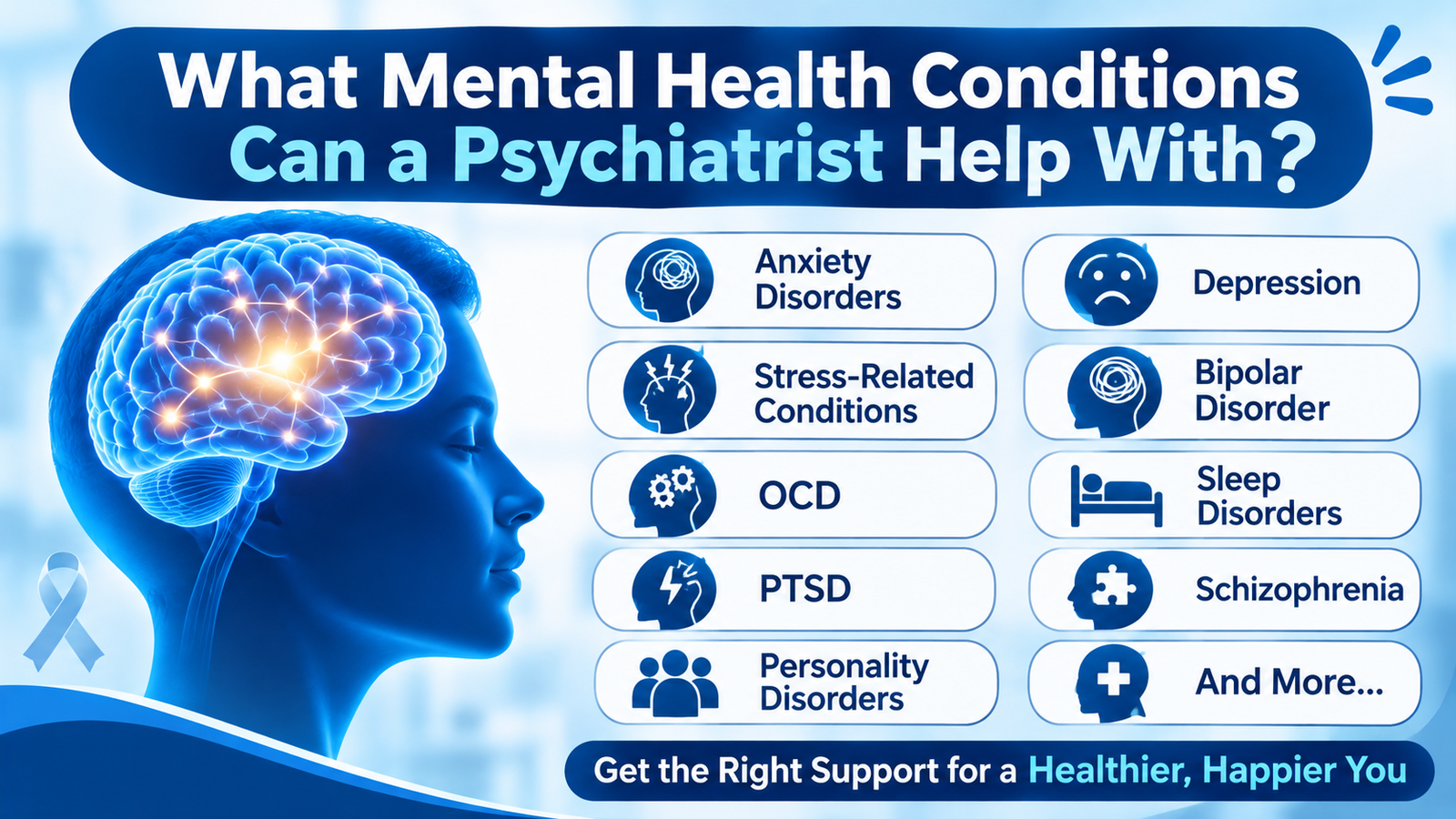
A psychiatrist is a doctor who is trained to diagnose and treat various types of mental disorders. Symptoms and treatment requirements vary from one individual to another, so it is important to assess the situation and pick the right treatment.
Some common reasons to consult a psychiatrist include:
Anxiety Disorders
Anxiety may result in persistent worries, fears, restlessness, and physical symptoms like a racing heart or often not being able to get a good sleep. Others may have panic attacks or fear normal activities due to profound anxiety.
A psychiatrist can examine the symptoms, determine the potential causes, and discuss treatment options.
Depression
Depression is not sad day after day. This can include having a low mood and loss of interest, being tired, changes to appetite, sleep problems, and trouble concentrating.
A psychiatric assessment can be used to determine if these symptoms are associated with depression or another illness. Treatment can include psychotherapy, medication, lifestyle support, or a combination.
Bipolar Disorder
Changes in mood, energy, and activity level are significant in bipolar disorder. Some people have times of depression, and sometimes times of mania or hypomania.
A psychiatrist can assess these mood patterns and formulate a treatment strategy that is suitable for the person.
Schizophrenia
Schizophrenia is a mental disorder that impairs thinking, perception, emotions, and behavior. Symptoms can include hallucinations, delusions, disorganized thinking, and impaired functioning in everyday activities.
It is important to get a professional assessment, as early diagnosis and subsequent support may help to manage symptoms.
Addiction and Substance Use Disorders
Some people start to have problems controlling their use of alcohol, drugs, or other substances. Addiction impacts a person’s physical, interpersonal, work, and emotional health.
Assess by a psychiatrist; discuss appropriate treatment, psychological support, and recovery.
Sleep and emotional problems are addressed.
Other possible symptoms that could need professional intervention include ongoing trouble sleeping, emotional instability, irritability, and inability to handle stress.
The symptoms are not necessarily associated with a psychiatric disorder. However, if they persist or become an issue in everyday life, an evaluation will help determine potential causes.
When Should You See a Psychiatrist?
A psychiatrist should be consulted if emotional and behavioural changes are persistent, hard to manage, or interfere with your daily life.
For instance, someone who was once going out and socializing with friends and family may start to avoid them. Another person might constantly feel anxious and experience problems with concentration and working.
Common symptoms to watch for are:
- A sad or hopeless attitude.
- A tendency to have panic attacks or too much anxiety.
- Significant mood changes.
- Insomnia, defined as not sleeping for a long time.
- Withdrawn, loss of interest in activities.
- Thoughts, perceptions, or behaviour that are unusual.
- Impaired regulation of anger and/or emotions.
- Issues with drug or alcohol use.
- Alterations in thinking, memory and daily functioning.
Having one symptom does not necessarily indicate a mental health disorder. A psychiatrist will be able to look at the whole picture before making the diagnosis.
When is psychiatric help necessary?
Don’t delay a routine appointment if someone mentions their plans to kill themselves, to harm others, or if they are overly confused or acting dangerously. Go to the nearest hospital emergency department immediately. Rescue 1122 is an ambulance service for emergency calls in Karachi.
How to Book a Psychiatrist Appointment in Karachi
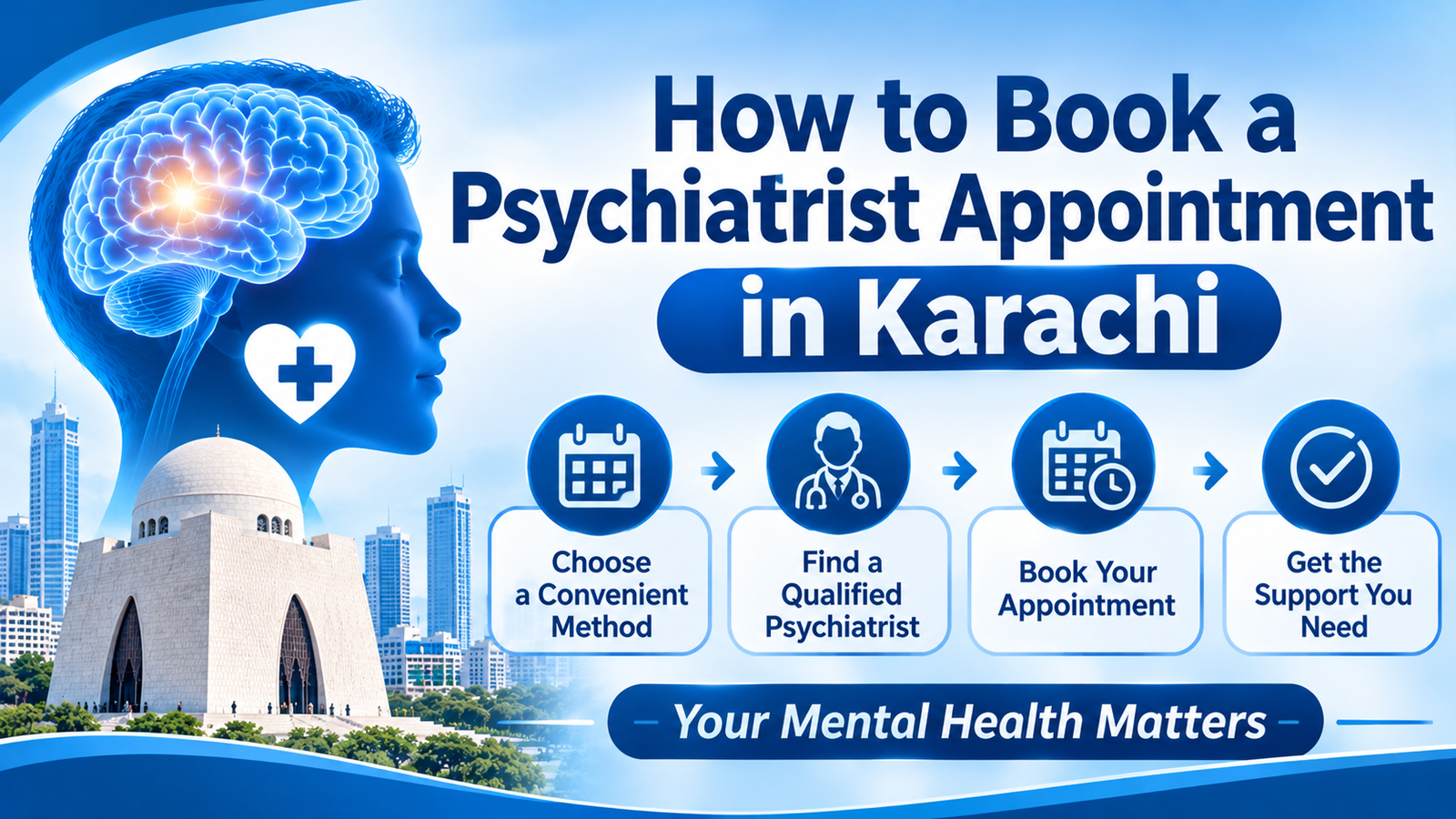
Making an appointment for psychiatric consultation should be simple. You can begin by finding a psychiatrist to try to schedule an appointment, and you can call the psychiatrist’s office directly.
These are the steps that need to be taken in practice.
The first step is to recognize your mental health concerns.
When calling a clinic, consider the primary purpose of the appointment. Don’t have to say what diagnosis you have.
Think about whether you might be experiencing anxiety, depression, mood swings, sleeping problems, addictions, or other issues.
This information can assist the clinic in determining the type of consultation you may require.
Locate a Psychiatric Expert.
Find a psychiatrist who has the proper medical training and experience in the evaluation of mental illness.
Official profiles and professional information can be checked. Dr. Muhammad Ilyas Jat is registered as an Assistant Professor in Psychiatry at Dow University of Health Sciences and has the qualifications of MBBS and FCPS.
Dow University of Health Sciences
The psychiatrist’s specialty, consultative practice, clinic setting, and follow-up schedule are also factors to consider.
The last step is to contact the Clinic.
After you find a psychiatrist that you would like to speak with, call the clinic to determine if they have availability.
You can ask about:
- Consultation days and times available.
- Appointment booking procedures.
- Consultation fees.
- Clinic location.
- Follow-up arrangements.
- Availability of online consultations.
Please verify the most up-to-date information by calling the clinic before coming.
Please confirm your appointment.
Discuss available options and confirm date & time. Find out if previous medical records, prescriptions, or investigation reports need to be brought.
Record the date and time of the appointment, so you don’t miss it.
Your consultation
When you attend your appointment, discuss your concerns honestly. There is no need to give “right” answers or a medical terms.
The psychiatrist will ask relevant questions, evaluate your symptoms, and talk about the next steps.
Psychiatrist vs Psychologist: Which Professional Should You Visit?
A psychiatrist and a psychologist both work in mental healthcare, but their professional training and responsibilities are different.
A psychiatrist is a medical doctor who specializes in mental health conditions. A psychologist generally focuses on psychological assessment, behavioural support, and psychotherapy, depending on their qualifications and professional scope.
Comparison | Psychiatrist | Psychologist |
Professional background | Medical doctor with psychiatric training | Psychology professional |
Main focus | Assessment and treatment of mental disorders | Psychological assessment and therapy |
Medication | Can prescribe medication | Generally cannot prescribe medication in Pakistan |
Therapy | May provide or coordinate psychotherapy | Often provides psychotherapy |
Medical assessment | Can assess medical factors affecting mental health | Focuses on psychological assessment |
Suitable for | Psychiatric symptoms and medication management | Emotional, behavioural, and psychological concerns |
Can You Visit Both?
Yes. Some people benefit from working with both professionals. A psychiatrist may manage medication and medical aspects of treatment, while a psychologist provides structured psychotherapy.
The appropriate combination depends on the individual’s symptoms and treatment needs.
What Happens During Your First Psychiatrist Appointment?
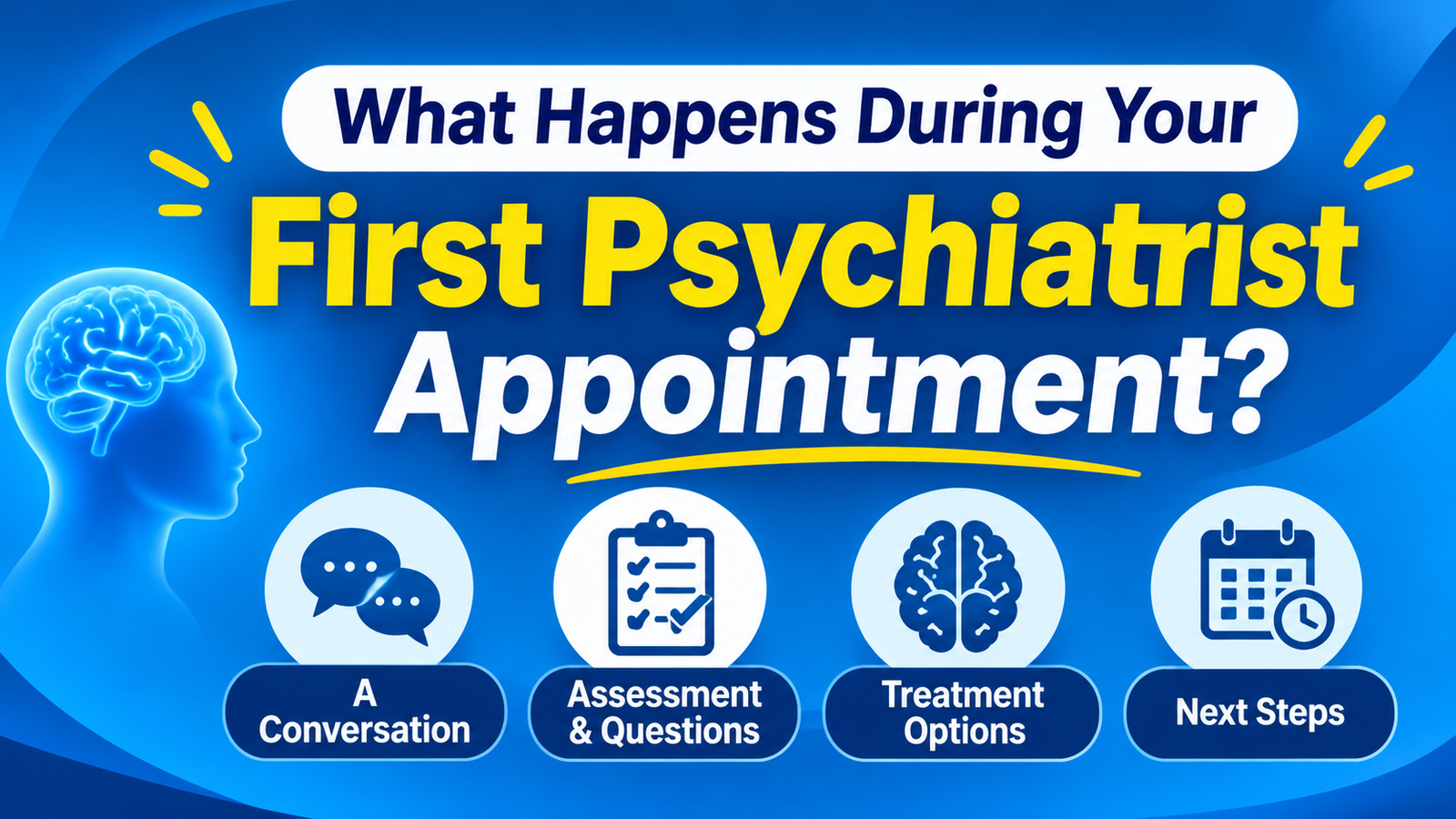
The first psychiatric visit is typically an assessment and not a quick prescription visit. The psychiatrist must first learn about your symptoms, background, and current issues before prescribing treatment.
While each consultation will vary, there are several steps that are common to most appointments.
Discussing Your Symptoms
The psychiatrist may ask you when your symptoms began, how often they happen, and if there is anything that makes them better or worse.
If you’re feeling anxious, the physician might inquire about your concerns, physical responses, sleeping patterns, as well as what causes you to feel like this.
Looking back at Your Medical History
Your physical health may impact your mental health at times. The psychiatrist may inquire about any current or past mental health condition, diagnosis, current medication, and family medical history.
Admit drugs and supplements.
Knowing yourself and your situation.
Stress from work, family life, relationship problems, financial issues, and significant changes in life can impact emotional health.
Talking about these situations will enable the psychiatrist to have a fuller understanding of your situation.
The discussion on Diagnosis and Treatment is being facilitated.
Following the evaluation, the psychiatrist might share some potential reasons for your symptoms and indicate if a further evaluation is necessary.
Treatment can include medication, psychotherapy, behavioural strategies, or referral to other practitioners for treatment. Medication is not necessary for everyone and treatment should be tailored to the individual.
How to Prepare Before Visiting a Psychiatrist
Here are some things that can be done in advance to make your appointment more productive. There’s no need to prepare a long report, but it helps to have some information to help you explain your concerns.
Think ahead to make the following:
- A short description of your main symptoms.
- At what time the symptoms started.
- All medicines you are taking at the time.
- Existing medical/psychiatric history.
- History relevant to the illness of the family.
- Concerns about treatment, side effects and follow-up visits.
You can also request that a friend or family member join you (as long as you’re okay sharing the information with them).
The psychiatrist should also be asked to use non-medical terms for medical terms or recommendations for treatment.
How Often Do You Need to Visit a Psychiatrist?
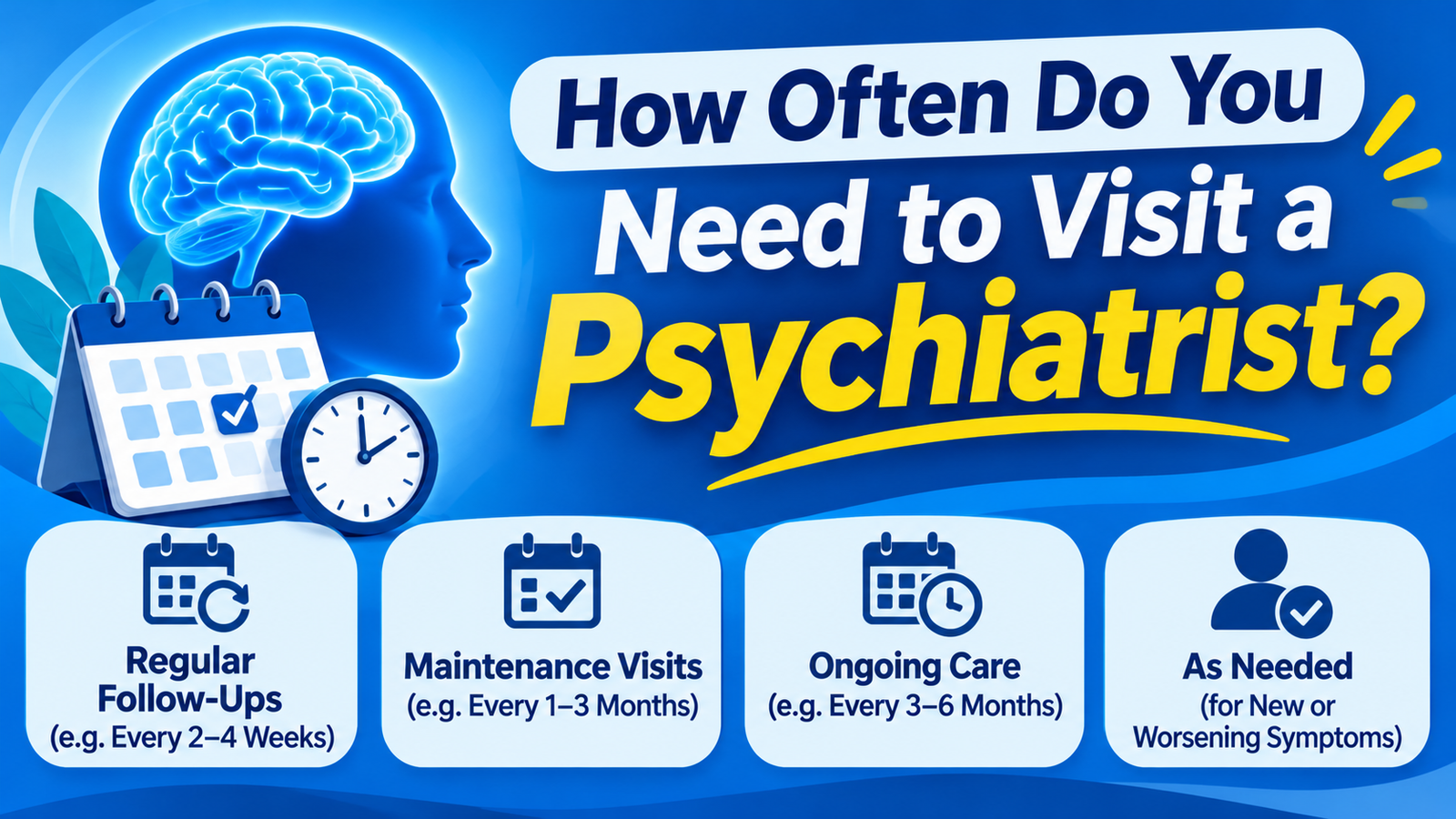
The number of psychiatric appointments will vary depending on your diagnosis, symptoms, treatment plan, and improvement.
Some patients may need an initial assessment and periodic follow-up reviews. People who have a mental illness that lasts a long time may need more frequent visits, particularly when they begin or change medications.
The psychiatrist can then make adjustments, if needed, talk about treatment results, concerns, and changes in symptoms during follow-up consultations.
Never discontinue or alter drugs, like those prescribed for psychiatric conditions, without consulting your health care provider.
What Should You Consider When Choosing a Psychiatrist in Karachi?
Hiring a psychiatrist is not as easy as picking the nearest clinic. You should feel comfortable sharing personal concerns and know the professional understands what you need.
Take the following into account when booking:
Professional Qualifications
Verify the psychiatrist’s medical qualifications and professional registration. Additionally, you can check out details released by accredited medical institutions or hospitals.
Relevant Clinical Focus
Various psychiatrists have expertise in various fields, including child psychiatry, anxiety, addiction, and mood disorders.
Select a specialist who is knowledgeable about the area of clinical interest related to your concerns.
Clinic Accessibility
Karachi is a big city, and it may be hard to reach the clinic if it is not close to your home or workplace. Keep in mind travel time, the availability of transport, and follow-up visits.
Communication and Comfort
It should not be embarrassing or feel like you’re being judged if you explain your symptoms. A proper consultation should allow you to ask questions and to have an understanding of the suggested treatment.
Follow-Up Availability
Continued monitoring of mental health care may be necessary. Inquire about follow-up visits before booking an appointment and how to reach the clinic for questions regarding treatment.
Is Online Psychiatrist Consultation Available?
Telepsychiatric consultations can offer mental health services without forcing all mental health visits to a clinic.
These can be helpful if they are unable to travel to the clinic, if they live far away, and would prefer to talk through their concerns at home.
Online consultations are not appropriate for all circumstances, though. There are conditions that will need to be evaluated in person, examined by a doctor, and/or require immediate action.
When scheduling an online appointment, be sure the psychiatrist provides the service, what communication option they use, and how prescriptions are provided and follow-up is conducted.
If there’s an emergency or immediate safety issue, then don’t use a regular online appointment.
Common Mistakes to Avoid When Booking a Psychiatrist
Sometimes, individuals make choices about mental health care for reasons of inadequate information. Some simple tips can help you to avoid common pitfalls in choosing the right care.
Not going to an appointment: If symptoms are not severe, it will be more difficult to take care of your daily routine. If problems continue, consult a professional.
Selecting only on terms of consultation fees: Cost should not be the only determining criterion; qualifications, experience in dealing with the issues, availability, and follow-up are important factors.
Concealing important information: Do not keep important information from the patient, such as symptoms, medication, substance use, or previous treatment. The psychiatrist needs to have accurate information to make an evaluation.
Believing that people need to get better right away: It takes time to receive mental health treatment. Adhere to the treatment plan and address the issues during follow-up visits, not on your own.
Mental Healthcare and Family Support
Family support can be an essential support in a person’s mental health path. A positive atmosphere can facilitate attendance at appointments, adherence to treatment recommendations, and discussions about difficulties.
Family members should listen without judging, refrain from blaming the person for their symptoms, and be respectful of their privacy.
For those who are under psychiatric care, family members can suggest regular psychiatric visits and be alert to changes in behaviour or mood.
Family support is not a substitute for professional psychiatric evaluation or treatment, however.