


What Is a Psychiatric Consultation?
A psychiatric consultation is a medical visit during which a psychiatrist reviews the mental health problems, symptoms, medical history, and functioning of an individual.
To find out what might be causing the issue and to decide if the problem needs to be looked at further, treated, or followed up on.
The psychiatrist will ask about a change in mood, anxiety, sleep, appetite, concentration, relationships, medication, and past mental health treatment during the consultation.
Inquiries regarding physical health and family medical history may also be appropriate, as certain medical conditions, drugs, and substances can impact mental health.
A consultation does not imply a diagnosis or a prescription. The psychiatrist might suggest observation, further medical testing (if necessary), psychotherapy, or medication or a combination of these.
The treatment strategy is determined by the person’s clinical situation and clinical assessment.
When Should You Consider a Psychiatrist in Karachi?
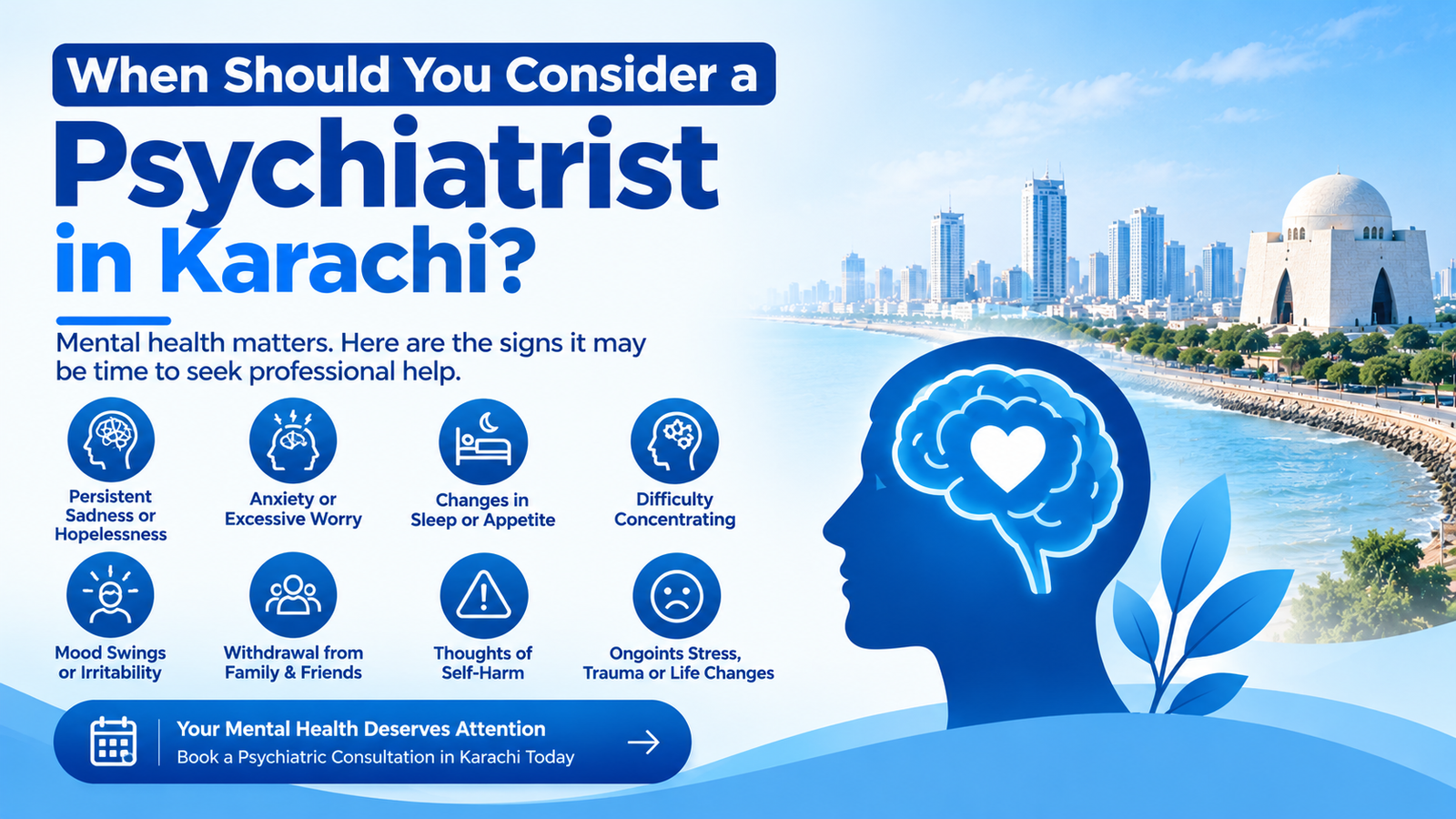
A psychiatric assessment may be useful during periods of emotional or behavioral symptoms that are difficult to manage, begin to interfere with daily life, or when symptoms last for more than a few months. Don’t wait until it is a problem before calling a professional for help.
For instance, an individual with a few weeks of anxiety who has begun avoiding work meetings might require an evaluation.
Likewise, if someone has a persistent depressed mood, disturbed sleep, and problems with focusing, assistance may be necessary to help them understand the cause of their mood changes.
Factors that may lead people to schedule an appointment include:
- Sadness, hopelessness, or loss of interest in usual activities for more than 2 weeks.
- Regular feelings of anxiety, panic, or excessive worry.
- Major sleep or appetite changes.
- Mood swings, irritability, or bursts of energy.
- Attention deficit and/or difficulty with maintaining daily functioning.
- Unwanted thoughts, urges, or worries that happen again and again.
- Tranquil issues related to trauma, loss, or significant life transition.
- Mental health manifestations persist despite self-care and/or support from family and friends.
The symptoms may have various causes, and the presence of one or more of them does not necessarily mean the presence of any specific disorder.
A health care provider can determine the pattern, severity, duration, and effects of the symptoms before making a recommendation.
Mental Health Conditions a Psychiatrist May Assess
Psychiatrists assess various mental health issues.
The type of assessment will vary based on the individual’s symptoms, medical history, age, and other considerations.
Anxiety Disorders
Anxiety may manifest as ongoing fear, restlessness, physical tension, insomnia, or a sudden feeling of intense fear.
If anxiety is excessive or disrupting daily functioning, a psychiatric evaluation can be used to identify if anxiety might be related to an anxiety disorder or another type of condition.
Depression
Depression may lead to a persistent low mood, decreased interest or motivation, decreased energy, changes in appetite, problems with sleeping, feelings of worthlessness, and lack of concentration.
The signs and symptoms can vary. They can be assessed by a psychiatrist for their length and intensity, and he or she can discuss appropriate treatment options.
Bipolar Disorder and Major Depressions
Bipolar disorder is characterised by periods of depression and mania/hypomania.
These episodes may impact energy, sleep, judgment, activity, and behavior. It is important to carefully assess so that the causes of mood changes can be distinguished and the treatments offered vary with the present mood disorder.
Mental health issues related to sleep
Sleep disturbances can accompany anxiety, depression, trauma symptoms, and/or other health issues.
A psychiatrist can help determine if a mental health issue is causing sleep problems and if further medical testing is required.
The two conditions that tend to overlap are OCD and trauma-related conditions.
OCD can be characterized by persistent and recurrent thoughts and actions that are not desired.
These can include intrusive memories, avoidance, increased alertness, or changes in mood after experiencing a distressing event, all of which may be related to trauma.
Other Behavioral and Mental Health Concerns
The psychiatrist might also evaluate attention problems, drug or alcohol issues, signs of psychosis, and other changes in thinking or behavior.
Treatment and assessment should be based on the individual, and not on one symptom.
What Happens During a Psychiatric Consultation?

In a first appointment, the person’s concerns are typically discussed, and a plan is put in place to determine further assessment or care.
The exact process depends on the symptoms presented, the psychiatrist’s approach, and whether it is an initial or a follow-up consultation.
A discussion on the symptoms and concerns.
The psychiatrist may inquire about the onset of symptoms, their frequency, factors that make them worse or better, and impact on daily functioning. You may summarize your experiences in your own words.
Don’t need to know the medical name of what you are experiencing.
Personal Medical History and Medical Records.Medical, Personal History.
Questions might include any of the following: What illnesses they have had, other medications they are taking, sleep habits, substance abuse, family history, and previous mental health treatment.
This information can guide your psychiatrist to think of other causes for the symptoms you are experiencing.
Mental State Assessment
The psychiatrist may evaluate mental functioning, including mood, speech, thought, concentration, behavior, and more.
The assessment is about understanding the person, not an evaluation of the person.
Explanation of Findings and Next Steps
The psychiatrist, based on the available information, might share a possible diagnosis, suggest further evaluation, or explain that more time is required to make a diagnosis. Be given a chance to ask questions & discuss concerns.
Treatment Planning and Follow-Up
Medication, psychotherapy, and/or practical coping strategies, referrals to other professionals, and/or monitoring may be involved in the treatment plan. Progress checks can be made at follow-up appointments, during which any side effects of medication can be discussed, and the plan can be modified if necessary.
Psychiatrist vs. Psychologist: Which Professional Should You See?
A psychiatrist and a psychologist both support mental health, but their training and typical responsibilities differ.
Choosing the right professional depends on the concerns you want to address and the kind of care you may need.
Factor | Psychiatrist | Psychologist |
Professional training | Medical doctor with specialist psychiatric training | Training in psychology, which varies by qualification and jurisdiction |
Main role | Medical assessment and treatment of mental health conditions | Psychological assessment and evidence-based psychological interventions, depending on training |
Medication | Can prescribe medication within their professional scope | Generally cannot prescribe medication in Pakistan unless specifically authorized under applicable law |
Therapy | May provide psychotherapy if trained in the relevant approach | May provide psychotherapy if appropriately trained |
Suitable situations | Symptoms requiring medical assessment, complex mood changes, or consideration of medication | Emotional difficulties, behavioral patterns, coping skills, and psychological therapy |
Working together | May coordinate care with a psychologist or other clinician | May refer to or collaborate with a psychiatrist when medical assessment is needed |
Neither professional is automatically the right choice for every person. Some people benefit from psychotherapy alone, while others need psychiatric evaluation, medication, or coordinated care involving multiple professionals.
If you are uncertain where to begin, a qualified mental health professional or primary care doctor can help you determine the appropriate next step.
Psychiatric Treatment Options: What May Be Recommended?
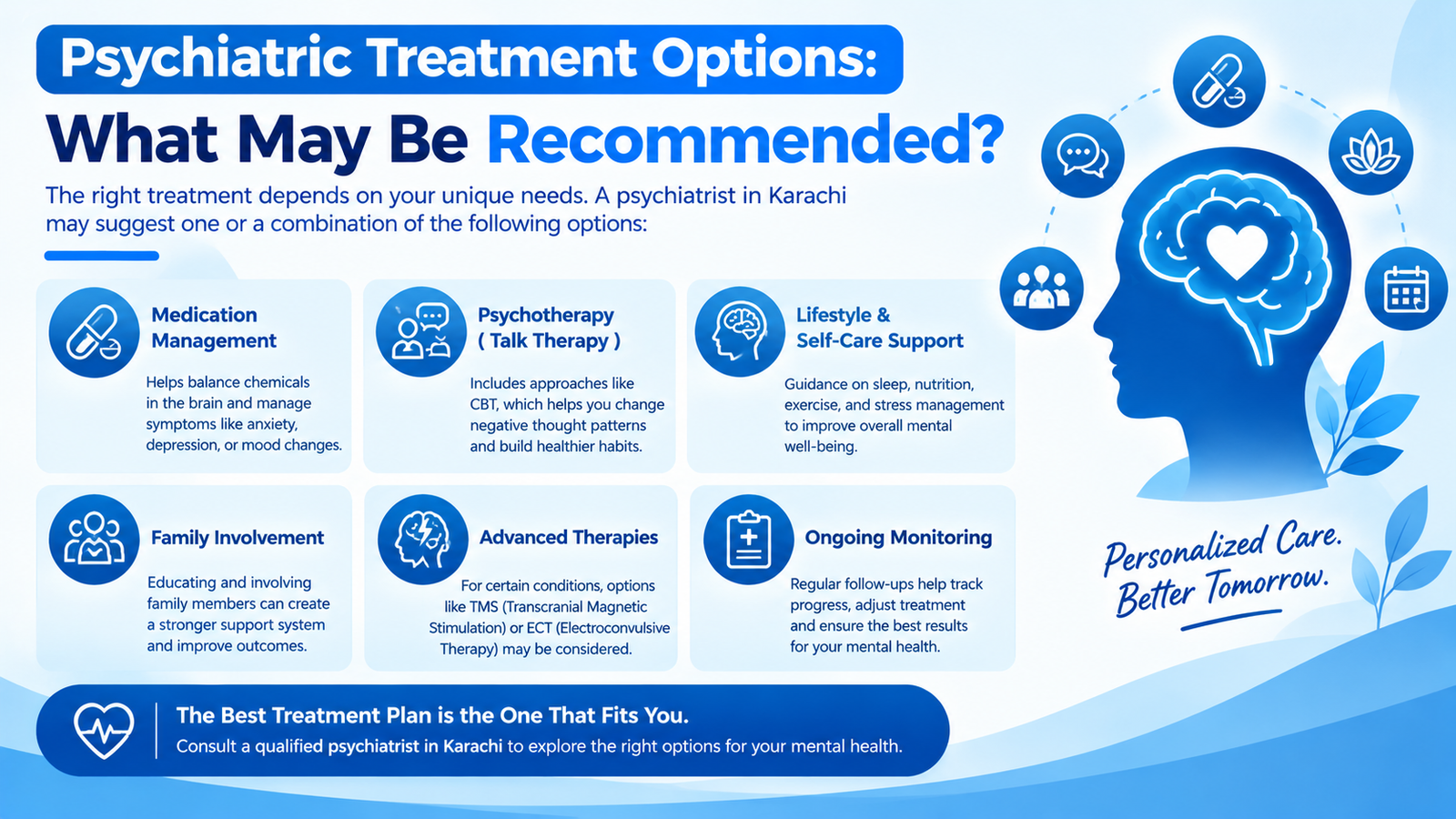
Treatment is based on symptoms, diagnosis if available, medical history, and the person’s own preferences and response to past treatment. Generalized treatment plans do not apply to all mental health issues.
Medication
Medications may be prescribed by a psychiatrist if it is clinically appropriate. This is dependent on what condition is being treated, potential benefit, side effects, interactions with other medications, and medical history.
The effect of medication can take some time to reach its peak (this varies by the medication and condition).
Patients should not alter or discontinue prescription medication without consulting the prescribing clinician; they should consult the prescribing clinician if they have any concerns regarding the medication.
Psychotherapy
Psychotherapy is a collaborative process between a trained professional and another person designed to help gain insight into thoughts, feelings, behaviors, and patterns that would be a source of distress.
One of the evidence-based therapies that are applied to a variety of mental health problems is cognitive behavioral therapy (CBT).
Psychotherapy may be offered by a psychiatrist if he or she is properly trained or, if not, a referral to a psychologist or psychotherapist may be made.
The use of lifestyle and supportive strategies
Use of lifestyle and supportive strategies. Good sleep, exercise, nutritional support, social support, and stress management can help to support mental health.
These strategies could be implemented in combination with clinical care, but are not intended to replace care when symptoms are severe or persistent.
Ongoing Monitoring
The follow-up care assists in assessing the effectiveness of treatment and the need for changes. This is also a chance to talk about new symptoms, concerns about medications, practical issues, and recovery goals.
How to Prepare for Your First Appointment
It can be helpful to have some information ready to discuss during your appointment. There’s no need to create a report or have all the answers.
Consider bringing or noting:
- A brief description of your main concerns and when they started.
- Any significant modifications to sleep or appetite, mood, concentration, or behavior.
- Current medication, supplements, allergies, and relevant medical conditions.
- Any previous assessment or treatment, if available, including details.
- Inquiries regarding treatment, the potential for side effects, confidentiality, costs, and aftercare.
- Be as open as you can. Ask the psychiatrist to clarify the question if it is not clear. If you are nervous, be sure to explain that at the start of the appointment.
You might also want to inquire if a family member you trust can come with you.
The psychiatrist should inform the patient of methods for preserving privacy and consent and should also explain any situations that may arise where privacy and consent are waived by law or for reasons of safety.
How to Choose a Psychiatrist in Karachi
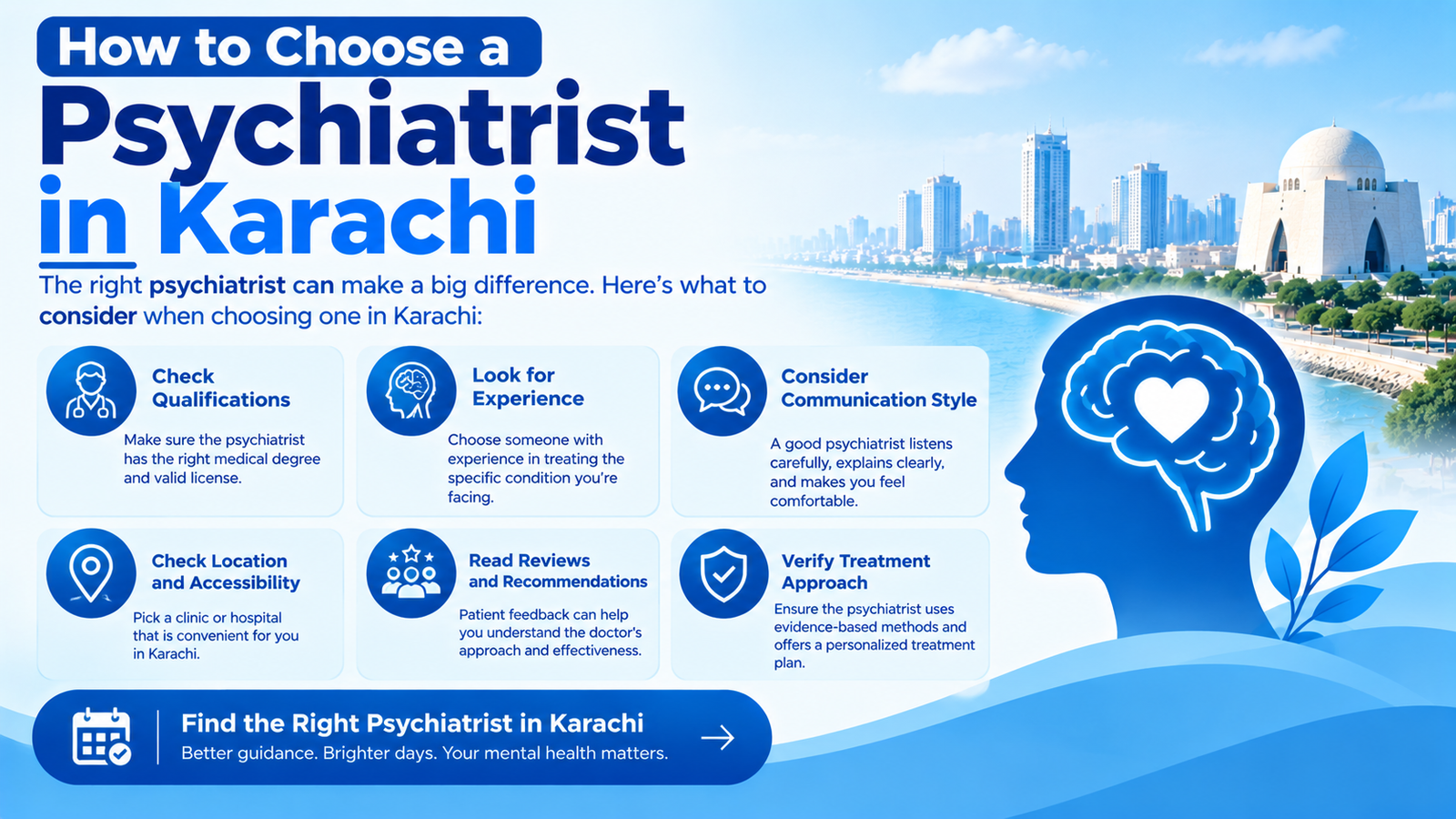
If you are considering psychiatric services in Karachi, don’t rely on the information provided in their online description or advertisements.
The professional should be appropriate, well-qualified, and able to communicate effectively, providing information about treatment options but without making guarantees.
Firstly, check the psychiatrist’s medical registration and postgraduate specialist qualifications with the Pakistan Medical and Dental Council (PMDC) or with the relevant official regulating body. Verify the clinician’s training and scope of practice.
Then think about clinical considerations like location, scheduling, consultation charges, follow-up plans, and access.
The traffic and travel time in Karachi can make it difficult to make appointments consistently, so plan accordingly or consider other options for appointments.
Last but not least, don’t overlook communication. You should be confident in stating concerns, asking questions, talking about your treatment preferences, and discussing concerns about medications or therapy.
A good provider will be able to articulate what they are proposing to do and why it is not a cure-all.
What Should You Know About Psychiatric Consultations in Karachi?
People in Karachi can obtain mental health care services in private clinics, at hospital outpatient departments, or other services available to them.
Treatment options are different from provider to provider, as are availability and fees, and procedures for appointments, so check ahead of time before visiting.
Some services may have virtual service sessions, and some will need to be face-to-face. Decisions regarding the appropriateness of telepsychiatry will depend upon the individual’s clinical needs, provider arrangements, privacy, and access to emergency support.
If symptoms are severe or urgent, then immediate face-to-face evaluation may be necessary.
To find out what services are available with Dr. Ilyas Jat, check out drilyasjat.com and confirm any consultation details, qualifications, location, or contact information before you make an appointment.
Do not assume that a service, fee, appointment time, or treatment is available unless confirmed by the provider.
Common Mistakes to Avoid When Seeking Mental Health Care
A common error is to only seek assistance when symptoms are overwhelming.
If the person continues to have changes to their mood, sleep, behaviour, or daily functioning, this should be noticed, even if they can still work or look after their family.
Another error is beginning, stopping, or altering psychiatric drugs without the prescribing clinician’s consent.
When deciding on the type of medication, the person’s condition, side effects, interactions, and treatment history should be considered.
It’s also not helpful to think that all mental health issues need to be addressed with medicine or that medicine is not always needed.
The recommended treatment is dependent on the clinical evaluation. Some people find that psychotherapy, medication, or both help them.
Lastly, don’t go for a provider simply due to a claim like “best psychiatrist” or a guarantee of outcomes. Check qualifications, ask pertinent questions, and search for a customized care plan and clear communication.
When Is Mental Health Care Urgent?
If possible, you or someone you know might be at risk of suicide, serious self-harm, or harming another person, seek professional help immediately.
If new severe confusion, hallucinations with unsafe behaviors, extreme agitation, or loss of basic safety is present, it is also a sign of urgency.
In case of immediate risk, immediately proceed to the closest emergency department or call the local emergency services in Pakistan.
If a person is immediately in danger, and it is safe for you to stay with him/her, do not leave him/her alone. Temporarily eliminate the use of hazardous materials, if possible, where it can be done safely.
If symptoms are urgent, do not wait for a regular psychiatric appointment or for online response. Emergency assessment is of paramount importance.