

What Does a Child Psychiatrist Do?
A child psychiatrist is a mental health specialist who deals with the evaluation and treatment of mental disorders in children and adolescents and their families.
In a psychiatric evaluation, developmental history, physical health, emotional functioning, family environment, school performance, relationships, and social factors are taken into account in contrast to a general mental health discussion based solely on symptoms.
A child psychiatrist will be able to assess issues including:
- Excessive fears and anxiety
- Persistent low mood and depression.
- Attention & Problem Behaviors, including ADHD
- Significant behavioral problems
- Mood disorders
- Obsessive-compulsive symptoms
- Trauma-related difficulties
- Sleep and mental health issues
- Social and emotional problems.
- Self-harm and suicidal thoughts
- Some complex developmental and behavioral presentation
Not all children with challenging behaviour will have a psychiatric disorder. Children have their own ups and downs, and can be sad, frustrated, irritated, frightened and unable to concentrate at times. The concern increases if the symptoms are ongoing, commonplace to a great deal, pose safety threats, or negatively impact school, family, friendships or day-to-day functioning.
When Should a Child See a Psychiatrist?
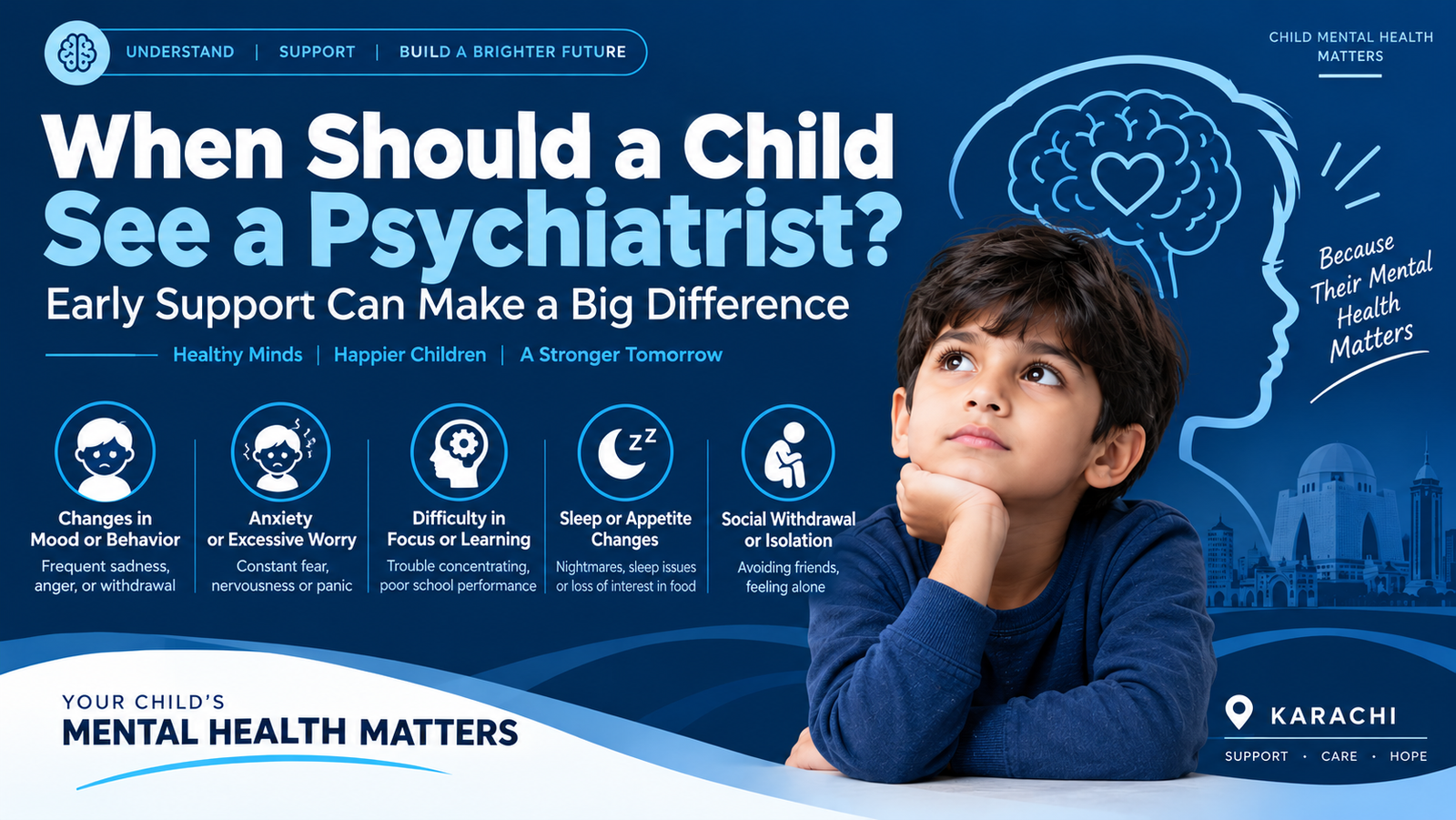
Emotional and/or behavioral changes that persist over weeks or months or start to disrupt normal activities may warrant a professional evaluation for a child.
For instance, parents can observe that a child who used to attend school without any problems is now withdrawn, has drastic changes in eating or sleeping habits, is frequently complaining of a physical symptom that is not clearly understood, has increased anxiety or is experiencing anxiety persistently, and has not had any changes in their schedule or activities.
Older children and teens might also experience changes that aren’t so clear. May withdraw from their previous hobbies, from family and friends, have a dramatic change in mood, may be involved in risky behaviour, or may express hopelessness.
NIMH advises consulting a professional for help if symptoms are continuing and the child is having difficulties in everyday functioning. Immediate professional help is required if a child is at immediate risk to self or others or is talking about hurting themselves or others.
These are the warning signs that parents shouldn’t overlook:
Parents should obtain a professional assessment if they find there are ongoing concerns, including:
- A significant shift in mood, sleep habits, behavior, or school performance
- Extreme anxiety, fear, anger, or irritation
- Distancing from family and friends.More distance from family and friends.
- Difficulty concentrating or paying attention (hyperactivity-inattention)
- Unusual physical complaints that occur repeatedly, along with emotional changes.
- Self harm
- Substance use
- The use of weapons or behavior that is dangerous or very impulsive
- Discussing death, suicide, and harming others
These signs do not necessarily indicate a child has a psychiatric disorder. They suggest that a competent person needs to investigate what could be going on.
Which Conditions Can a Child Psychiatrist Treat?
Child and adolescent psychiatrists can assess a broad spectrum of emotional, behavioral, and psychiatric disorders. The specific diagnosis and treatment will depend on the child’s symptoms, development, medical history, family environment, and overall functioning, along with his or her age.
Concentration and attention problems, including ADHD.
If your child has ongoing issues paying attention, holding their attention down and/or controlling their behaviour, sitting still and/or failing to accomplish age-appropriate tasks, they might need an evaluation. Evaluation of ADHD should include symptoms in relevant settings and how they affect functioning, not just a single behavior.
Anxiety disorders
Children can become overly worried, become anxious when separated from or in fear of others, may have panic reactions, fear of or obsessive thoughts and compulsive behaviors. It is important to identify if anxiety is normal or clinically significant, and this can be done through professional evaluation.
Depression and mood disorders.
Children’s depression is not necessarily manifesting as sadness. Other symptoms include irritability, withdrawal, loss of interest, changes in sleep and appetite, decreased energy, problems with schoolwork, and hopelessness.
Behavioral difficulties
If a child continues to be aggressive, defiant, destructive, extremely emotional, or has a problem at home or school, assessment may be warranted, especially if this behavior is impacting a child’s safety or relationships.
Distress and trauma
Children’s emotional health may be impacted by bullying, family conflict, loss, abuse, accidents, significant changes, or other stressful situations. A professional will be able to evaluate symptoms and decide on suitable support.
How Is a Child Psychiatric Evaluation Done?
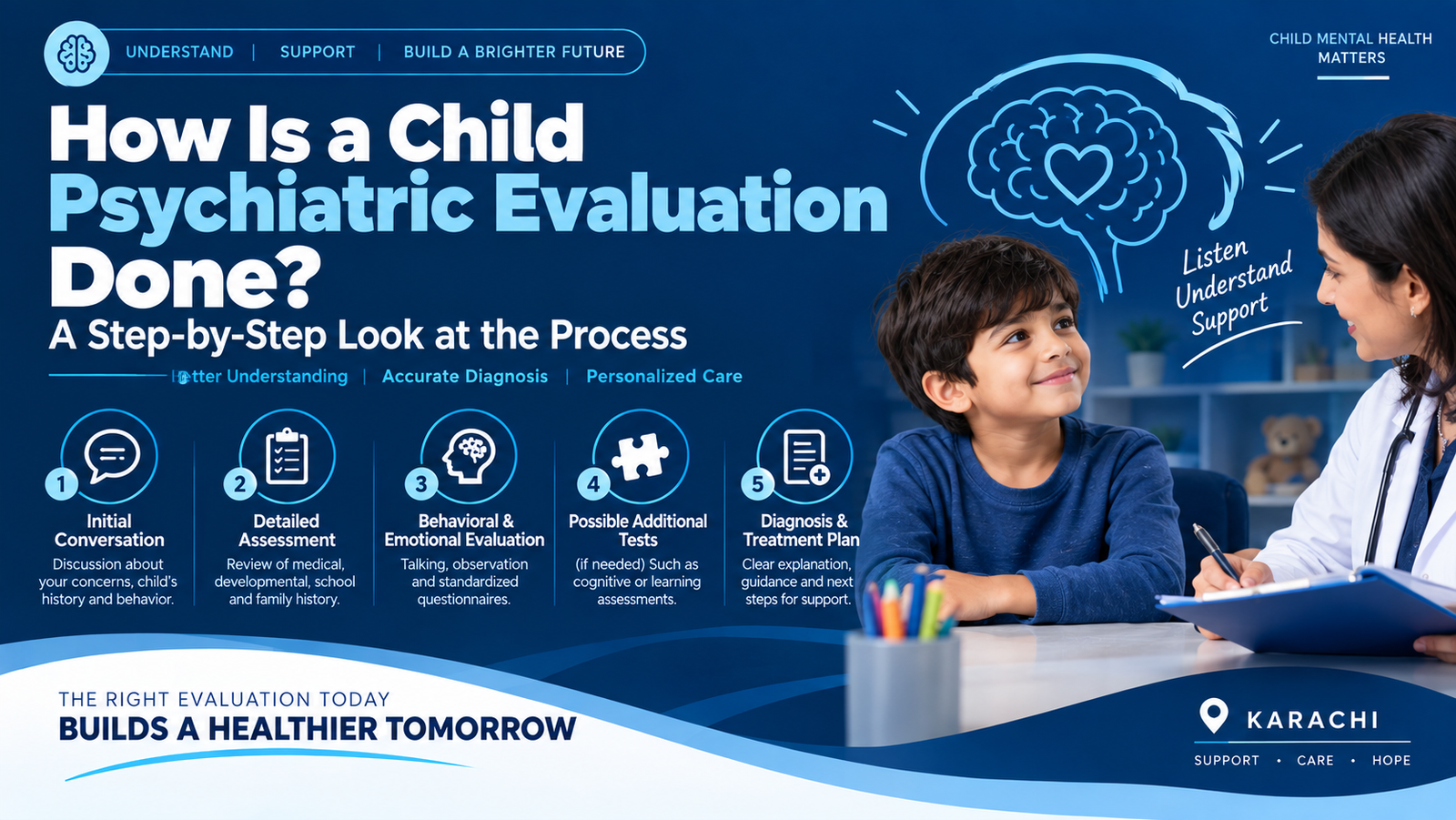
The child psychiatric assessment is not just a brief exchange and a diagnosis. A comprehensive evaluation can include data from the child, parents/caregivers and, where appropriate and allowed, other significant individuals, including teachers and health care providers, etc.
The assessment can take into consideration:
- The main symptoms and when they started
- History of physical and mental health problems.
- Developmental milestones
- School performance/learning issues
- Collaborating with parents, siblings, teachers, and peers
- Family history
- The importance of sleep and routines.The value of sleep and routines.
- Other treatments or medicines that have been given in the past.
- Major life events or sources of stress
- The strengths of the child and their current support.
The psychiatrist may decide that other psychological, educational, speech and language, medical, or other tests are needed.
This is because the same behaviours may have different causes. There may be anxiety, attention, learning, sleep, family stress, or other concerns that may affect a child who has difficulty at school. A thorough assessment is useful to decide on next steps.
What Treatment Can a Child Psychiatrist Recommend?
Treatment will be determined by the evaluation and the child’s needs. No one treatment is suitable for all children.
Treatment options may involve psychotherapy, family-based interventions, parent support, collaboration with the school or other health care providers, and medication if medically appropriate. Treatment options include psychotherapy, medication, family counseling, and support for parents, says NIMH.
Medication is not always necessary. If it is decided that a medication should be used, the prescribing clinician should evaluate the potential benefits, risks, appropriateness, and the child’s individual circumstances.
Psychological therapy and family involvement may be a key aspect of treatment for some children. For some, a mix of strategies may be appropriate. Biological, psychological, developmental, family, school, and social factors are generally considered in child psychiatry.
Child Psychiatrist vs Child Psychologist: What Is the Difference?
Both professionals can play important roles in children’s mental health, but their training and responsibilities are different.
Factor | Child Psychiatrist | Child Psychologist |
Medical doctor | Yes | Usually no |
Psychiatric diagnosis | Can perform medical psychiatric evaluation | Can assess psychological and behavioral concerns |
Medication | Can prescribe when appropriately licensed | Generally does not prescribe |
Psychotherapy | May provide or coordinate it | Commonly provides psychotherapy |
Physical health factors | Integrated into psychiatric assessment | Considered within psychological assessment |
Best role | Psychiatric evaluation and medical treatment planning | Psychological assessment, therapy, and behavioral support |
A child may benefit from one professional or from coordinated care involving several specialists. AACAP describes child psychiatrists as physicians who can integrate medical, psychological, developmental, family, and social information when evaluating children and adolescents.
How to Choose a Child Psychiatrist in Karachi
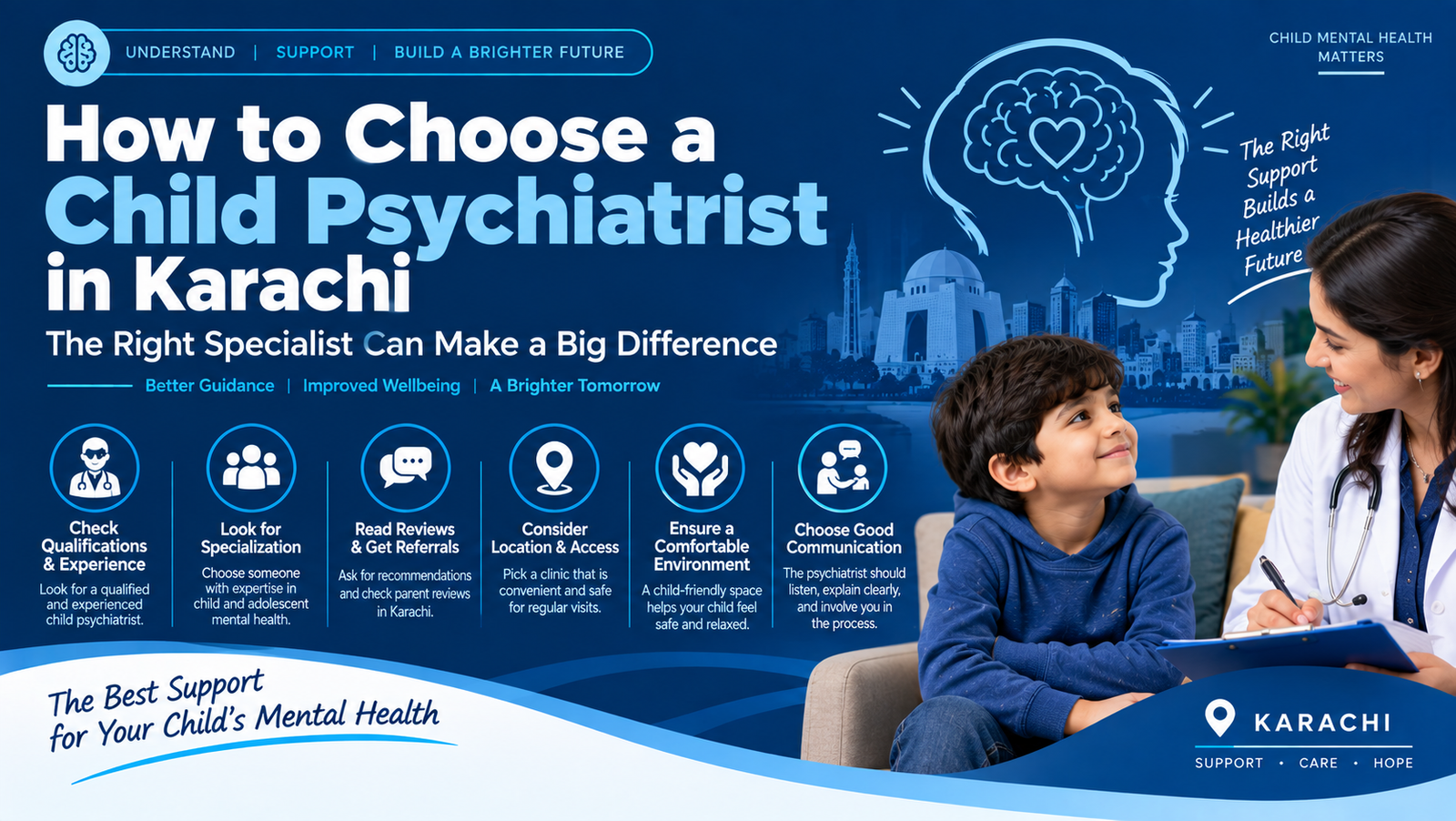
There are lots of possibilities for getting a child psychiatrist in Karachi. Parents should not just pick a doctor that comes up high on search results, but evaluate the service to see if it will fit their kid’s requirements.
Take into account the following:
Relevant qualifications and training: Verify the professional credentials of the psychiatrist and whether his/her training and qualifications are relevant to child/adolescent mental health.
Experience with children: A clinician who has had experience working with children and adolescents might be better equipped to evaluate age-specific emotional and behavioral issues.
Assessment approach: Ask if the first visit will involve a thorough assessment or only one specific symptom.
Treatment options: Parents can ask what types of treatment may be considered and how parents/caregivers are involved in the treatment.
Communication: Children and parents should be given the chance to ask questions and get explanations in language understandable to them.
Keep following up: Mental health care might need supervision and modification. Inquire about follow-up appointments and review of progress.
Arrangements for emergencies: Families should be aware of what to do if a child suddenly becomes unwell or if a child is in danger.
Considering Dr. Ilyas Jat for Child Psychiatry in Karachi
Dr. Ilyas Jat may also be mentioned to families when they are looking for psychiatric services in Karachi. He is an official member of the services offered on his website in Karachi, Pakistan, which include child psychiatry.
Parents should consider the doctor’s qualifications, professional registration, type of doctorate held, areas of specialization, consultation policies, and suitability in relation to their child’s specific worries when evaluating any doctor, including Dr. Ilyas Jat.
The objective isn’t just to locate an easily visible doctor. The more important question is whether the clinician can make an adequate evaluation and treatment plan for that child’s unique situation.
What Should Parents Take to the First Appointment?
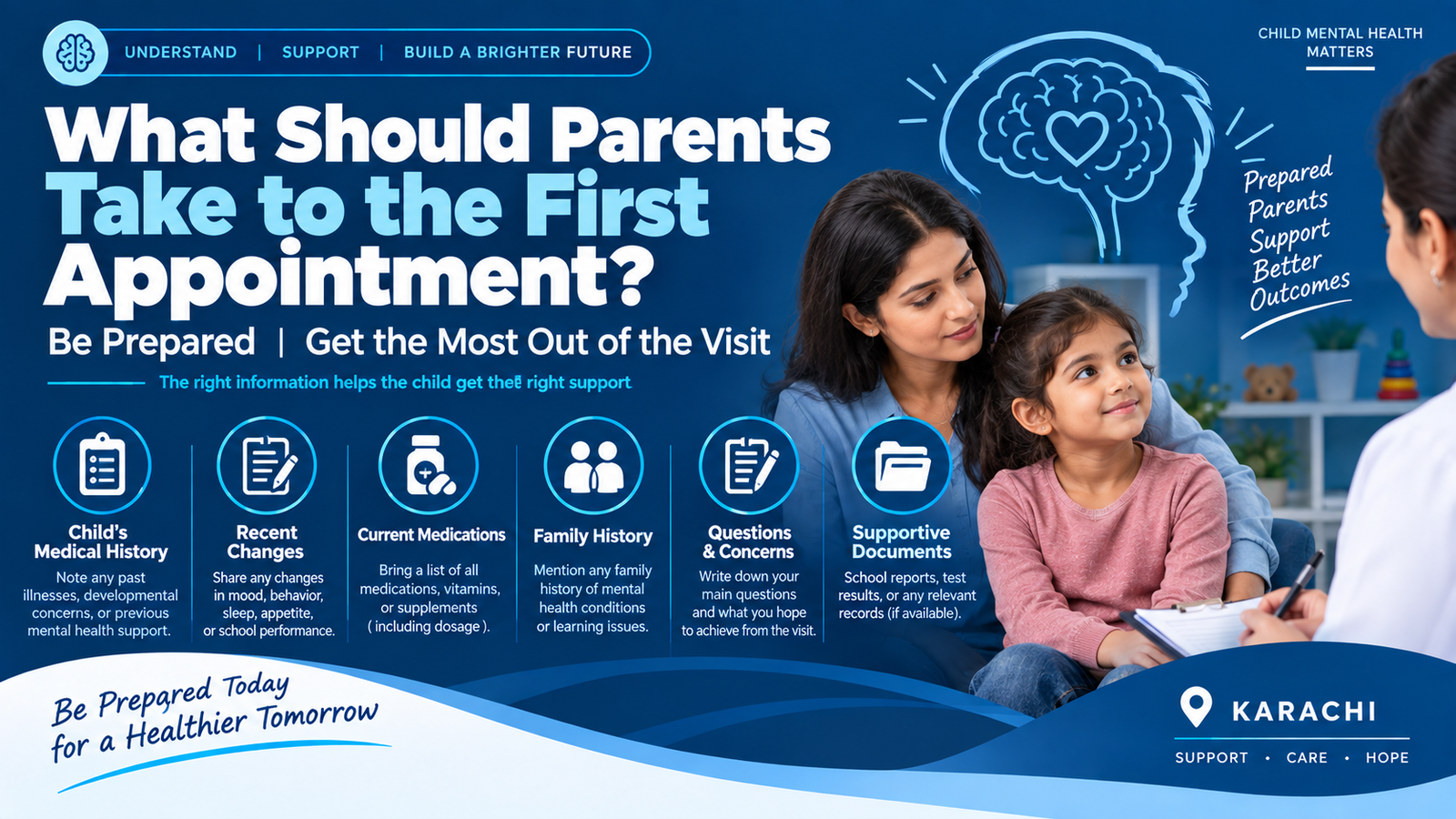
First appointments can be much more meaningful if parents have valuable background information. While you are not required to create an extensive medical file, it may be helpful to have a timeline.
Think about making notes regarding the onset of the problem, the frequency, possible triggers, and the impact it has on school, home, sleep, friendships, and daily activities.
Parents may also be able to provide medical reports from previous assessments, school reports, psychological reports, and a list of current medicines or medicines that have been used recently, if applicable.
It can also assist you in writing down inquiries to ask, including:
- What might be causing such symptoms?
- Do I need to seek further assessment for my child?
- Are there school/learning issues?
- What are the treatment options?
- How will progress be monitored?
- How can parents help at home?
- When do we need emergency assistance?
A thorough psychiatric assessment typically includes assessment of the child’s symptoms, health history, developmental history, educational history, family relationships, and social environment.
Why Early Mental Health Support Matters
The emotional, social, and cognitive development of children and adolescents is a critical time. Untreated mental health issues can impact school functioning, relationships, family lives, and future wellbeing.
Early help does not equate to labelling a child. It involves tackling persistent worries seriously and investigating their causes. According to the WHO, mental health disorders can emerge during childhood and adolescence, and they call for efforts to build effective and available child and youth mental health services.
Parents should not feel accountable or blame the child. Emotional and behavioural problems can develop as a result of a complex of biological, psychological, developmental, family, school, and social factors.
When Is Emergency Help Needed?
There are instances where it is necessary to do something immediately rather than waiting till the next routine appointment.
Seek immediate medical or emergency help if a child or teenager is at immediate risk of hurting themselves or others, has attempted suicide, is very disturbed in his or her behavior, or does not seem to be aware of reality.
Never leave a child unattended in an emergency situation where there is a risk to that child’s safety. Call local emergency numbers or transport the child to an appropriate emergency medical centre.
The mental health concerns that are routine can be assessed during a scheduled appointment, but there are those where immediate safety concerns must be addressed. NIMH specifically recommends urgent assistance if the child is unsafe or indicates a desire to hurt self or others.