

What Makes a Good Psychiatrist in Karachi?
A qualified medical professional with a good understanding of mental health symptoms who can explore potential contributing factors, communicate treatment plans in a clear way, and is able to track a patient’s progress over time is a good psychiatrist.
Treatment preferences, location, and availability are other factors in the right choice, as well as whether the patient needs medication management and the type of concern.
Symptoms of mental health conditions may overlap. For instance, trouble sleeping can be caused by anxiety, depression, stress, side effects of medication or the use of substances, or some medical issues. A good psychiatric evaluation takes a holistic approach and does not focus on a single symptom.
Patients are advised not to look at advertisements, however. Qualifications, specialty, relevant clinical focus, appointment arrangements, communication style, and appropriate follow up are more valuable considerations when comparing psychiatrists.
What Does a Psychiatrist Do?
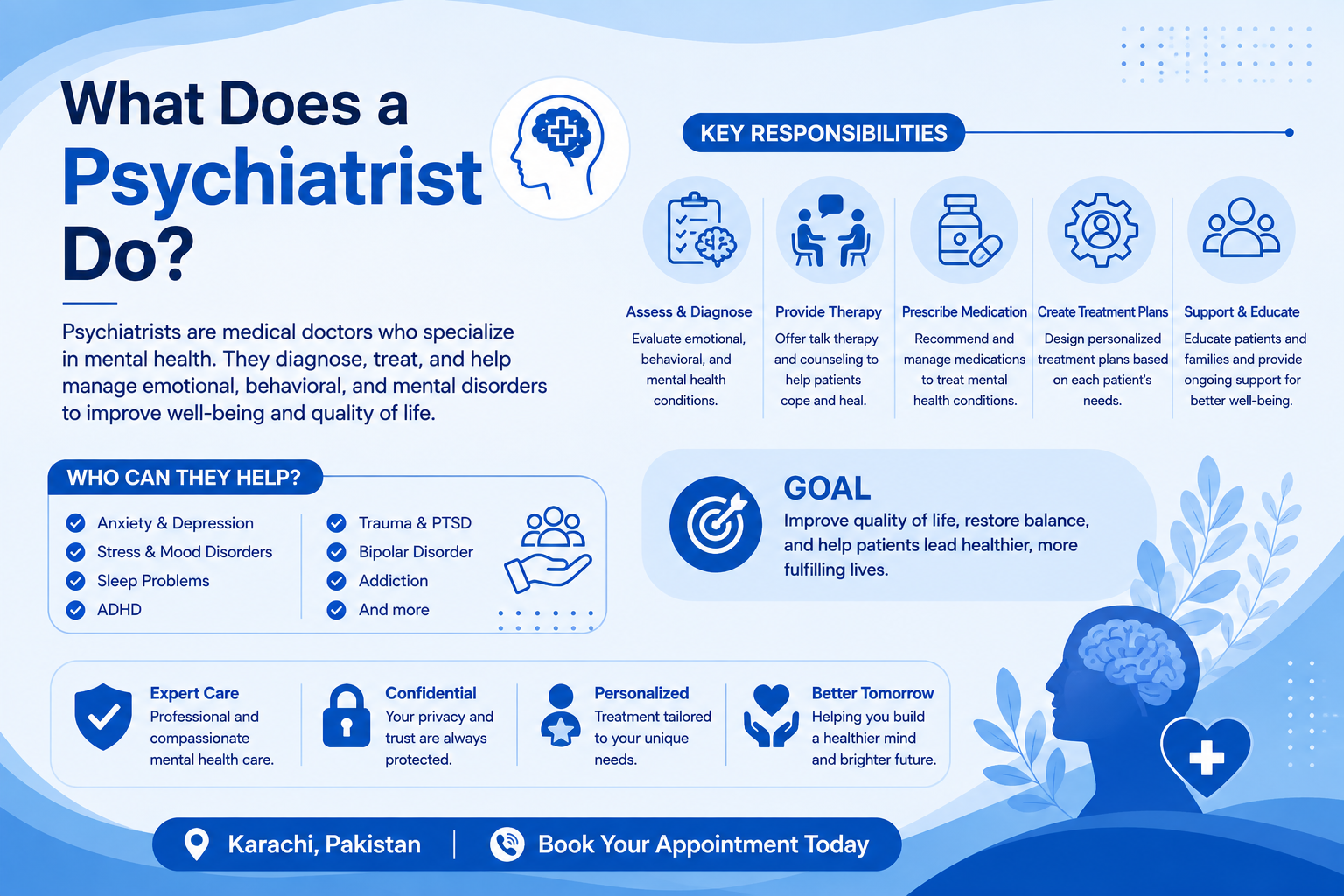
A psychiatrist is a doctor who evaluates, ascertains and treats mental illness. Since psychiatry is a medical field, psychiatrists can take into account the psychological symptoms as well as physical issues that could impact mental health.
The first part of a psychiatric consultation usually involves a thorough discussion of the patient’s symptoms and concerns. The doctor might ask questions about mood, sleep, appetite, concentration, behaviour, relationships, past treatment, present medications, and medical history.
Treatment varies, based on the person’s situation. It could contain medication if clinically appropriate, referral to a psychotherapist, monitoring, lifestyle recommendations, or referral to other health professionals for referrals.
A psychiatrist may also be consulted when symptoms are complicated, chronic, intense, or interfering with daily activities.
When Should You See a Psychiatrist?
Don’t wait until a mental health problem is quite serious before seeking professional assistance. If there are ongoing shifts in mood, behavior, sleep, thinking, or function, it is a reasonable basis to set up an assessment.
If you are depressed, anxious, have chronic or repeated panic attacks, significant changes in mood, sleep disturbance, unusual thoughts or perceptions, substance abuse issues, or emotional or behavioral problems that are interfering with daily functioning, psychiatric evaluation may be warranted.
These symptoms need not guarantee that a person has a psychiatric disorder. A qualified healthcare professional needs to evaluate the complete situation.
In some cases, a general physician may be an appropriate initial health care provider if physical symptoms are significant or the cause of illness is unknown. Some individuals may receive direct benefit from a psychiatrist or psychologist.
Which Mental Health Conditions Can a Psychiatrist Treat?
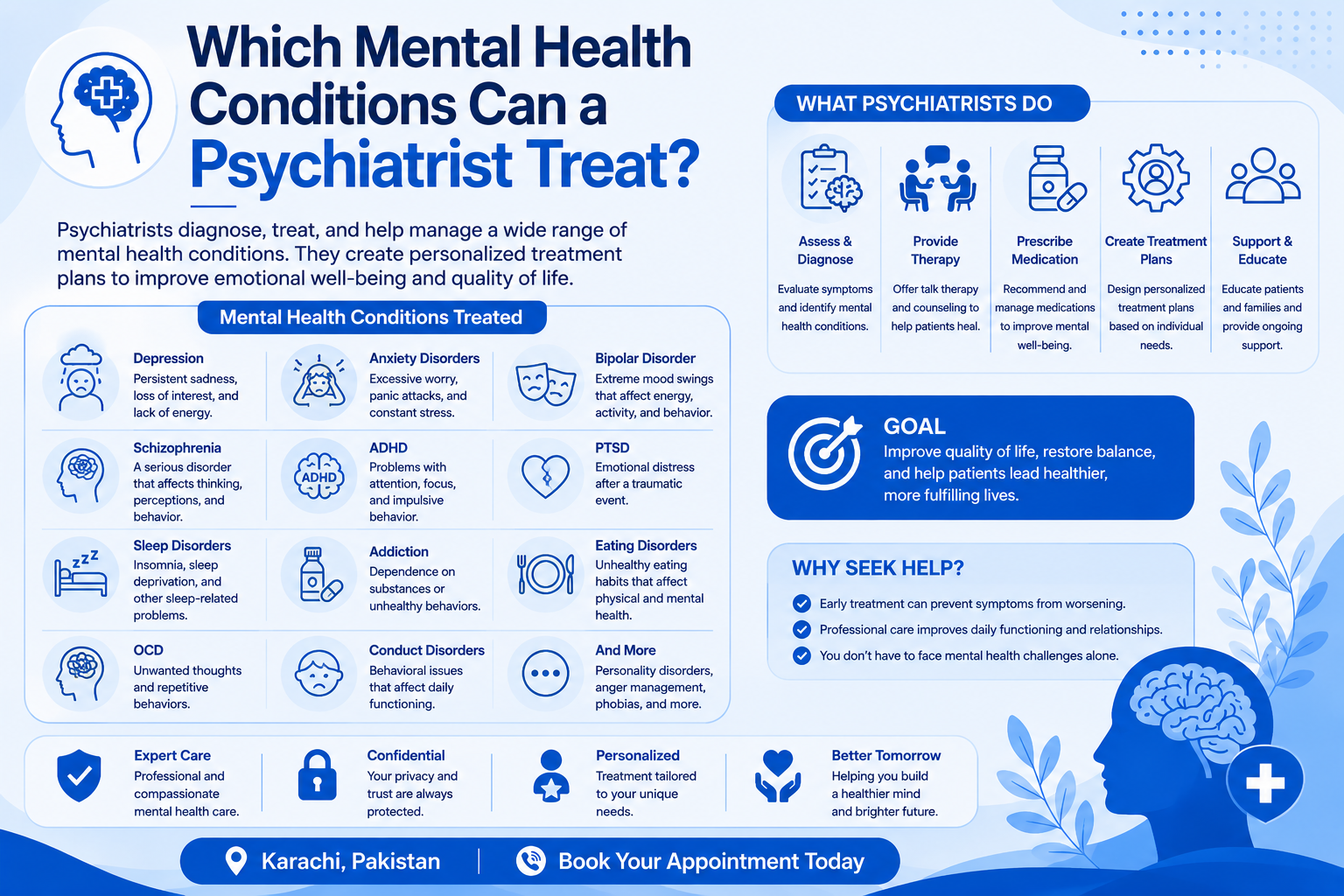
Psychiatrists deal with a variety of mental health disorders. Conditions treated may differ among practitioners based on their specialty.
Some areas of psychiatric care include depression, anxiety disorders, panic disorders, bipolar disorder, schizophrenia, addiction and substance-related disorders, sleep disorders, and other emotional or behavioral disorders.
Dr. Ilyas Jat’s official website states that his services are related to adult psychiatry, anxiety and related disorders, addiction and related disorders, schizophrenia, bipolar affective disorder, child psychiatry, and dementia related disorders.
Depression
Depression is more than temporary sadness. It could be a low mood, reduced interest in things that are normally enjoyed, low energy, sleep or eating disturbances, poor concentration, low self-esteem or hopelessness.
A psychiatrist can check if these symptoms are a sign of depression or another disorder, and determine which kind of professional help might be needed.
Treatment can vary. It can be psychotherapy, medication, or psychotherapy and medication.
Anxiety and Panic
Symptoms of anxiety may be feelings of worry and fear, restlessness, trouble focusing, physical tension, sleep difficulties, or panic attacks.
If anxiety is starting to become problematic in the workplace, school, relationships, sleep, or normal activities, it may help to seek professional assessment.
A psychiatrist can evaluate the symptoms and decide if psychiatric treatment or psychological treatment, medication, or other treatment is warranted.
Bipolar Disorder
Bipolar disorder is a condition characterised by extreme mood swings between periods of depression and episodes of abnormally elevated, expansive, or irritable mood.
Assessment is especially crucial as mood changes may impact a variety of areas. Treatment should be decided based on a professional evaluation and not self-diagnosis.
Schizophrenia and Psychotic Symptoms
Schizophrenia and other types of psychosis may include hallucinations, delusions, disorganized thinking, or significant changes in behavior or functioning.
If perceptions or confusion become unusual, or if a person’s behavior changes greatly or they become extremely suspicious, it is important to have a prompt professional evaluation.
Addiction and Substance-Related Problems
There may also be psychiatric issues that are relevant when drinking alcohol, using drugs, or any other addictive behavior is starting to hurt health, relationships, work, finances, or daily functioning.
Treatment for addiction doesn’t need to involve only a single form of support. Depending on the situation, psychiatric assessment, psychological therapy, medical care, family involvement, and structured recovery support may all play a role.
Child and Adolescent Mental Health
Children and young people can present with mental health challenges in different ways than adults. Sometimes, school performance, behavior, sleep, social interaction, mood, or emotional regulation changes may need to be assessed by a professional.
Child psychiatry is one of the services provided by Dr. Ilyas Jat, which is listed on the registry of services provided. It is the parent’s responsibility to verify the services offered and the age group they serve before making an appointment.
Psychiatrist vs Psychologist: Which One Should You Choose?
A psychiatrist and psychologist can both play important roles in mental healthcare, but their training and responsibilities are different.
Factor | Psychiatrist | Psychologist / Therapist |
Main role | Medical assessment and psychiatric treatment | Psychological assessment and psychotherapy |
Medical doctor | Yes | Usually no |
Can prescribe medication | Yes, when clinically appropriate | Generally no |
Provides therapy | Some psychiatrists do | Yes, when appropriately trained |
Useful for | Psychiatric assessment, medication evaluation, complex mental health concerns | CBT and other forms of psychotherapy |
May work together | Yes | Yes |
The choice is not always either or. Some patients benefit from psychiatric assessment and psychological therapy at the same time.
For example, someone experiencing severe anxiety may need a psychiatrist to assess whether medication could be appropriate while also working with a qualified therapist on psychological strategies such as CBT.
How to Choose a Psychiatrist in Karachi
Numerous professionals are qualified in the field of mental health in Karachi, making it difficult for patients to choose between all these.
One way of doing this is to ensure the information is what would impact the quality and suitability of care.
Check Qualifications and Specialty
Begin by presenting the psychiatrist’s medical degree and specialization. For instance, Dr. Muhammad Ilyas Jat is listed as Assistant Professor of Psychiatry on the profile of Dow University of Health Sciences, while his title on his profile is MBBS, FCPS.
He is also listed in a professional directory as MBBS, FCPS-qualified psychiatrist with up-to-date appointment details.
Qualifications should be verified, preferably by a reliable professional or institutional source – not from promotional language alone.
What is the Doctor’s clinical focus? What is the doctor’s clinical interest?
Consider why you need assistance.
For anxiety treatment, a psychiatrist with experience in treating anxiety disorders might be the best choice. A family may need someone to provide child and adolescent psychiatry assistance when they seek help for a child. Someone addicted might be searching for someone with experience in addiction issues.
If the psychiatrist’s specialty is similar to your concern, the consultation may be more relevant.
Appointment Options.
But there are practical considerations as well. Keep in mind the setting of the clinic, availability of appointments, the type of consultation, and whether there is an online consultation.
Dr. Muhammad Ilyas Jat has published appointments with Taj Medical Complex and Al-Hujjat Medical & Diagnostics at the moment, along with online consultation. The schedule and fees may be subject to change, so please verify schedule changes and fees in advance.
Take into account Communication and Comfort.
Consultations with mental health providers may include very personal issues. A patient should be able to openly express their symptoms without having to feel embarrassed or fear being judged.
Even a technically qualified doctor may not be the perfect match for a patient. The consultation can also be influenced by a person’s comfort, communication, clarity, and willingness to ask questions.
Don’t choose only because of a “Best” label.
Phrases like “best psychiatrist,” “top psychiatrist,” or “number one psychiatrist” are frequently seen in search results. The following words can help you find doctors, but they do not necessarily indicate that they are the best.
No one universal list of psychiatrists that will decide the best psychiatrist for each patient. Some people may require addiction treatment, others may need anxiety treatment, and others may need child psychiatric assessments.
The really important question is:
What is the right psychiatrist for me and my symptoms and treatment needs?
Why Dr. Muhammad Ilyas Jat May Be Worth Researching
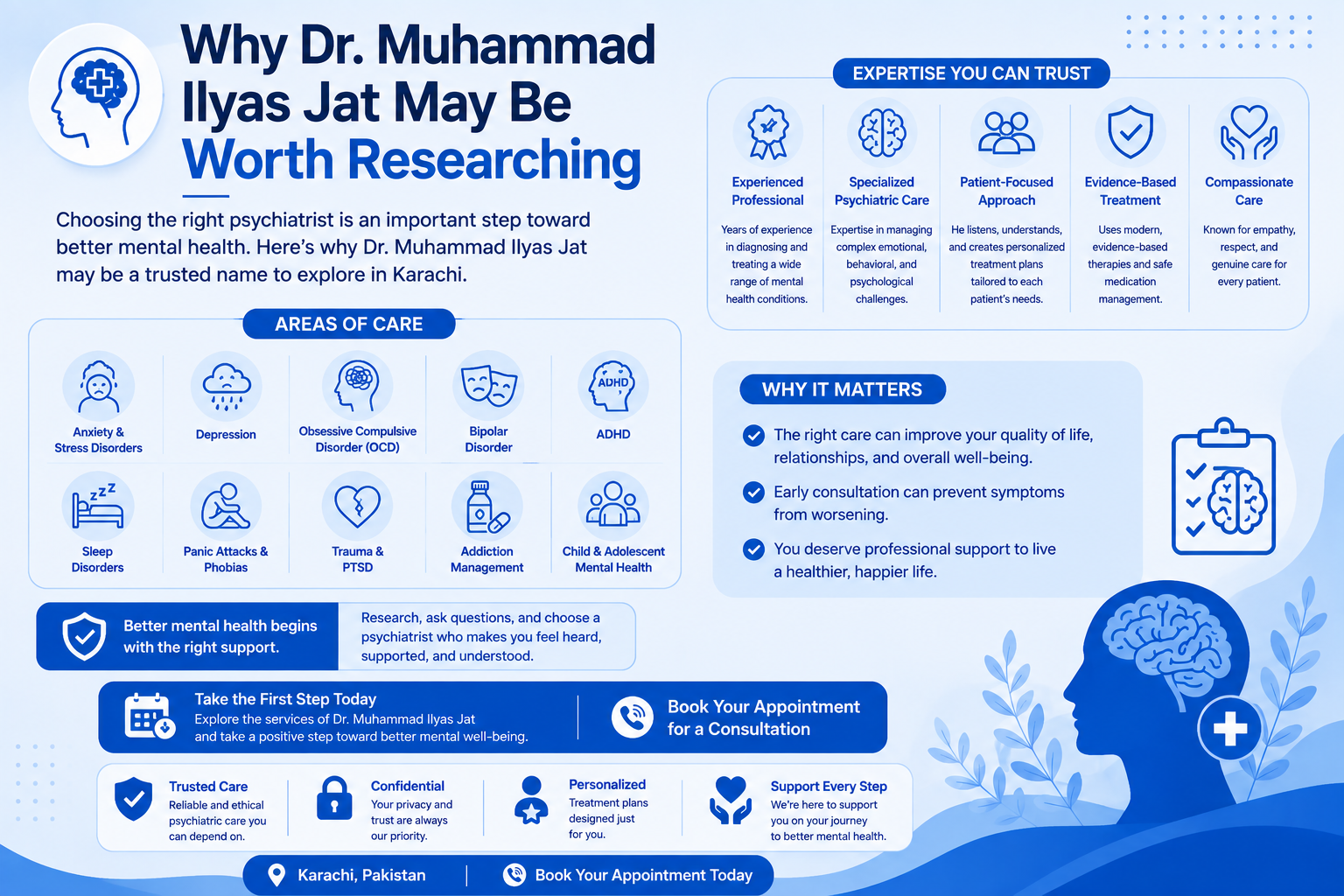
Dr. Muhammad Ilyas Jat is a public psychiatrist in Karachi. Dow University of Health Sciences has him as Assistant Professor of Psychiatry (MBBS, FCPS).
The university also has records of research publications on depression, anxiety, headaches, migraine, and psychiatric conditions.
On his official website, he has several sections of psychiatric practice such as adult psychiatry, anxiety and related disorders, addiction and related disorders, schizophrenia, bipolar affective disorder, child psychiatry, and dementia related disorders.
According to a profile on his Oladoc page, he has a verified profile with PMDC, a doctorate in Psychiatry, and has the following qualifications: MBBS, FCPS, and he has been appointed as a psychiatrist at the Medical College, Karachi.
He is a relevant professional for those who are looking for psychiatric treatment in Karachi, as these details are public.
Patients should, however, consider their individual needs and confirm the current details of appointments before booking.
What Happens During a Psychiatric Consultation?
The first psychiatric visit typically isn’t a one-symptom consultation.
The doctor might ask when it began, how often it happens, if it’s worsening, how it impacts living and if it’s happened before.
Questions about sleep or appetite, concentration, mood, relationships, work or school, medical conditions, current medications, substance abuse, and past psychiatric treatment may also be asked.
The goal is to increase clinical understanding.
The psychiatrist might then talk about what could be causing the problem and how to handle it. The procedure is different in each of the cases, depending on the case and the reason for the visit.
How Should You Prepare for Your Appointment?
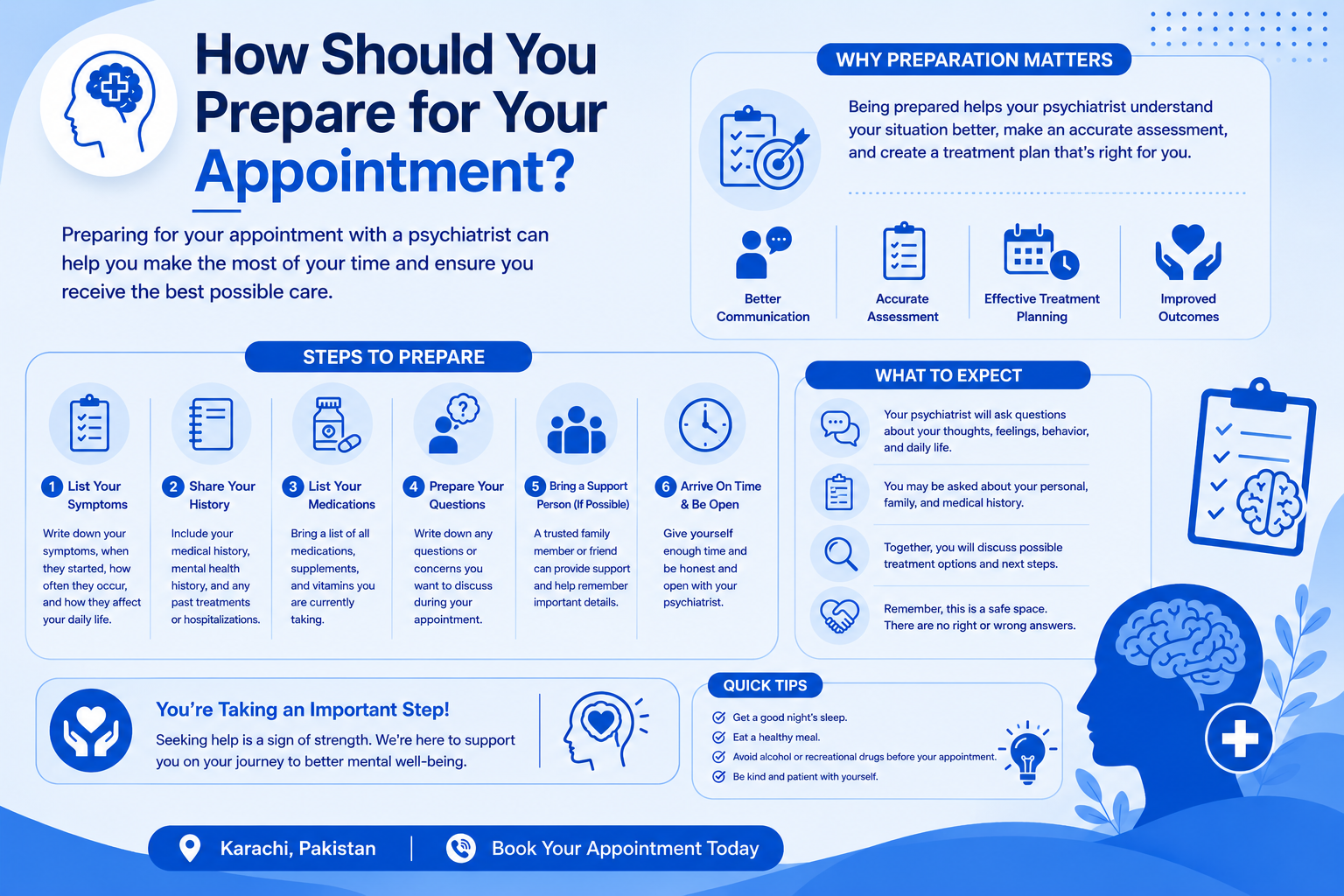
Don’t make the medical report complicated to prepare. Simple guidelines can aid the initial consultation.
Details of onset of symptoms, frequency of symptoms, significant changes in sleep or appetite, current medications, prior treatment, any important medical conditions, and any specific questions to ask.
A family member accompanying the patient may be able to offer helpful information regarding changes in behavior and/or functioning, especially if the patient is a child or lacks the ability to describe symptoms.
Be honest about symptoms, medicines, alcohol/drug use, and prior treatment. When the psychiatrist has accurate information, he or she can make a more appropriate evaluation.
What Questions Should You Ask a Psychiatrist?
Sometimes patients leave a consultation without asking all the questions that they had. It can help if you jot them down first.
It might be a good idea to ask:
- What might be causing such symptoms?
- Is there a need to further evaluate psychiatric and/or medical issues?
- What are the treatment options?
- Do I need medication in my case?
- Would it help to have psychotherapy or CBT?
- Are there any side effects or warning signs that I should know about?
- How will the progress be tracked?
- What’s the best time to come back for follow-up?
Do not require all the questions to be answered. Practice these points when discussing the concerns that are most important to you.
Common Mistakes to Avoid When Choosing Mental Health Care
A common error is to pick a psychiatrist because of an ad that calls him or her the “best.” Good search visibility does not necessarily make something medically suitable.
Another error is self-diagnosis via social media videos or symptom lists on the internet. There is some overlap between symptoms for mental health and symptoms associated with physical health, and several mental health symptoms can overlap.
It is also not a good idea for patients to be taking psychiatric drugs that someone else has prescribed. Even if two people have the same symptoms, they can have different medical histories and different treatments.
Lastly, never stop or alter medications for psychiatric use without consulting the prescribing health care professional.
When Is Psychiatric Care Urgent?
Some mental health issues cannot wait until a regular appointment.
Help is especially needed when a person is immediately at risk of hurting himself or herself or others, is extremely confused or has lost touch with reality, or displays a significant and sudden change in behavior that poses a safety risk.
Severe physical symptoms should not automatically be assumed to be anxiety or another psychiatric problem.
Chest pain, if severe; serious difficulty breathing; fainting; or another sudden medical emergency – immediate medical assessment is necessary.
In case of immediate safety risk, call local Emergency Medical Services or visit the nearest Emergency Department.
A Simple Checklist for Choosing Psychiatric Care in Karachi
When choosing psychiatrists, consider the factors that can be documented and are relevant to your needs.
- Check medical qualifications and professional registration where applicable.
- Make sure the psychiatrist’s specialty is relevant to your issue.
- Verify the clinic’s current location, appointment times, and consultation availability.
- If getting to a doctor is a problem, check if there is a doctor’s consultation available online.
- Don’t rely on reviews; they are one source, not the one and only.
- Inquire about the treatment plan and follow-up.
- Select a professional who is a comfortable person for the patient to discuss his or her sensitive concerns.