


What Does Psychiatry Mean?
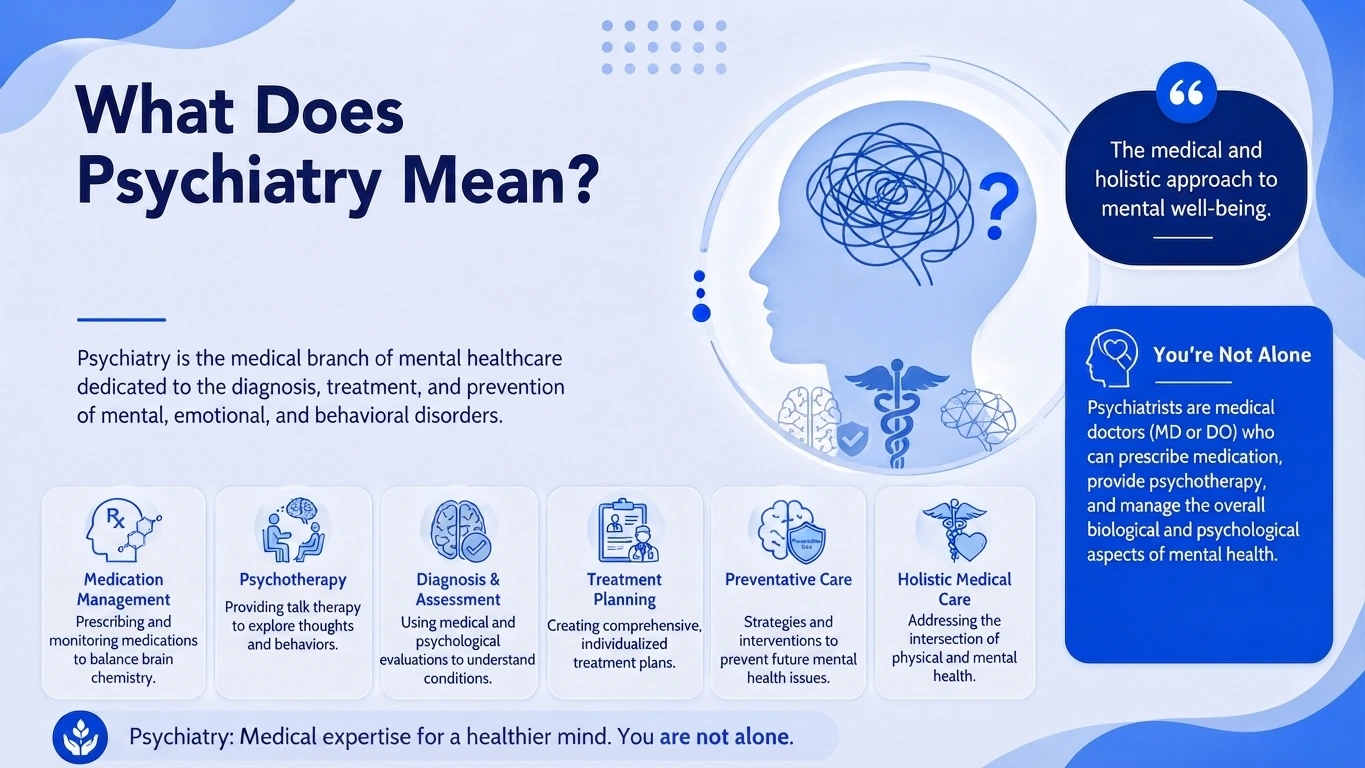
Psychiatry is a medical specialty focused on the assessment, diagnosis, treatment, and ongoing management of mental health conditions. Psychiatrists are medical doctors who can evaluate mental health symptoms and, when appropriate, use medication as part of treatment.
They may also recommend psychotherapy, lifestyle changes, psychological assessment, or referral to another mental health professional.
Psychiatric care can be useful for conditions such as depression, anxiety disorders, bipolar disorder, schizophrenia, substance use disorders, and other emotional or behavioral difficulties.
The appropriate treatment depends on the person’s symptoms, medical history, circumstances, and overall health.
What Is the Difference Between a Psychiatrist and a Psychologist?
A psychiatrist is a medical doctor who specializes in mental health and can prescribe medication where clinically appropriate.
A psychologist generally focuses on psychological assessment and therapy and may use different therapeutic approaches to help people manage emotional, behavioral, and psychological difficulties.
Factor | Psychiatrist | Psychologist |
Medical doctor | Yes | Usually no |
Can evaluate mental health conditions | Yes | Yes, within professional scope |
Can prescribe psychiatric medication | Yes, where legally permitted | Generally no |
Provides psychotherapy | May provide or coordinate it | Yes, commonly |
Useful for medication assessment | Yes | May refer to a psychiatrist |
Can work with other professionals | Yes | Yes |
In some situations, a person may benefit from both psychiatric and psychological care. For example, medication management may be combined with psychotherapy when clinically appropriate.
When Should You See a Psychiatrist?
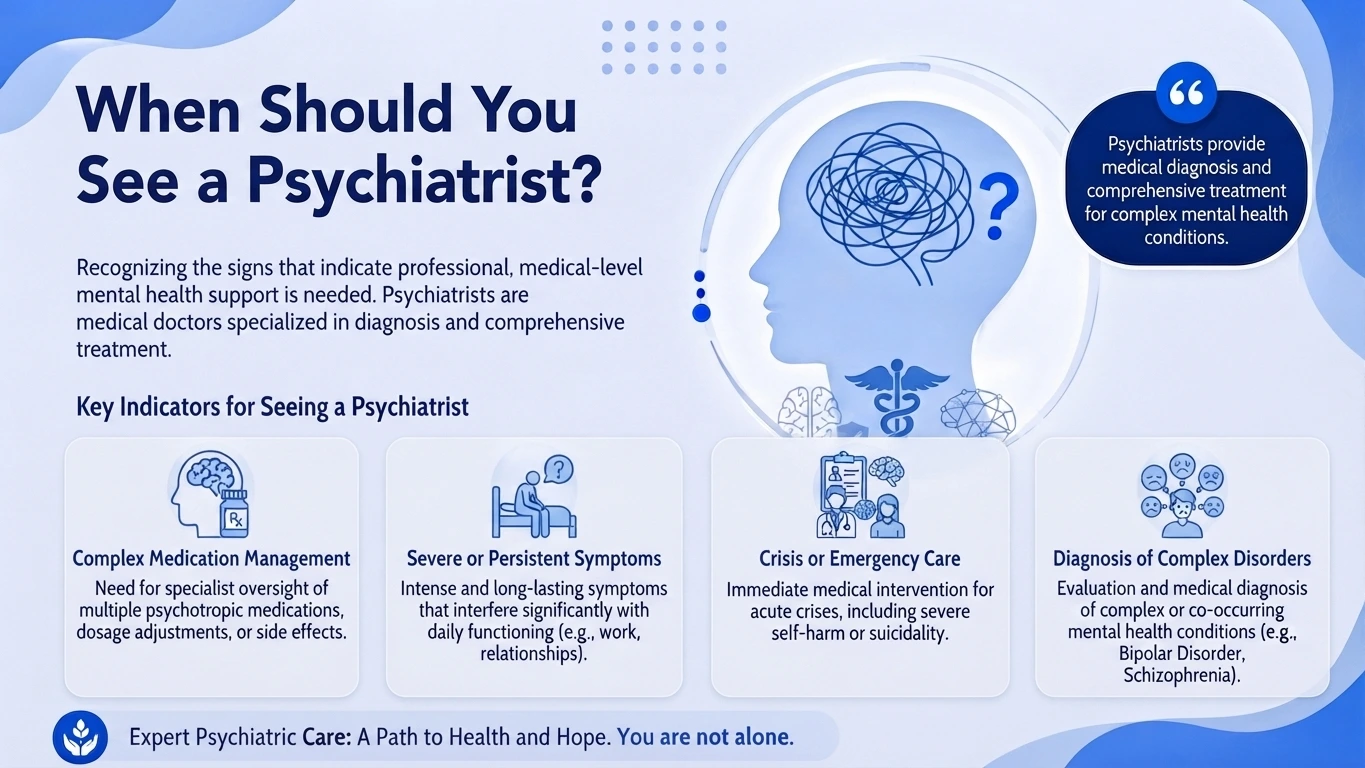
You may consider professional psychiatric evaluation when emotional, behavioral, or psychological symptoms persist, interfere with daily life, or become difficult to manage on your own.
A consultation can be particularly relevant when symptoms affect sleep, work, education, relationships, concentration, appetite, personal safety, or the ability to perform normal activities.
Common reasons people seek psychiatric care include persistent sadness, excessive worry, panic symptoms, major mood changes, unusual thoughts or perceptions, difficulty controlling substance use, and significant changes in sleep or behavior.
Seeking help does not mean that someone is weak or that a serious condition is necessarily present. An evaluation is simply a way to identify what may be contributing to the problem and determine what type of support is appropriate.
Mental Health Conditions Commonly Managed in Psychiatry
Psychiatric practice covers a wide range of conditions. The symptoms and treatment approach can vary considerably from one person to another.
Anxiety and Related Disorders
Anxiety can involve excessive worry, fear, restlessness, physical tension, panic symptoms, or avoidance of certain situations.
When anxiety becomes persistent or starts interfering with everyday life, professional assessment may be appropriate.
Dr. Ilyas Jat’s official website lists anxiety and related disorders among his psychiatric service areas in Karachi.
Depression
Depression is more than occasional sadness. It can involve persistent low mood, loss of interest, reduced energy, concentration difficulties, changes in sleep or appetite, and feelings of hopelessness.
A psychiatrist can assess symptoms, consider possible contributing factors, and determine whether psychiatric treatment, psychotherapy, lifestyle support, or a combination of approaches may be appropriate.
Bipolar Disorder
Bipolar disorder involves episodes of significant mood changes, which may include periods of depression and periods of elevated or unusually irritable mood with increased activity or energy.
Proper assessment is important because treatment for bipolar disorder differs from treatment approaches used for some other mood conditions.
Schizophrenia and Related Conditions
Schizophrenia and related disorders can involve changes in perception, thinking, behavior, and emotional functioning.
Symptoms can be complex, and professional psychiatric evaluation is important when someone experiences significant changes in reality testing, behavior, or functioning.
Addiction and Substance-Related Problems
Psychiatry can also play a role in the assessment and treatment of substance use and addiction related problems.
Treatment may involve psychiatric care, behavioral support, counseling, family involvement, and other services depending on the situation.
Child and Adolescent Mental Health
Children and adolescents can experience emotional, behavioral, developmental, and psychological difficulties that require specialist evaluation. Dr. Ilyas Jat’s official website lists child psychiatry among his service areas.
What Happens During a Psychiatric Appointment?
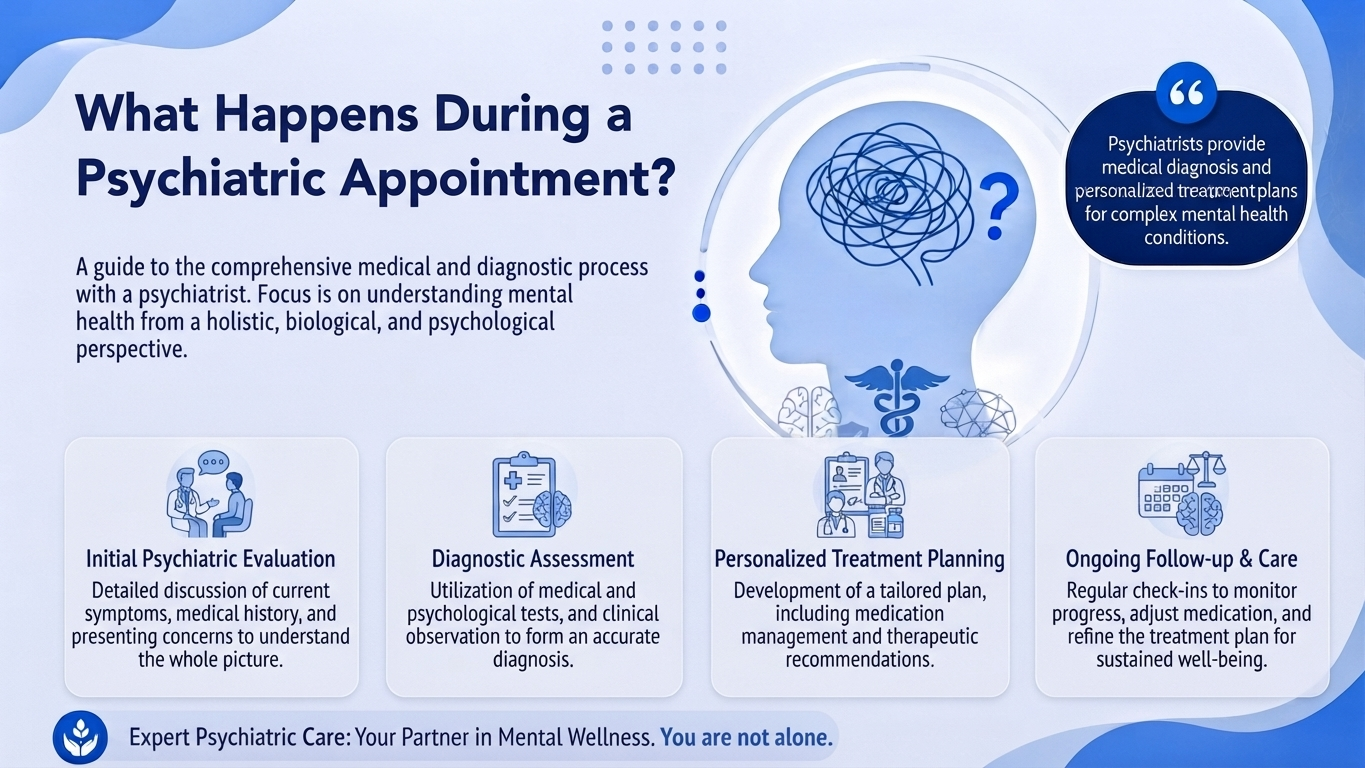
A first appointment usually involves a detailed discussion about the person’s concerns and medical and mental health history.
The psychiatrist may ask about symptoms, when they started, how frequently they occur, sleep, appetite, mood, concentration, previous treatment, current medications, substance use, family history, and other relevant factors.
The purpose is not simply to attach a label to symptoms. The clinician needs enough information to consider possible causes and determine the most appropriate next step.
Depending on the situation, the psychiatrist may recommend:
- Further assessment or follow up
- Medication when clinically appropriate
- Psychotherapy or counseling
- Lifestyle and behavioral changes
- Psychological testing or another specialist assessment
- Coordination with another healthcare professional
Treatment should be reviewed over time because symptoms and individual circumstances can change.
How to Choose the Right Psychiatrist in Karachi
Searching for the best psychiatrist in Karachi should not be based only on online rankings or promotional claims.
A better approach is to look at professional qualifications, area of practice, location, appointment arrangements, and whether the psychiatrist’s approach fits your needs.
Dr. Muhammad Ilyas Jat’s profile at Dow University of Health Sciences identifies him as an Assistant Professor in Psychiatry and lists MBBS and FCPS qualifications.
His official website lists services including adult psychiatry, anxiety and related disorders, addiction, schizophrenia, bipolar affective disorder, child psychiatry, and dementia related disorders.
What Should You Check Before Booking?
Look for:
- Relevant medical qualifications and professional registration.
- Experience with your particular concern, where this information is available.
- Location and appointment availability that are practical for you.
- Clear communication about assessment and treatment.
- Follow-up arrangements if ongoing treatment is required.
- A professional approach to privacy and confidentiality.
Appointment information can change, so confirm the current clinic, consultation time, and fee before visiting.
Dr. Ilyas Jat and Psychiatric Care in Karachi
Dr. Muhammad Ilyas Jat is publicly listed by Dow University of Health Sciences as an Assistant Professor in Psychiatry.
The university profile lists MBBS and FCPS qualifications and identifies his office with the Dr. A.Q. Khan Institute of Behavioral Sciences at DUHS.
His official website describes psychiatric services in Karachi for adults and children and lists areas including anxiety, addiction, bipolar disorder, schizophrenia, dementia related disorders, and other psychological or psychiatric concerns.
A public healthcare listing also identifies Dr. Ilyas Jat as a psychiatrist with MBBS and FCPS qualifications and provides clinic and online consultation information.
Because appointment schedules and fees can change, patients should verify current details before booking.
For someone researching psychiatric care in Karachi, these publicly available professional details can be useful starting points.
However, the most suitable psychiatrist depends on the individual’s symptoms, treatment needs, preferences, and circumstances.
Psychiatric Treatment Is Not the Same for Everyone
One of the most important things to remember when searching for mental health treatment is that there is no single treatment that works for every person.
Two people may both report anxiety but have different underlying factors. One person may need psychological therapy, another may need psychiatric assessment, and another may benefit from a combination of approaches.
Medication, when prescribed, also requires appropriate assessment and follow up. Patients should not start, stop, or change psychiatric medication without discussing it with a qualified healthcare professional.
A good treatment plan should take the person’s symptoms, medical history, other medications, daily circumstances, and treatment goals into account.
How to Prepare for Your First Psychiatry Appointment
You do not need to prepare a perfect explanation of everything you have experienced. Honest and specific information is usually more useful.
Before your appointment, consider writing down when your main symptoms started, how they affect your daily routine, whether they are getting better or worse, and any previous treatment you have received.
It can also help to bring a list of current medications and relevant medical information. If a family member or trusted person has noticed important changes in your behavior or mood, their observations may sometimes provide useful information, depending on the circumstances.
Common Mistakes to Avoid When Seeking Psychiatric Care
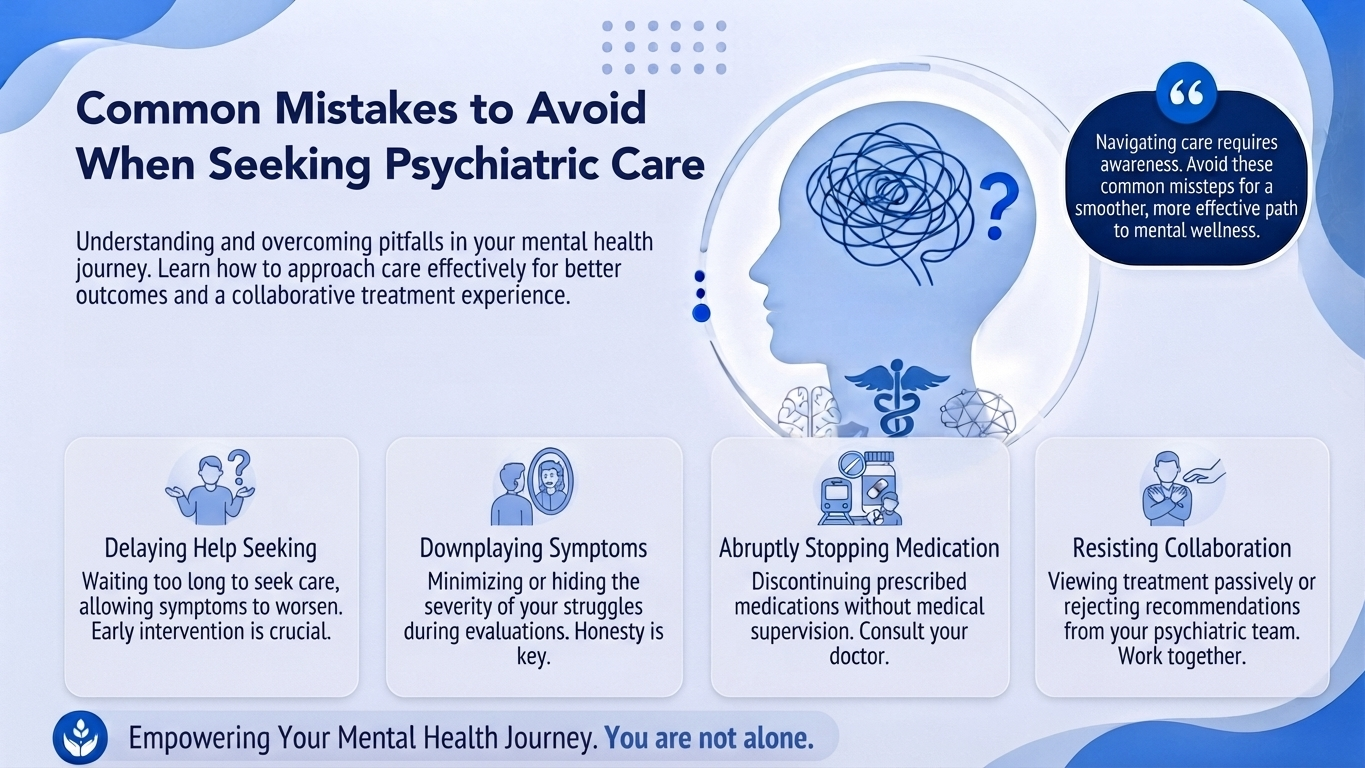
Choosing mental health care based only on the word “best” can be misleading. Online claims may not tell you whether a particular clinician is appropriate for your specific needs.
Another common mistake is waiting until symptoms become extremely severe before seeking help. Earlier professional evaluation may make it easier to identify appropriate support.
Patients should also avoid comparing their treatment directly with someone else’s. Mental health treatment is individualized, and a medication or therapy that was appropriate for one person may not be appropriate for another.
When Is Psychiatric Help Urgent?
Some mental health situations require immediate professional attention rather than waiting for a routine appointment.
Seek urgent help if someone is at immediate risk of harming themselves or another person, is experiencing severe confusion or loss of contact with reality, or is unable to remain safe because of a serious mental health crisis.
In an emergency in Karachi, contact local emergency medical services or go to the nearest emergency department. Do not leave a person alone if there is an immediate and serious safety concern.
Questions to Ask a Psychiatrist
A first appointment can feel difficult, especially if you are discussing personal or emotional concerns. Asking questions can make the consultation clearer.
Useful questions include:
- What could be contributing to my symptoms?
- What type of assessment do I need?
- What treatment options are available?
- Are there non-medication options?
- If medication is recommended, what is its purpose?
- What side effects should I discuss with you?
- How often will follow-up be needed?
- Should I also see a psychologist or therapist?
- What signs would mean that I need urgent help?
These questions can help you participate more actively in decisions about your care.
Best Life Psychiatry in Karachi: What Should Patients Look For?
If your search for best life psychiatry is really a search for high quality psychiatric care in Karachi, focus on the quality and suitability of care rather than a marketing label.
A suitable provider should have appropriate professional qualifications, relevant psychiatric expertise, a clear assessment process, and reasonable follow-up arrangements.
It is also useful to choose a clinician with whom you feel comfortable discussing sensitive concerns.
For Karachi patients researching Dr. Ilyas Jat, his university profile and official website provide verifiable information about his psychiatric role, qualifications, and listed service areas.
The final choice should still be based on your individual needs and a professional consultation.