

Changing behavior is often more difficult than people expect.
Whether someone struggles with anxiety, depression, obsessive thoughts, anger, stress, or unhealthy habits, simply deciding to “do better” rarely creates lasting change.
This is where behavioral therapy becomes one of the most effective treatment approaches available.
Mental health professionals worldwide recommend behavior-focused therapies because decades of clinical research support their effectiveness.
In fact, organizations such as the American Psychological Association (APA) and the World Health Organization (WHO) recognize behavioral approaches as valuable treatments for many mental health conditions.
Whether you’re considering therapy for yourself, supporting a loved one, or simply learning more, this guide explains everything you need to know—from how it works to who benefits most and what results you can realistically expect.
What Is Behavioral Therapy?
Featured Snippet Answer
Behavioral therapy is a type of psychotherapy that helps people identify unhealthy behaviors and replace them with healthier responses through evidence-based techniques such as positive reinforcement, exposure therapy, skills training, and behavior modification.
The foundation of this therapy is simple:
- Behaviors are learned.
- Learned behaviors can be changed.
- New habits become stronger through consistent practice.
Unlike approaches that spend most sessions exploring childhood experiences, behavioral therapy places significant emphasis on solving present-day challenges and improving daily functioning.
A licensed therapist works collaboratively with the client to:
- Identify problem behaviors
- Discover environmental triggers
- Set realistic goals
- Practice healthier responses
- Track measurable progress
This structured process makes therapy practical and goal-oriented rather than purely conversational.
How Does Behavioral Therapy Work?
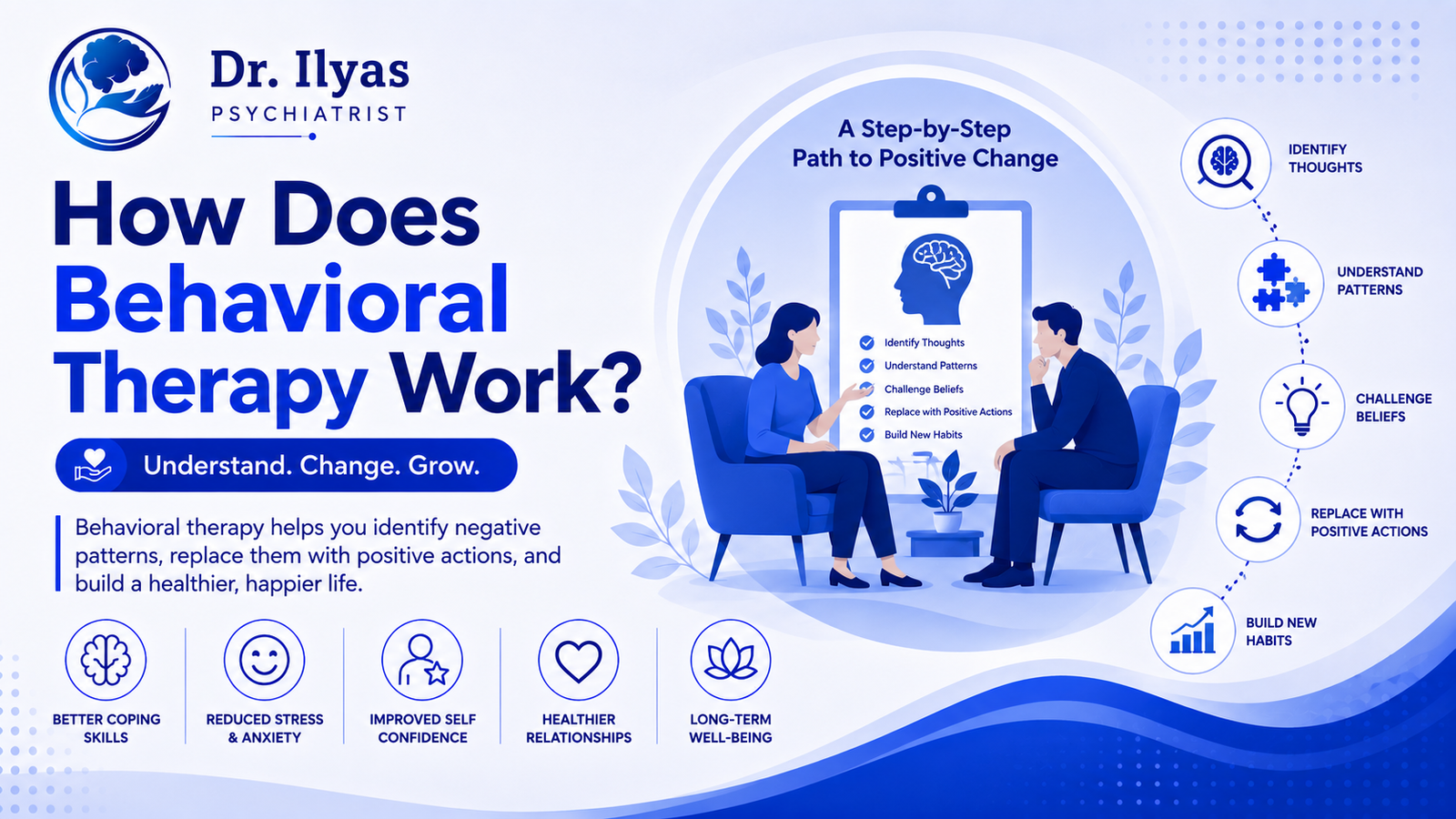
Every behavior follows a pattern.
Experts often describe this pattern as:
Trigger → Behavior → Consequence
For example:
Sarah feels anxious before giving presentations.
Trigger:
Speaking in front of coworkers.
Behavior:
She calls in sick to avoid presenting.
Consequence:
She experiences temporary relief, but her fear grows stronger over time.
A therapist helps Sarah gradually break this cycle by introducing healthier coping strategies instead of avoidance.
Treatment often includes:
- Identifying negative behavior patterns
- Setting measurable goals
- Learning relaxation skills
- Practicing new behaviors
- Monitoring progress weekly
- Reinforcing positive changes
Over time, the brain begins forming healthier behavioral patterns that become more automatic.
Who Can Benefit From Behavioral Therapy?
Behavior-focused treatment can help children, teenagers, adults, and older adults.
It is commonly recommended for people experiencing:
Anxiety Disorders
Including:
- Generalized anxiety
- Panic disorder
- Social anxiety
- Specific phobias
Depression
Therapists help clients increase meaningful daily activities, improve motivation, and reduce avoidance behaviors that often worsen depression.
Obsessive-Compulsive Disorder (OCD)
Exposure-based techniques help reduce compulsive rituals while gradually lowering anxiety.
Post-Traumatic Stress Disorder (PTSD)
Structured behavioral interventions may reduce trauma-related avoidance and improve emotional regulation.
Attention-Deficit/Hyperactivity Disorder (ADHD)
Children and adults learn:
- Time management
- Organization
- Reward systems
- Impulse control
Substance Use Disorders
Behavioral strategies help individuals identify triggers, manage cravings, and maintain long-term recovery.
Anger Management
Clients practice healthier communication, emotional regulation, and problem-solving skills instead of reacting impulsively.
What Are the Main Types of Behavioral Therapy?
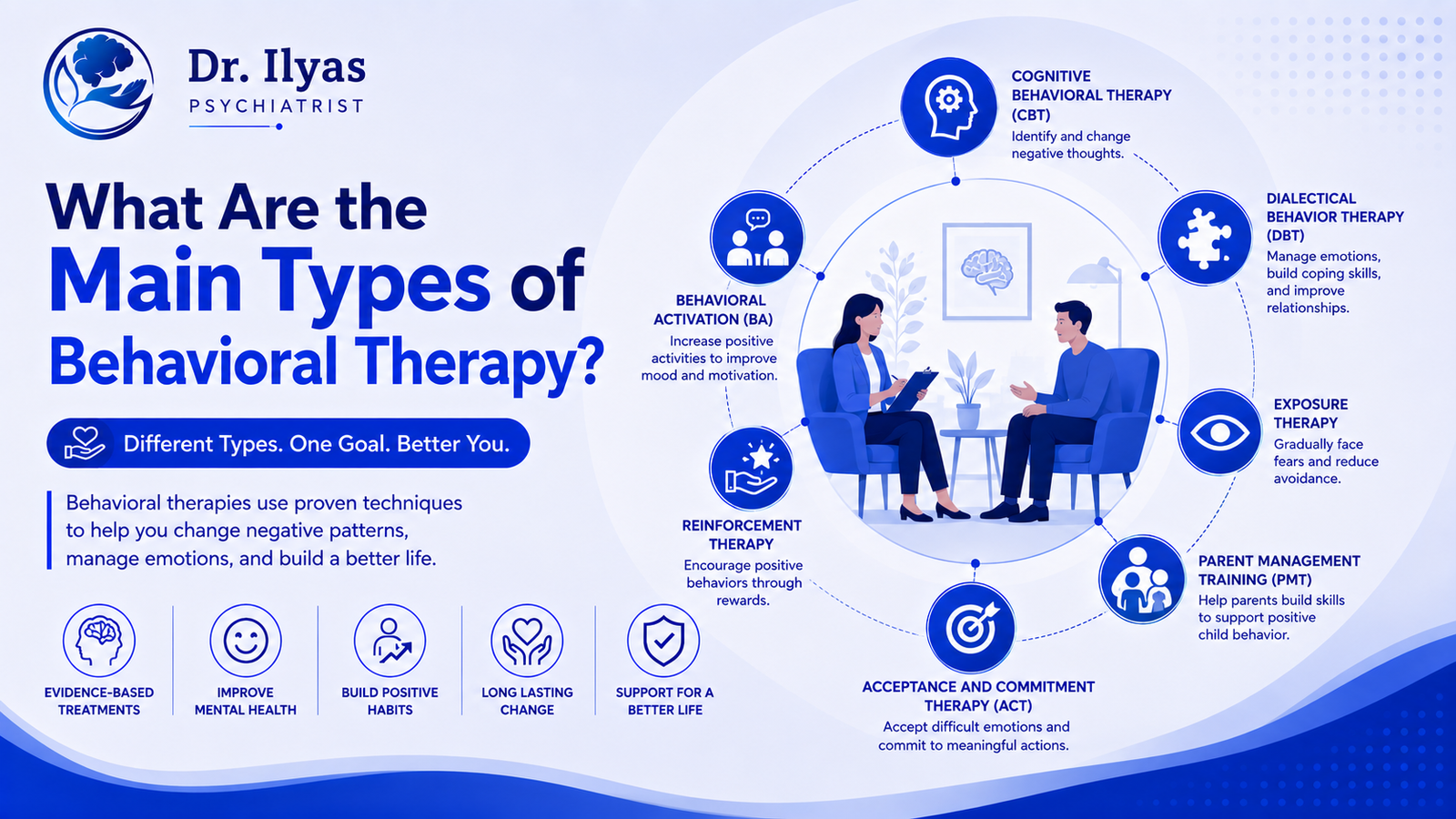
Behavioral treatment has evolved into several specialized approaches, each designed to address different challenges.
Therapy Type | Best For | Main Focus |
Cognitive Behavioral Therapy (CBT) | Anxiety, depression | Thoughts and behaviors |
Exposure Therapy | Phobias, OCD, PTSD | Facing fears gradually |
Dialectical Behavior Therapy (DBT) | Emotional regulation | Coping and mindfulness |
Applied Behavior Analysis (ABA) | Autism spectrum disorder | Skill development |
Behavioral Activation | Depression | Increasing healthy activities |
Acceptance and Commitment Therapy (ACT) | Anxiety, chronic stress | Psychological flexibility |
Although these therapies differ slightly, they all aim to promote healthier behaviors and improve quality of life.
Why Is Behavioral Therapy So Effective?
Researchers have studied behavioral approaches for decades.
Several factors contribute to their success:
It Focuses on Real-Life Problems
Instead of discussing problems without direction, therapy emphasizes practical solutions that clients can apply immediately.
It Uses Measurable Goals
Progress is tracked using specific objectives, making it easier to evaluate improvement over time.
It Encourages Active Participation
Clients complete exercises between sessions, allowing new skills to become part of everyday life.
It Builds Long-Term Skills
Rather than offering temporary relief, therapy teaches techniques that individuals can continue using long after treatment ends.
It Is Supported by Scientific Evidence
Extensive research has shown positive outcomes for many mental health conditions, making behavioral approaches among the most trusted psychological treatments available.
What Happens During a Behavioral Therapy Session?
Many people worry that therapy involves lying on a couch and talking endlessly about the past.
In reality, behavioral therapy sessions are structured, collaborative, and focused on solving present-day challenges.
While every treatment plan is personalized, a typical session follows a clear process.
1. Review Progress
The therapist begins by discussing:
- Changes since the last session
- Successes and setbacks
- Homework or practice exercises
- Current emotional state
2. Identify Triggers
Next, the therapist helps uncover situations that influence certain behaviors.
Common triggers include:
- Stress at work
- Family conflicts
- Financial pressure
- Relationship issues
- Social situations
- Physical health problems
Recognizing these triggers is the first step toward creating healthier responses.
3. Learn Practical Skills
Sessions often include exercises such as:
- Deep breathing
- Problem-solving techniques
- Stress management
- Relaxation methods
- Assertive communication
- Emotional regulation
These skills are designed to be used in everyday situations, not just during therapy.
4. Practice New Behaviors
Role-playing and real-life scenarios allow clients to rehearse healthier responses before applying them outside the therapy room.
5. Set Weekly Goals
Each session usually ends with small, achievable tasks that reinforce positive behavioral changes.
For example:
- Take a 15-minute walk three times this week.
- Speak up once during a meeting.
- Practice relaxation exercises before bedtime.
- Record situations that trigger anxious thoughts.
Small, consistent actions often lead to meaningful long-term progress.
What Are the Benefits of Behavioral Therapy?
Behavioral therapy offers more than symptom relief. It equips people with practical tools they can continue using throughout life.
Improved Emotional Well-Being
Clients often report feeling more confident, calm, and in control after learning healthier coping strategies.
Better Stress Management
Instead of reacting impulsively, individuals develop effective ways to respond to challenging situations.
Stronger Relationships
Improved communication skills help reduce conflict with family members, friends, and coworkers.
Increased Productivity
Replacing avoidance behaviors with healthy routines often improves performance at work and school.
Greater Self-Awareness
People become better at recognizing patterns that contribute to emotional distress.
Long-Term Results
Because therapy focuses on changing habits rather than providing temporary solutions, many people continue benefiting long after treatment ends.
Are There Any Risks or Limitations?
Although behavioral therapy is highly effective for many people, it is not a quick fix.
Some challenges include:
- Progress requires regular practice.
- Improvement may take several weeks.
- Facing fears during treatment can feel uncomfortable initially.
- Some individuals benefit from combining therapy with medication, depending on their diagnosis.
Working with a licensed mental health professional helps ensure that treatment matches the individual’s needs and goals.
What Common Mistakes Can Slow Progress?
Many people expect immediate results, but lasting behavioral change takes time and consistency.
Common mistakes include:
- Skipping therapy sessions
- Avoiding homework assignments
- Expecting overnight improvement
- Hiding important information from the therapist
- Stopping therapy as soon as symptoms improve
- Comparing progress with others
Consistency is one of the strongest predictors of success.
How Does Behavioral Therapy Compare With Other Treatment Approaches?
Choosing the right therapy depends on the person’s symptoms, preferences, and treatment goals.
Feature | Behavioral Therapy | Talk Therapy | Medication |
Focus | Changing behaviors | Exploring emotions and experiences | Reducing symptoms |
Skill Building | High | Moderate | Low |
Homework | Usually included | Sometimes | None |
Long-Term Coping Skills | Strong emphasis | Moderate | Limited |
Scientific Support | Extensive | Varies by approach | Extensive for many conditions |
Works Best For | Anxiety, depression, OCD, phobias, ADHD, behavior change | Emotional insight and relationships | Moderate to severe symptoms or combined treatment |
In many cases, healthcare providers recommend combining psychotherapy with medication when symptoms significantly affect daily functioning.
What Does Research Say About Behavioral Therapy?
Behavioral approaches are among the most extensively studied forms of psychotherapy.
Research has shown positive outcomes for conditions such as:
- Anxiety disorders
- Depression
- Obsessive-compulsive disorder
- Panic disorder
- Post-traumatic stress disorder
- Eating disorders
- Chronic pain management
- Insomnia
Clinical studies also suggest that people who actively participate in therapy and complete between-session exercises often experience better long-term outcomes than those who rely only on medication.
This strong evidence base is one reason behavioral techniques are widely recommended by psychologists, psychiatrists, and primary care providers.
Can Behavioral Therapy Help Without Medication?
Featured Snippet Answer
Yes. Many people benefit from behavioral therapy alone, particularly when symptoms are mild to moderate.
However, for severe mental health conditions, healthcare professionals may recommend combining therapy with medication to achieve the best outcomes.
The decision depends on factors such as:
- Symptom severity
- Medical history
- Personal preferences
- Previous treatment response
- Recommendations from a qualified mental health provider
A personalized treatment plan often produces the most effective and lasting results.
What Are the Best Practices for Getting the Most From Therapy?
Your commitment outside the therapy room plays a major role in your progress.
To maximize results:
- Attend sessions consistently.
- Be honest with your therapist.
- Complete homework assignments.
- Practice new skills daily.
- Keep a journal to track thoughts and behaviors.
- Celebrate small improvements instead of aiming for perfection.
- Stay patient and trust the process.
Behavior change happens gradually, and steady effort often leads to meaningful improvements over time.
Real-Life Example: Small Changes, Big Results
Imagine Ahmed, a 32-year-old office worker who experienced intense anxiety before team meetings.
To avoid speaking, he often stayed silent or called in sick on presentation days.
With guidance from a therapist, Ahmed learned to identify the situations that triggered his anxiety.
He practiced relaxation techniques, challenged avoidance habits, and gradually participated in discussions during meetings.
He started with a simple goal—asking one question during each meeting. Over the following months, his confidence grew. Eventually, he was able to deliver presentations without overwhelming fear.
Ahmed’s progress didn’t happen overnight. It resulted from consistent practice, realistic goals, and support from a trained professional.
His experience shows how small behavioral changes, repeated over time, can lead to significant improvements in daily life.
Frequently Asked Questions
What is behavioral therapy mainly used for?
Behavioral therapy is primarily used to treat mental health conditions and unhealthy behavior patterns.
It is commonly recommended for anxiety disorders, depression, obsessive-compulsive disorder (OCD), phobias, post-traumatic stress disorder (PTSD), ADHD, anger management, insomnia, and substance use disorders.
It helps individuals replace harmful behaviors with healthier coping strategies.
How long does behavioral therapy take to work?
The timeline varies depending on the individual and the condition being treated.
Some people notice improvements within 6 to 12 sessions, while others may benefit from longer-term treatment.
Regular attendance and practicing techniques between sessions often lead to faster and more sustainable results.
Is behavioral therapy effective for children?
Yes. Behavioral therapy is widely used for children experiencing ADHD, anxiety, autism spectrum disorder, oppositional behaviors, and emotional regulation difficulties.
Therapists often involve parents or caregivers to reinforce positive behaviors at home and support consistent progress.
Can behavioral therapy be done online?
Yes. Many licensed therapists provide secure virtual sessions through telehealth platforms.
Research suggests that online behavioral therapy can be just as effective as in-person treatment for many conditions, provided the individual actively participates and follows the treatment plan.
What is the difference between behavioral therapy and cognitive behavioral therapy (CBT)?
Behavioral therapy focuses primarily on changing observable behaviors through techniques such as reinforcement, exposure, and habit formation.
Cognitive Behavioral Therapy (CBT) combines behavior change with identifying and modifying negative thought patterns.
While both approaches are evidence-based, CBT addresses both thoughts and behaviors, whereas traditional behavioral therapy emphasizes behavior itself.
Conclusion
Behavioral therapy has become one of the most trusted and research-backed approaches for improving mental health and changing unhelpful behavior patterns.
Instead of offering temporary solutions, it teaches practical skills that people can use every day to manage anxiety, depression, stress, phobias, and many other challenges.
The key to success is consistency. Small, positive actions repeated over time can create lasting improvements in emotional well-being, relationships, work performance, and overall quality of life.
Working with a qualified mental health professional ensures that treatment is tailored to your unique needs and goals.
If you or someone you care about is struggling with persistent emotional or behavioral challenges, seeking professional support can be an important first step.
Early intervention often leads to better outcomes, greater resilience, and healthier habits that last a lifetime.